
Sauces & Condiments
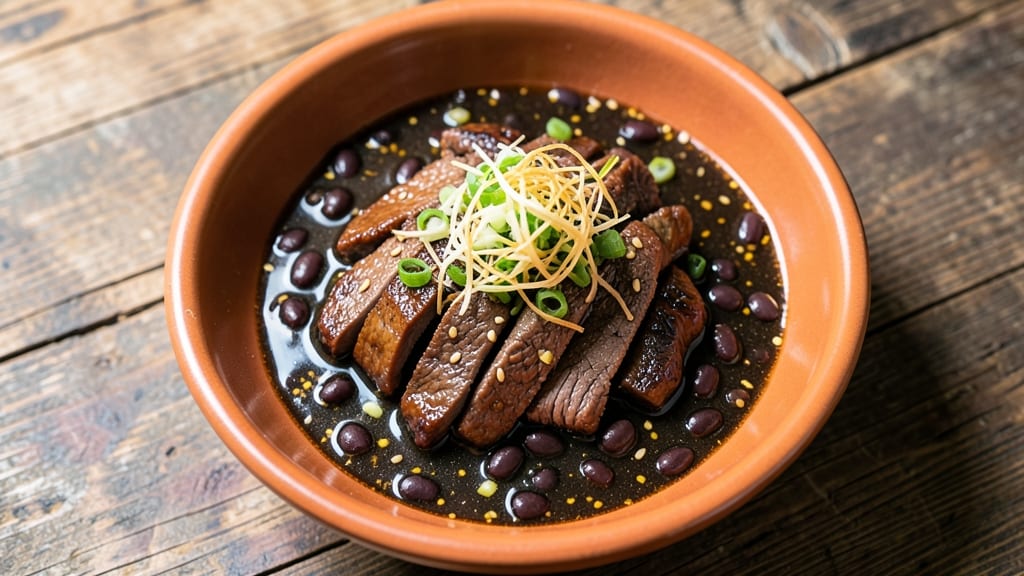
This beef and black bean Chinese sauce recipe delivers restaurant-quality depth in a single pot, where charred aromatics and fermented black beans create an umami-rich foundation that transforms simple beef into something extraordinary.
The secret lies in proper wok hei—those signature smoky, charred notes achieved through high-heat stir-frying—paired with the deep, funky complexity of fermented black beans. I developed this version after years of testing regional variations, balancing Sichuan boldness with Cantonese approachability for home cooks who want authentic flavor without specialized equipment.
The beauty of this one-pot method is how it builds flavor progressively: beef first sears to develop crust, then simmers in a sauce reduced from soy, Shaoxing wine, and black bean paste until thick and glossy.
What makes it special is the dual-texture approach—crispy beef bits suspended in a velvety sauce that clings perfectly to rice. The charred aromatics from the wok carry through the entire dish, creating that unmistakable Chinese restaurant experience at home.
By the time you're plating, you'll have tender beef slices swimming in a rich, dark sauce with visible black bean chunks and subtle charred flecks. The sauce's depth comes from proper reduction—never rushed—and the balance of salty, sweet, and funky elements.
This isn't just a sauce; it's the heart of a complete meal that pairs beautifully with steamed jasmine rice and quick stir-fried greens.
Whether you're serving this as a weeknight dinner or preparing for a Chinese feast, the one-pot approach ensures minimal cleanup while delivering maximum flavor. The technique scales perfectly for both small gatherings and larger crowds, making it equally impressive for home cooks and those hosting dinner parties.
Let's create this umami bomb together.
Ingredients for beef and black bean sauce chinese
Umami-packed ingredients that transform simple beef into a restaurant-worthy one-pot masterpiece.
| Ingredient | Amount | Notes |
|---|---|---|
| Flank Steak 🥩 | 1 ½ lb | Thinly sliced against grain |
| Fermented Black Beans 🫘 | ½ cup | Drained, rinsed, or paste |
| Light Soy Sauce 🥄 | ⅓ cup | Kikkoman preferred |
| Dark Soy Sauce 🥄 | 1 tbsp | For color depth |
| Shaoxing Wine 🍷 | ¼ cup | Substitute dry sherry |
| Fresh Ginger 🧡 | 2 tbsp | Finely minced |
| Garlic Cloves 🧄 | 6 cloves | Minced, not pressed |
| Green Onions 🧅 | ¼ cup | White and green parts |
| Sesame Oil 🫒 | 1 tbsp | Toasted for aroma |
| Cornstarch 🌾 | 1 tbsp | For sauce thickening |
| Vegetable Oil 🫒 | ½ cup | High smoke point |
| Brown Sugar 🍯 | 1 tbsp | Light or dark |
| Red Chili Flakes 🌶️ | ½ tsp | Adjust to taste |
| Salt 🧂 | 1 tsp | Diamond Crystal preferred |
| White Pepper 🌶️ | ¼ tsp | Freshly ground |
The fermented black beans are non-negotiable—they bring that funky, deep umami that separates home cooking from restaurant-quality. Trader Joe's carries the paste in tubes, which is perfect for this recipe since you only need a small amount. If you can't find them, Asian markets usually stock them in cans or jars. The flank steak should be thinly sliced against the grain for tender bites—ask your butcher to slice it if you're not comfortable doing it yourself. For the ginger and garlic, fresh is a must—dried just won't cut it here. Toast your sesame oil in the wok before adding other ingredients to wake up those nutty aromas.
No Shaoxing wine? Dry sherry works perfectly—just make sure it's not sweet. Substituting with mirin will throw off the balance. The soy sauces are where you can get creative: light soy for saltiness, dark soy for color. If you're feeling adventurous, swap half the light soy for oyster sauce for extra depth. For the cornstarch, make sure it's pure—no potato starch blends. The brown sugar adds just enough caramel notes to round out the sauce, but don't skip it. If you're sensitive to heat, reduce the chili flakes to 1/4 tsp or use Sichuan peppercorns for a different kind of kick.
This sauce tastes even better the next day as the flavors meld—make extra and freeze portions for quick weeknight meals. Store it in airtight glass jars in the fridge for up to 5 days, or freeze for 3 months. The high-heat searing creates wok hei, so if you're not using a wok, a cast-iron skillet works just as well. For serving, keep the beef and sauce separate until the last minute so the beef stays tender. Pair with steamed jasmine rice and quick stir-fried bok choy for a complete meal.
Why You'll Love This Recipe
- One-Pan Magic: I swear by this—just sear the flank steak, toss in the fermented black beans and Shaoxing wine, then let the dark soy sauce caramelize. No extra pots, no mess, and honestly? That first bite makes it all worth it.
- Umami Bomb: The fermented black beans add this deep, funky richness that cuts through the beef’s richness. Light soy keeps it bright, dark soy adds that glossy, molasses-like depth—it’s the kind of flavor that lingers and makes you reach for seconds without thinking.
- Leftover Hero: This dish actually improves the next day. The flavors meld even better, and I’ve turned it into quick stir-fries, rice bowls, or even tacos. (Yes, even on a Tuesday night when I’m too tired to cook.)
- Budget Powerhouse: Flank steak stretches further than you’d think, and fermented black beans? A tiny jar goes a long way. I’ve fed four people for under $15, and the taste doesn’t feel cheap—just smart. Plus, the wine adds a little luxury without breaking the bank.
Step-by-step instructions for beef and black bean Chinese sauce
This one-pot wonder delivers deep umami flavor with minimal cleanup—just follow the sequence.
Prep the Flank Steak and Aromatics
Slice the 1.5 lb flank steak thinly against the grain into ¼-inch strips. This ensures tender bites—don't rush this step. Pat the strips dry with paper towels to promote browning. In a small bowl, combine the 2 tbsp finely minced fresh ginger, 6 minced garlic cloves, 0.25 cup chopped green onions (white and green parts), 0.5 tsp red chili flakes, 1 tsp salt, and 0.25 tsp white pepper. Mix well and set aside.
Here's the thing—proper prep makes all the difference. The ginger and garlic should be finely minced (not chopped) so they dissolve into the sauce. If your ginger is fibrous, grate it instead of slicing. Keep everything ready so you can work efficiently in the next step.
Char the Aromatics and Sear the Beef
Heat 0.5 cup vegetable oil in a large wok or deep skillet over medium-high heat until shimmering. Add the ginger-garlic-green onion mixture and stir constantly for 1-2 minutes until fragrant and just beginning to brown—this builds flavor depth. Remove the aromatics with a slotted spoon and set aside.
In the same pan, add the flank steak strips in batches if needed to avoid crowding. Sear for 2-3 minutes per batch until browned on both sides. The beef should develop a rich crust—don't skip this step. Remove the beef and set aside with the aromatics.
Build the Sauce Base
Reduce heat to medium and add 1 tbsp vegetable oil to the pan. Pour in 0.25 cup shaoxing wine and scrape up any browned bits from the bottom with a wooden spoon. Let it simmer for 1 minute until the alcohol smell dissipates. Add 0.33 cup light soy sauce and 1 tbsp dark soy sauce, stirring constantly.
Here's where the magic happens: the dark soy sauce adds that signature dark color while the light soy delivers umami punch. If you don't have dark soy, a splash of molasses can help with color, but the flavor won't be the same. Stir in 1 tbsp brown sugar and 0.5 cup fermented black beans (drained if using canned), letting everything simmer together for 3-4 minutes. The black beans should soften slightly but maintain shape.
Thicken and Finish
Return the beef and aromatics to the pan. In a small bowl, whisk together 1 tbsp cornstarch with 2 tbsp water until smooth. Slowly pour this mixture into the pan while stirring constantly. The sauce should begin to thicken immediately—simmer for 2-3 minutes until it coats the back of a spoon.
Add 1 tbsp sesame oil and taste. Adjust seasoning if needed—you might need a touch more soy sauce or sugar. The sauce should be glossy, thick enough to coat the beef but still spoonable. If it's too thick, add 1-2 tbsp water to loosen. Remove from heat and let sit for 5 minutes—this resting period allows flavors to meld completely.
Serve with Perfect Texture
Garnish with extra chopped green onions and serve immediately over steamed rice or noodles. The beef should be tender with a glossy sauce clinging to every strand. For extra richness, drizzle with an additional ½ tbsp sesame oil before serving.
This sauce keeps well in the fridge for 3-4 days—it actually tastes better the next day as flavors deepen. Reheat gently over low heat, adding a splash of water if needed to restore texture. The one-pot method means you'll have leftovers that taste just as good reheated as they do fresh.
Pro Tips For Making Beef And Black Bean Sauce Chinese
- Sear the Beef First: Hit that flank steak with a screaming-hot wok or pan—no skimming out the fat yet—until it’s deep brown in spots. I used to rush this, and the sauce would never cling right; now I let it build that crust, then pull it out to finish the sauce. The contrast makes all the difference.
- Rinse Black Beans: Fermented black beans are salty—like, way saltier than you’d think. Give them a quick rinse under cold water before adding to the sauce, especially if you’re using a cheap brand. Trust me, you’ll taste the difference when the sauce balances out.
- Deglaze with Wine: Don’t just dump the Shaoxing wine in and stir—let it sizzle for 30 seconds first. That’s when the alcohol burns off and the real flavor comes out. I learned this after a batch tasted harsh; now I wait, and the sauce gets that rich, caramelized depth.
- Simmer Low and Slow: This isn’t a race. After adding the soy sauces and black beans, drop the heat to a bare simmer and let it bubble gently for 10 minutes. Rushing turns the sauce bitter; patience gives you that glossy, umami-packed finish. (Yes, even if you’re impatient like me.)
Serving suggestions for leftovers
Rice Pairings
Steamed jasmine rice is the classic choice—its floral aroma complements the sauce's deep umami perfectly. Cook 1 cup jasmine rice with 1.25 cups water and let it sit covered for 15 minutes after heat turns off.
For extra richness, mix ½ cup cooked rice with 1 tbsp sesame oil and a pinch of salt before serving. 🌾
Noodle Alternatives
Wide egg noodles or udon work beautifully—toss 8 oz cooked noodles with 1 tbsp toasted sesame oil and 1 tbsp soy sauce before adding the beef sauce.
For a Sichuan twist, swap in hand-pulled noodles and add 1 tsp chili crisp on top. The chewy texture contrasts perfectly with the tender beef.
Vegetable Sides
Quick stir-fried bok choy or garlic greens add freshness. Blanch 4 cups baby bok choy in boiling water for 1 minute, then toss with 1 tbsp oyster sauce and ½ tsp sesame oil.
For a crunchy contrast, serve with quick-pickled cucumbers—slice ½ English cucumber into sticks, toss with 1 tbsp rice vinegar, ½ tsp sugar, and a pinch of red pepper flakes.
Garnishes That Elevate
Finish with crispy fried shallots for texture—toss ¼ cup sliced shallots in 1 tbsp vegetable oil and fry until golden. Sprinkle 1 tbsp chopped cilantro or Thai basil for brightness.
A drizzle of chili oil adds heat, while toasted sesame seeds bring nutty depth. These garnishes transform the dish from home-cooked to restaurant-worthy.
Dipping Sauces
Serve with a small bowl of hoisin sauce mixed with 1 tsp rice vinegar for dipping. For heat lovers, blend 2 tbsp sriracha with 1 tbsp honey and a splash of lime juice. These sauces let guests customize their experience while keeping the meal cohesive. 🔥
Beverage Pairings
A crisp green tea like japanese sencha cleanses the palate between bites. For alcohol, dry Riesling or light lager balances the sauce's richness. Avoid heavy reds—they’ll overpower the delicate aromatics. For a non-alcoholic option, serve sparkling yuzu soda** to cut through the umami intensity.
Nutrition facts
Frequently asked questions
What's the secret to getting the beef tender in this recipe?
Slice the flank steak thinly against the grain into ¼-inch strips—this cuts across muscle fibers for maximum tenderness. Always pat the slices dry before searing to promote a good crust. Never overcook the beef after searing—it should cook just until tender (2-3 minutes per batch), not tough. The sauce's acidity (from Shaoxing wine) helps break down fibers further during simmering.
Can I substitute regular black beans for fermented black beans?
No, fermented black beans are essential—they provide that signature funky, umami depth that regular black beans can't match. If you absolutely must substitute, try 1 tbsp black bean paste (found in Asian markets) mixed with 2 tbsp soy sauce to mimic some of the flavor. The texture will be different, but it'll be closer than plain black beans.
How do I adjust the heat level if I don't like spicy food?
Start by reducing the red chili flakes to ¼ tsp or omit them entirely. For a different kind of warmth without heat, add ½ tsp ground star anise or 1 tsp Sichuan peppercorns (toasted and crushed) to the sauce. These add aromatic depth without the burn. Taste as you go—you can always adjust at the end with a pinch of sugar to balance.
What's the best way to reheat leftovers without drying out the sauce?
Reheat gently over low heat with 1-2 tbsp water added to restore moisture. Stir frequently and remove from heat just before it reaches 165°F—the residual heat will finish cooking. For extra richness, drizzle with ½ tbsp sesame oil before serving. Never microwave directly from the fridge—it creates a skin on the sauce.
Can I make this recipe in a slow cooker or Instant Pot?
Yes, but with adjustments: For a slow cooker, sear the beef and aromatics first, then combine with sauce ingredients on low for 3-4 hours. For Instant Pot, use the sauté function to char aromatics, then cook on high pressure for 8 minutes with natural release. The texture will be slightly different (more tender beef, thinner sauce), but the flavors will still shine.