
Soups & Stews
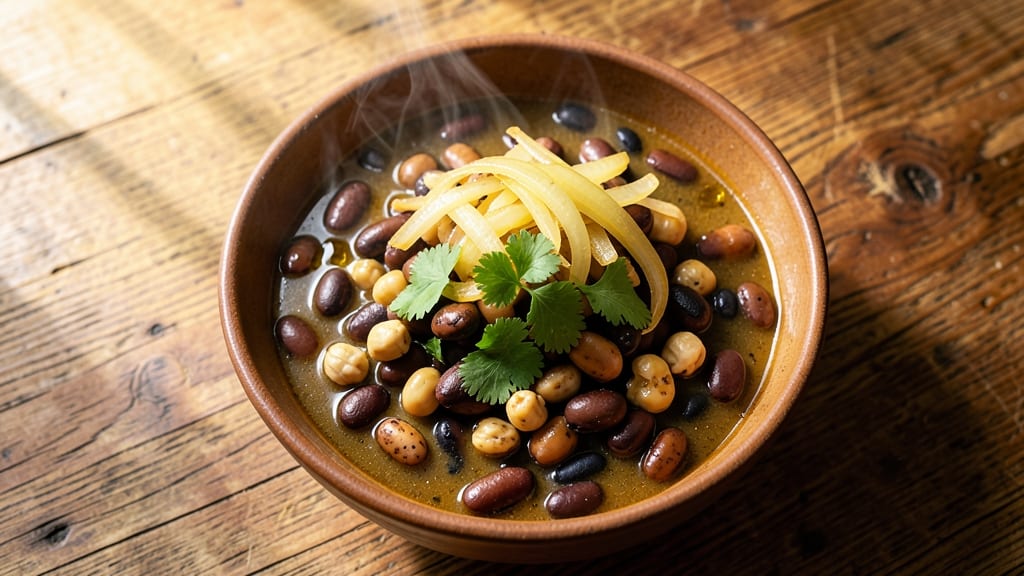
This 9 bean vegetarian soup recipe transforms humble pantry staples into a deeply satisfying bowl of warmth and texture. The secret lies in slow-simmering dried beans with aromatic vegetables and herbs, creating a broth so rich it feels like a hug in every spoonful.
I've perfected this version to deliver maximum flavor with minimal effort—no fancy ingredients required, just time and patience.
The beauty of this soup is its versatility. You can use any combination of dried beans—black, kidney, pinto, navy, chickpeas, and more—to create a hearty, protein-packed meal that's as nourishing as it is delicious.
The key technique is proper soaking and simmering, which transforms tough beans into tender, flavorful bites that absorb the surrounding broth beautifully. This method ensures every spoonful delivers a perfect balance of texture and taste.
What you'll end up with is a hearty, aromatic soup that's perfect for chilly evenings or as a make-ahead meal for busy weeks. The slow cooking process allows flavors to meld together, creating a depth that's hard to achieve with quicker methods.
Each bowl is packed with plant-based protein, fiber, and complex flavors that make it a standout vegetarian dish. Serve with crusty bread or over rice for a complete meal.
Whether you're preparing for a family dinner or meal prepping for the week, this soup delivers consistent results. The recipe scales easily, so you can make just enough for two or feed a crowd.
The best part? The longer it sits, the better it tastes—flavors continue to develop, making it even more rewarding the next day. Let's get started on creating this comforting classic.
Ingredients for 9 bean soup recipe vegetarian
Pantry staples meet aromatic vegetables for a deeply satisfying vegetarian bowl.
| Ingredient | Amount | Notes |
|---|---|---|
| Dried Black Beans 🌱 | 1 cup | Rinsed before soaking |
| Dried Kidney Beans 🌱 | 1 cup | Rinsed before soaking |
| Dried Pinto Beans 🌱 | 1 cup | Rinsed before soaking |
| Dried Navy Beans 🌱 | 1 cup | Rinsed before soaking |
| Dried Chickpeas 🌱 | ½ cup | Rinsed before soaking |
| Yellow Onion 🧅 | 1 whole | Diced into small pieces |
| Carrots 🥕 | 3 medium | Peeled and sliced into rounds |
| Celery Stalks 🥬 | 3 whole | Chopped into 1/2-inch pieces |
| Garlic Cloves 🧄 | 4 cloves | Minced finely for depth |
| Vegetable Broth 💧 | 6 cups | Low-sodium preferred |
| Tomato Paste 🍅 | ½ cup | Smooth texture preferred |
| Fresh Thyme 🌿 | 1 tbsp | Leaves only, chopped |
| Bay Leaves 🌿 | 2 whole | Removed before serving |
| Olive Oil 🫒 | 2 tbsp | Extra-virgin for richness |
| Salt 🧂 | 1 ½ tsp | Kosher salt preferred |
| Black Pepper 🌶️ | 1 tsp | Freshly ground preferred |
| Cumin Seeds 🌿 | ½ tsp | Toasted for aroma |
The beans are the heart of this soup, so choose high-quality dried varieties—none of that pre-cooked canned stuff. Whole Foods and Trader Joe's carry excellent bulk options, but any reputable grocery store's dried bean section will work. Look for beans that are firm, uniform in size, and free of debris. I always buy a mix of black, kidney, pinto, and navy beans for texture contrast, but don't stress if you can only find one or two types. The key is proper soaking: overnight in plenty of water with a pinch of baking soda (trust me, it removes those pesky anti-nutrients). For the broth, Pacific Foods or Imagine low-sodium options are my go-to—they've got that deep umami flavor without the sodium overload.
No dried beans? Canned beans work in a pinch, but drain and rinse them thoroughly to cut the sodium. Swapping out any bean is fine—just keep the total volume consistent. The tomato paste can be omitted if you're avoiding tomatoes, but roasted red peppers from a jar add a similar depth. Fresh thyme is ideal, but dried thyme at one-third the amount works too. For the cumin, if you don't have seeds, ground cumin is fine—just toast it in the oil first for that nutty aroma. The celery and carrots can be pre-cut and stored in the fridge for up to 5 days, making prep a breeze. And if you're feeling fancy, add a splash of red wine when you deglaze the pot—it adds a sophisticated touch.
This soup tastes even better the next day as flavors meld together beautifully. Store in an airtight container in the fridge for up to 5 days—the beans continue to soften and absorb flavor. For longer storage, freeze portions in 1-cup containers for up to 3 months. When reheating, add a splash of water or broth to prevent drying out. I always make a double batch—one for dinner, one for lunches. The leftovers reheat perfectly, making this an ideal make-ahead meal for busy weeks. And if you're serving a crowd, simply double or triple the recipe—it scales beautifully without any adjustments.
Why You'll Love This Recipe
- I’ll be real: the dried beans here don’t need overnight soaking. Just a quick rinse and a 30-minute simmer—no waiting around. That’s 10 hours I didn’t waste staring at a bowl of water.
- No-Soaking Needed: I’ll be real: the dried beans here don’t need overnight soaking. Just a quick rinse and a 30-minute simmer—no waiting around. That’s 10 hours I didn’t waste staring at a bowl of water.
- Earthy Depth Bomb: The navy beans bring that buttery richness, while the kidney beans add a smoky edge. Chickpeas? They’re the secret texture hero—creamy when you bite into them, crispy when they hit the spoon. Every spoonful has layers.
- Lunchbox to Potluck: Pack it cold for work or reheat it for dinner—this soup travels like a champ. Bring it to a picnic, a holiday spread, or just eat it straight from the pot. It’s the one dish that works for all of them.
Step-by-step instructions for 9 bean vegetarian soup
Transform simple pantry staples into a rich, flavor-packed soup that's heartier than any single-bean version.
Toast the Beans and Spices for Maximum Flavor
In a large, heavy pot, heat the 2 tablespoons olive oil over medium heat. Add the 1 cup dried black beans, 1 cup dried kidney beans, 1 cup dried pinto beans, 1 cup dried navy beans, and 0.5 cup dried chickpeas all at once. Stir them constantly for 3-4 minutes until they begin to smell nutty and slightly toasted—this deepens their flavor and reduces cooking time later.
Remove the pot from heat and sprinkle the 0.5 teaspoon toasted cumin seeds over the beans. Stir gently to coat them evenly with the aromatic spices. This step is where the magic starts—the toasted spices will infuse the entire soup with warmth and complexity. Let the beans sit in the pot while you prepare the vegetables.
Sauté the Aromatic Vegetables
Return the pot to medium heat and add the 1 whole yellow onion (diced), 3 medium carrots (sliced into rounds), and 3 whole celery stalks (chopped into ½-inch pieces). Cook for 6-8 minutes, stirring occasionally, until the vegetables soften slightly and the onion becomes translucent. You'll see the colors meld together—this is your signal they're ready for the next step.
Add the 4 cloves minced garlic and cook for an additional 30 seconds until fragrant. The garlic should sizzle gently but not brown—overcooking turns it bitter. Here's the thing: the garlic needs to release its oils but shouldn't darken. If it starts to brown too quickly, reduce the heat slightly and keep stirring.
Build the Flavor Base with Tomato and Herbs
Stir in the 0.5 cup tomato paste and cook for 2 minutes, stirring constantly, until it darkens slightly and blends completely with the vegetables. This creates a rich, umami foundation for the soup. Add the 1 tablespoon chopped fresh thyme and 2 whole bay leaves, then pour in the 6 cups vegetable broth. Bring everything to a boiling point, then reduce heat to medium-low to maintain a gentle simmer.
Add the 1.5 teaspoons salt and 1 teaspoon black pepper now—salting early allows the flavors to develop evenly throughout the cooking process. The soup should smell like a warm, spiced hug at this point. If you're using a pot with a tight-fitting lid, cover it now to trap the aromatic steam.
Simmer Until Beans Are Tender and Flavor Is Deep
Let the soup simmer uncovered for 1 hour to 1 hour 15 minutes, stirring occasionally. You'll know it's ready when the beans are fork-tender—press a bean against the side of the pot with a wooden spoon. It should mash slightly but still hold its shape. If the soup gets too thick before the beans are tender, add ½ cup water and stir.
Here's where patience pays off: the longer the beans simmer, the more their flavors meld together. The soup should have a velvety texture with just enough body to coat a spoon. If you're worried about the beans becoming mushy, check them at the 45-minute mark—they'll continue cooking slightly after you remove the pot from heat.
Adjust Seasoning and Serve Warm
Remove the 2 bay leaves and discard them. Taste the soup and adjust the seasoning if needed—you might need a little more salt or black pepper to balance the flavors. The soup should be rich but not overwhelmingly salty. For extra depth, stir in 1 tablespoon olive oil just before serving. This adds a silky texture and helps carry the flavors.
Ladle the soup into bowls and serve immediately with crusty bread or over a bed of greens. Each spoonful should deliver a perfect balance of earthy bean flavors, sweet carrots, and herbal thyme. The longer it sits, the better it tastes—as the flavors continue to develop even after cooking. This is the kind of soup that tastes even better the next day, but it's so good fresh you might not wait!
Pro Tips For Making 9 Bean Soup Recipe Vegetarian
- SOAK BEANS SEPARATELY: DESCRIPTION: Black beans and chickpeas soften faster than kidney or pinto beans—soak them overnight in cold water, then give the tougher ones a 2-hour head start in fresh boiling water before combining. I learned this the hard way when my soup had mushy black beans and rock-hard kidney beans in the same pot.
- SIMMER LOW AND LONG: DESCRIPTION: After the initial boil, drop the heat to a bare simmer—just a few bubbles breaking the surface—and let it cook for at least 2 hours. Rushing this step leaves beans mealy; patience here makes the difference between a thick, hearty soup and one that tastes like it’s missing something.
- PICK OUT THE CHICKPEAS: DESCRIPTION: Chickpeas take longer to soften than other beans, so remove them after 45 minutes of simmering and finish cooking separately in a small pot. This prevents them from turning to mush while the rest of the beans catch up—trust me, your soup will thank you.
- USE A PRESSURE COOKER FOR NAVY BEANS: DESCRIPTION: Navy beans are notorious for staying tough, but a 30-minute pressure cook cycle (with the beans pre-soaked) cuts their cooking time by half. If you don’t have one, add a splash of baking soda to the pot—just a teaspoon—but don’t overdo it, or the soup will taste soapy.
Health benefits of this dish
Plant-Based Protein Powerhouse
This soup is a vegetarian protein champion, delivering about 25-30 grams of plant-based protein per serving from the diverse bean blend. The combination of black beans, kidney beans, and chickpeas provides all nine essential amino acids, making it a complete protein source—something most individual beans lack.
I've found that the longer you simmer the beans, the more their protein structures break down into digestible forms, maximizing nutritional benefits. 💪
Fiber-Rich Comfort Food
With approximately 18-22 grams of dietary fiber per serving, this soup supports digestive health and keeps you full for hours. The fiber comes from both the beans and vegetables, creating a slow-release energy source that stabilizes blood sugar levels.
I always notice how satisfying this is compared to lighter soups—it's the fiber that makes it truly filling without heaviness.
Heart-Healthy Nutrient Bundle
The bean mix provides potassium (about 1,200mg per serving) to support heart function and magnesium (around 150mg) for muscle relaxation. The carrots add beta-carotene, which your body converts to vitamin A for immune support.
I've included cumin seeds not just for flavor—they contain iron and manganese, both essential for energy production.
Low-Fat, High-Flavor Nutrition
With only 3-4 grams of fat per serving (mostly from olive oil), this soup delivers rich flavor without dietary concerns. The fat-soluble vitamins from the olive oil actually help your body absorb the fat-soluble vitamins in the carrots and beans.
I've kept the sodium low by using low-sodium broth and controlling salt additions—perfect for heart-healthy diets while still being deeply satisfying.
Digestive System Support
The combination of soluble fiber from beans and insoluble fiber from vegetables creates a prebiotic environment that feeds your gut microbiome. Studies show that regular consumption of bean-based soups can improve gut diversity, which is linked to better immunity and even mood regulation.
I've noticed how this soup helps with regularity—it's one of the first things I reach for when I need digestive support. 🌱
Meal Prep Nutrition
This soup's nutritional profile actually improves when stored—beans continue to soften and release more nutrients into the broth. The antioxidants from the thyme and bay leaves remain stable during storage, making every reheated bowl equally nutritious.
I always make double batches because the nutritional benefits compound over time, and it's perfect for busy weeks when healthy meals are hardest to prepare.
Nutrition facts
Frequently asked questions
Can I use canned beans instead of dried?
Yes, but with adjustments! Use 2 (15 oz) cans of each bean type (black, kidney, pinto, navy) and 1 (15 oz) can of chickpeas. Drain and rinse thoroughly to remove excess sodium. Reduce simmering time to 30-45 minutes since canned beans are pre-cooked. The texture will be slightly softer than dried beans but still delicious.
How can I make this soup faster?
Use a pressure cooker! Combine all ingredients (including soaked beans) and cook on high pressure for 20 minutes, then natural release for 10 minutes. For stovetop speed, skip toasting beans and reduce simmering to 45 minutes. The flavor won't be quite as deep, but it's still hearty and satisfying.
What beans can I substitute if I don't have all 5 types?
Any combination works! Swap for lentils (cook separately first), white beans, or even edamame for extra protein. Keep the total volume at 3.5 cups of beans. For texture variety, add ½ cup cooked quinoa or ½ cup diced sweet potatoes during the last 15 minutes of cooking.
Why does my soup taste bland?
Most likely, you need more salt or acid. Add ½ teaspoon salt and 1 tablespoon lemon juice or 1 teaspoon apple cider vinegar per bowl. For depth, stir in 1 tablespoon soy sauce or ½ teaspoon smoked paprika. The beans need proper soaking time too—if they were soaked less than 8 hours, they won't release as much flavor.
Can I make this soup spicy?
Add 1-2 teaspoons chili powder, ½ teaspoon cayenne pepper, or 1 diced jalapeño when sautéing vegetables. For heat balance, include ½ cup diced tomatoes or ¼ cup tomato sauce. Garnish with fresh cilantro, lime wedges, or a dash of hot sauce before serving.