
Salads
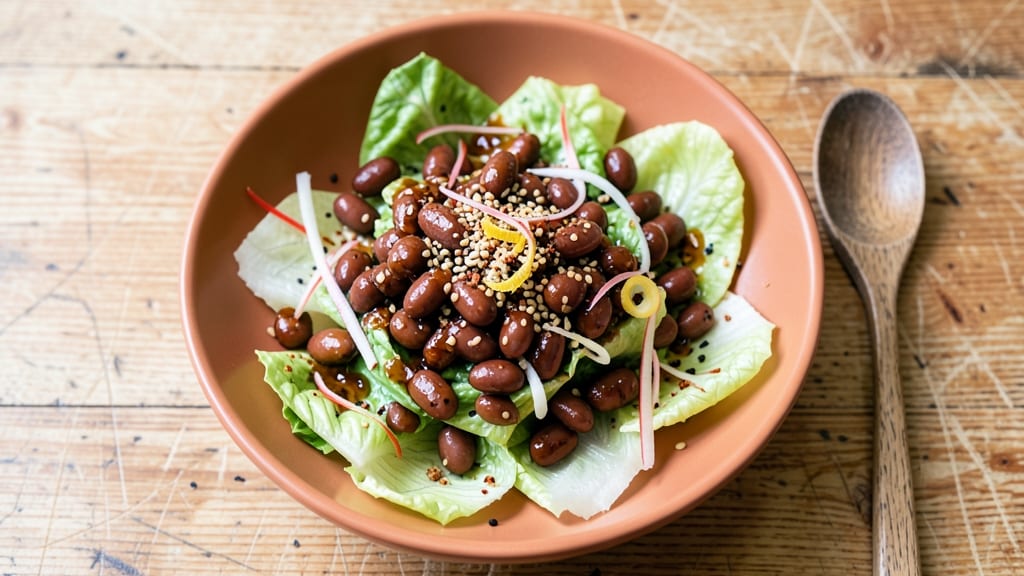
This bulgogi bean salad recipe transforms classic Korean flavors into a vibrant, plant-based dish that’s ready in just 20 minutes. The secret lies in a sweet-savory marinade—soy, ginger, and garlic-infused—that coats crispy adzuki beans for a satisfying crunch.
What makes it special is the balance: sticky, caramelized edges from the marinade meet fresh vegetables and a tangy sesame dressing, creating layers of texture and flavor that feel both nostalgic and fresh.
The recipe starts with a quick marinade of soy sauce, brown sugar, garlic, and sesame oil, which tenderizes the beans while adding depth. Tossed with shredded carrots, cucumber, and scallions, the salad becomes a colorful, nutrient-packed dish that’s as visually appealing as it is delicious.
The crisp-tender beans absorb the marinade perfectly, delivering that signature bulgogi tang without meat.
What you’ll end up with is a crunchy, umami-rich salad that’s ideal for meal prep or a light lunch. Serve it alongside rice, in lettuce wraps, or as a standalone dish with a sprinkle of toasted sesame seeds.
The flavors develop as it sits, making it even more flavorful with time—proof that simplicity can be just as satisfying as tradition.
This version keeps the soul of bulgogi while making it accessible for vegetarians. The technique is straightforward, but the result is restaurant-quality. Let’s make it!
Ingredients for bulgogi bean salad
Sweet-savory marinade meets crisp vegetables for a restaurant-quality bulgogi-inspired dish.
| Ingredient | Amount | Notes |
|---|---|---|
| Adzuki Beans 🌱 | 1 ½ cups | Dried, soaked overnight |
| Low-Sodium Soy Sauce 🍶 | ⅓ cup | Korean or Japanese preferred |
| Brown Sugar 🍯 | ¼ cup | Packed, light brown preferred |
| Sesame Oil 🫒 | 1 tbsp | Toasted, not flavored |
| Fresh Ginger 🌿 | 1 tbsp | Finely grated, peeled |
| Garlic Cloves 🧄 | 4 cloves | Minced, fresh preferred |
| Carrots 🥕 | 2 medium | Shredded, organic preferred |
| Persian Cucumber 🥒 | 1 whole | Seedless, thinly sliced |
| Green Onions 🧅 | 3 whole | Thinly sliced, white parts removed |
| Toasted Sesame Seeds 🌰 | 1 tbsp | For garnish, store-bought or homemade |
| Rice Vinegar 🍶 | 1 ½ tbsp | White or seasoned |
| Sesame Seeds 🌰 | 1 tsp | Extra for garnish |
| Diamond Crystal Kosher Salt 🧂 | ½ tsp | For seasoning |
| Black Pepper 🌶️ | ¼ tsp | Freshly ground |
The adzuki beans are the foundation—organic or high-quality dried beans ensure the best texture. Soak them overnight to reduce cooking time, and don’t skip the rinse before boiling. For a shortcut, Trader Joe’s or Whole Foods sell pre-cooked adzuki beans in the canned section, but homemade gives superior texture. The soy sauce should be low-sodium Korean or Japanese style—Kikkoman or Lee Kum Kee are reliable brands. Fresh ginger and garlic are non-negotiable here; frozen won’t deliver the same depth of flavor.
No sesame oil? Avocado oil at half the amount works in a pinch, but the nutty aroma is essential. Substituting brown sugar with maple syrup (same quantity) keeps it vegan. For the vegetables, organic carrots and cucumbers stay crunchier longer. If you can’t find Persian cucumbers, English cucumbers with seeds removed work fine. The sesame seeds should be toasted—Costco or bulk bins offer the best value. Preferring a sweeter dressing? Add 1 tsp maple syrup to the rice vinegar mixture.
Store the cooked beans in the fridge for 4-5 days—they actually taste better the next day as flavors meld. The dressing keeps for 1 week in an airtight container. For meal prep, assemble the salad just before serving to maintain crispness. The sesame seeds can be toasted ahead and stored in a cool, dark place for up to 3 months. Double the recipe and freeze portions for quick lunches.
Why You'll Love This Recipe
- No-Cook Magic: I swear by this when I’m too tired to boil anything. Toss the pre-cooked adzuki beans with the dressing—no chopping, no waiting—just stir and let the ginger and sesame oil work their flavor spell in 10 minutes.
- Sweet-Savory Balance: That caramelized brown sugar and soy sauce combo? It’s like a hug for your taste buds. The ginger adds a zing that cuts through the richness, and the sesame oil finishes with a nutty warmth that makes every bite irresistible.
- Lunchbox Hero: Pack it cold for work or school—it keeps well for days, and the flavors only get better as the adzuki beans soak up the dressing. Honestly, I’ve sent this in bento boxes, over rice bowls, and even as a side for takeout. It’s that adaptable.
- Budget Meal Stretch: Adzuki beans are cheap, and this recipe uses minimal ingredients that won’t break the bank. Make a big batch, and you’ll have a satisfying, protein-packed side for snacks, soups, or wraps all week—no waste, just flavor.
Step-by-step instructions for bulgogi-inspired bean salad
Here's how to transform simple ingredients into a vibrant, restaurant-quality bean salad with authentic Asian flavors.
Prepare the Bulgogi-Inspired Dressing
In a small bowl, whisk together the 0.33 cup low-sodium soy sauce, 0.25 cup packed brown sugar, 1 tablespoon sesame oil, 1 tablespoon finely grated fresh ginger, and 4 minced garlic cloves. This combination creates the perfect balance of sweet, salty, and aromatic notes that define bulgogi flavor. Let the mixture sit for 5 minutes to allow the flavors to meld—you'll notice the ginger and garlic soften and release their oils, creating a more cohesive dressing.
Real talk: the brown sugar should dissolve completely. If it doesn't, gently warm the mixture over low heat for 10-15 seconds while stirring constantly. This ensures your dressing coats the beans evenly without leaving gritty sugar crystals. The dressing should be smooth and syrupy—this consistency is key to achieving that signature bulgogi stickiness.
Cook the Adzuki Beans
Drain the soaked adzuki beans and rinse them thoroughly under cold water. In a medium saucepan, combine the beans with 4 cups fresh water (the beans will triple in volume). Bring to a boil over medium-high heat, then immediately reduce to medium-low heat and simmer uncovered for 45-50 minutes until the beans are tender but still hold their shape.
Here's the thing—adzuki beans should never be mushy. You'll know they're done when a knife slides in easily but the beans still have a slight bite. Drain the beans and immediately transfer them to a large bowl. While still warm, pour the prepared dressing over the beans and toss gently to coat. The residual heat helps the dressing adhere better, creating that perfect bulgogi-inspired flavor profile.
Prepare the Vegetable Components
Using a box grater or mandoline, shred the 2 medium carrots into fine strips—think matchstick thickness. Thinly slice the 1 whole Persian cucumber lengthwise, then cut each half into ¼-inch thick half-moons. Remove the white parts from the 3 whole green onions and slice them diagonally into ½-inch pieces. The goal is to create a mix of textures that provide both crunch and tenderness in each bite.
Place the shredded carrots in a separate bowl and toss with 1 tablespoon rice vinegar and ½ teaspoon Diamond Crystal kosher salt. Let them sit for 5 minutes to soften slightly and absorb the acidity. This step prevents the carrots from being too harsh when combined with the other ingredients later. The cucumber and green onions can be kept separate until the final assembly—this prevents them from becoming soggy from the dressing.
Combine and Chill the Salad
Add the prepared carrots, cucumber, and green onions to the bowl with the dressed beans. Gently fold everything together using a large spoon or clean hands. The beans should be evenly distributed with visible pockets of each vegetable. Sprinkle with the 1 tablespoon toasted sesame seeds and 1 teaspoon extra sesame seeds for garnish and texture contrast.
Transfer the salad to an airtight container and refrigerate for at least 1 hour before serving. This chilling time allows all the flavors to develop and the textures to meld perfectly. When ready to serve, give it one final toss and adjust seasoning with a pinch of black pepper if needed. The salad should be vibrant with layers of sweet, savory, and fresh flavors in every bite.
Pro Tips For Making Bulgogi Bean Salad
- SOAK BEANS OVERNIGHT: I learned this the hard way—rushing soaked adzuki beans means they’ll turn mushy and split while cooking. Toss them in water (double the bean volume) with a pinch of salt at least 8 hours before cooking, then drain. Cold water does the job better than hot; you’re not boiling them, just softening them.
- GINGER: GRATE, DON’T CHOP: Finely grated ginger (about 1 teaspoon) blends into the sauce without clumps, but chopping it leaves texture that fights the smoothness of the dressing. Use the small holes of a box grater—no food processor needed—and mix it in while the sauce is still warm so it dissolves completely.
- SIMMER SAUCE LOW: The second the soy-brown sugar mixture hits a boil, turn the heat down to a bare simmer. I used to walk away and come back to a sticky, caramelized mess—now I keep it at a whisper of heat for 5-6 minutes. You want the sugar to dissolve, not burn.
- FINISH WITH SESAME OIL: Add sesame oil last, right before serving. I was skeptical until I tried it—pouring it in early makes the salad taste bitter and overpowering. A teaspoon swirled in at the end coats the beans lightly and lets the ginger-soy flavor shine. (Yes, even if you’re impatient like me.)
Flavor customization for bulgogi bean salad
Sweet-Savory Balance
Adjust the sugar-to-soy ratio to suit your taste. For a more traditional bulgogi flavor, increase the brown sugar to 3 tablespoons while keeping the soy sauce at ⅓ cup. If you prefer less sweetness, reduce sugar to 2 tablespoons and add ½ teaspoon grated ginger for extra zing.
The key is balancing the caramelized edges from the sugar with the umami depth of the soy—this creates that signature bulgogi stickiness. 🌟
Spicy Kick Options
Add heat with 1 teaspoon gochujang (Korean chili paste) or ½ teaspoon red pepper flakes to the marinade for a subtle spicy note. For a smoky twist, incorporate ½ teaspoon smoked paprika—this works beautifully with the sesame oil.
If you love bold flavors, try 1 teaspoon chili crisp (like Lao Gan Ma) for a fiery, tangy finish. Always start with half the amount and adjust to taste.
Umami Boosts
Enhance the savory depth by adding 1 tablespoon miso paste (white or red) to the marinade. For a richer profile, stir in 1 teaspoon fish sauce (vegan fish sauce works too) or 1 teaspoon mushroom powder.
These ingredients amplify the umami without overpowering the sweetness. I often use ½ teaspoon dried shiitake powder for an earthy, meaty undertone that pairs perfectly with the beans.
Herb & Citrus Variations
Brighten the salad with 1 tablespoon finely chopped cilantro or mint leaves for a fresh, herbaceous twist. For citrusy contrast, toss in 1 tablespoon freshly grated daikon radish or mandarin orange segments.
A squeeze of lime juice (1 teaspoon) right before serving adds a bright, tangy finish that cuts through the richness. The acidity also helps balance the sweetness of the marinade.
Crunchy Add-Ins
Boost texture with ¼ cup toasted peanuts or crushed wasabi peas for a salty, crunchy element. For a nutty crunch, sprinkle 2 tablespoons chopped roasted cashews over the top.
If you love texture, try ½ cup thinly sliced radishes or quick-pickled jalapeños—these add a refreshing bite that contrasts beautifully with the soft beans. Always add these last to preserve their crispness.
Dressing Customizations
Swap the rice vinegar for 1 tablespoon apple cider vinegar for a slightly tangier dressing, or use 1 teaspoon lemon juice for a brighter finish. For a creamy twist, whisk in 1 tablespoon tahini with 1 tablespoon water to create a sesame-based dressing.
If you prefer a lighter option, replace the sesame oil with 1 tablespoon avocado oil—it’s neutral but still adds richness. Each variation changes the salad’s character while keeping the bulgogi essence intact. ✨
Nutrition facts
Frequently asked questions
Can I use canned beans instead of dried adzuki beans?
Yes, but with adjustments! Use 1.5 cups of canned adzuki beans (rinsed and drained) and reduce cooking time to 10 minutes in the marinade. For extra flavor, add ½ teaspoon soy sauce and 1 teaspoon sesame oil directly to the canned beans before tossing. The texture will be slightly softer, but the taste remains authentic.
How do I make this salad spicier without overpowering the flavors?
Start with ½ teaspoon gochugaru (Korean red pepper flakes) or 1 teaspoon chili crisp mixed into the marinade. For heat lovers, add 1 thinly sliced jalapeño to the final salad. Always taste before adding more—Korean flavors balance well with mild heat, so go slow!
Can I prep this salad ahead of time for meal prep?
Store the marinated beans separately from the vegetables in airtight containers for up to 4 days. Assemble the salad just before serving to keep the veggies crisp. The flavors actually improve overnight as the marinade penetrates the beans. For extra freshness, pack the dressing separately and toss it in right before eating.
What's the best way to serve this bean salad?
Pair it with steamed jasmine rice for a complete meal, or serve it in lettuce wraps for a low-carb option. It also works beautifully as a side for grilled proteins or as a filling for banh mi sandwiches. Garnish with extra sesame seeds and sliced green onions for freshness. The crispy beans hold up well in bowls or wraps!
Why did my beans turn mushy instead of crisp-tender?
Overcooking is the most common cause! Adzuki beans should cook for 45-50 minutes until just tender—not mushy. If using canned beans, simmer them in the marinade for only 5-8 minutes. For extra crispness, rinse the cooked beans in cold water before tossing with the dressing. The key is high heat at the end to caramelize the edges.