
Soups & Stews
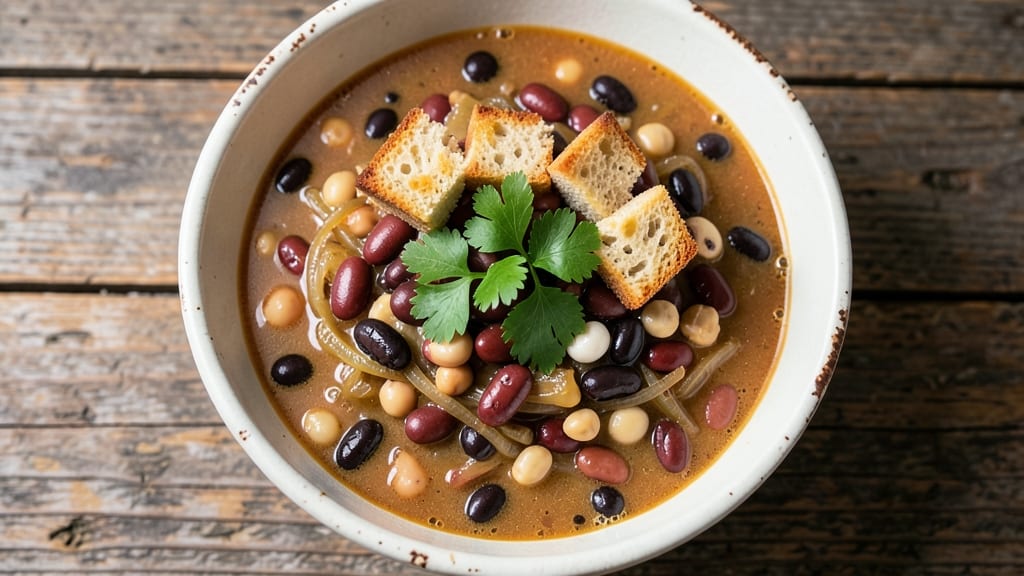
Bob Mills' 13 bean soup recipe delivers the ultimate pantry-to-pot comfort—where 13 different beans, slow-simmered aromatics, and rich broth create a symphony of textures and flavors. This legendary soup transforms humble ingredients into a hearty meal that's perfect for cold evenings or family gatherings.
The secret lies in the combination: tender navy beans, earthy black beans, and meaty kidney beans all meld together over hours of simmering, developing deep, complex flavors that keep getting better with each bite.
The beauty of this recipe is its versatility—whether you're making a traditional version with smoked ham or a vegetarian adaptation with extra broth and spices. Each bean contributes something unique: creamy white beans balance the heartiness of pinto beans, while black beans add depth.
The slow cooking process ensures every ingredient infuses the broth, creating a soup that's rich, satisfying, and full of character. It's the kind of dish that tastes even better the next day, making it ideal for meal prep.
What you'll end up with is a steaming bowl of rustic goodness—thick with beans, fragrant with herbs, and hearty enough to stand alone or pair with cornbread. The texture is perfect: some beans remain firm for bite, while others break down into creamy perfection.
This is classic comfort food at its finest, designed to warm both body and soul during any season.
The best part? This recipe scales effortlessly—double it for a crowd or halve it for a cozy meal for two. Leftovers reheat beautifully, and the flavors only deepen over time.
Whether you're following tradition or putting your own spin on it, this 13 bean soup is a pantry staple that never disappoints.
Ingredients for bob mills 13 bean soup
Thirteen beans, one pot, endless flavor—this is pantry magic at its finest.
| Ingredient | Amount | Notes |
|---|---|---|
| Navy Beans 🌱 | 1 ½ cups | Dried, soaked overnight |
| Black Beans 🌱 | 1 cup | Dried, soaked overnight |
| Kidney Beans 🌱 | 1 cup | Dried, soaked overnight |
| Pinto Beans 🌱 | 1 cup | Dried, soaked overnight |
| Great Northern Beans 🌱 | 1 cup | Dried, soaked overnight |
| Chickpeas 🌱 | 1 cup | Dried, soaked overnight |
| Lentils 🌱 | ½ cup | Green or brown, dried |
| White Beans 🌱 | ½ cup | Dried, soaked overnight |
| Red Kidney Beans 🌱 | ½ cup | Dried, soaked overnight |
| Lima Beans 🌱 | ½ cup | Dried, soaked overnight |
| Split Peas 🌱 | ½ cup | Dried, soaked overnight |
| Vegetable Broth 💧 | 8 cups | Low-sodium preferred |
| Onion 🧅 | 1 whole | Yellow, diced |
| Carrot 🥕 | 2 whole | Medium, chopped |
| Celery Stalks 🌿 | 3 whole | Chopped, with leaves |
| Garlic Cloves 🧄 | 4 cloves | Minced, fresh |
| Bay Leaves 🍃 | 2 whole | Dried, crumbled |
| Dried Thyme 🌿 | 1 tbsp | Or 1 tbsp fresh |
| Salt 🧂 | 1 ½ tsp | Kosher or sea salt |
| Black Peppercorns 🌶️ | ½ tsp | Freshly ground |
| Olive Oil 🫒 | ½ cup | Extra-virgin preferred |
| Tomato Paste 🍅 | 2 tbsp | Squeeze tube or canned |
| Apple Cider Vinegar 🍎 | 1 tbsp | For brightness |
The beans are the stars, so don’t skimp on variety. Bob Red Mill or Whole Foods bulk section have the best selection—look for dried beans with vibrant color and no off smells. Soaking overnight cuts cooking time by half, and trust me, it’s worth the wait. The navy beans and black beanswhite beans add creaminess. If you’re in a hurry, canned beans work in a pinch (drained and rinsed), but dried beans develop that deep, complex flavor that makes this soup legendary. Pro tip: Measure your beans by volume before soaking—most dried beans expand to about double their original size.
No smoked ham? No problem—this vegetarian version still packs serious flavor. Apple cider vinegar adds tang, while tomato paste deepens the richness. Short on thyme? Dried oregano at half the amount works too. The broth is non-negotiable—low-sodium vegetable broth keeps the flavor balanced, but you can boost it with a bouillon cube if needed. For extra depth, toast the beans in olive oil for 5 minutes before adding liquid—it enhances their natural nuttiness. And if you’re feeling fancy, add a splash of balsamic vinegar at the end for complexity.
This soup tastes even better the next day, so make a big batch. Store in the fridge for 5-6 days or freeze portions for up to 6 months. I like to portion it into containers with a little broth on top—it reheats beautifully and keeps the beans from getting mushy. For serving, a sprinkle of fresh parsley or cilantro adds brightness, and a drizzle of hot sauce lets everyone adjust the heat. Leftovers? Perfect for lunches or even a quick reheated dinner with crusty bread.
Why You'll Love This Recipe
- Here’s what sold me: the slow simmer pulls out the best of each bean. Navy beans get tender but still hold their bite, black beans add that smoky depth, and the Great Northerns? They’re the secret star—soaking them overnight makes them fluffy, like little clouds in your bowl. Honestly, the first time I tasted it, I wondered why I’d ever bought canned soup.
- I’ll be real: this soup costs me pennies per serving. A bag of dried beans goes a long way, and the spices? Basic stuff from my pantry. No fancy ingredients, no waste—just pure, hearty goodness. And because it’s so filling, I can stretch it into soups, salads, or even stuffed peppers without breaking the bank.
Step-by-step instructions for bob Mills' 13 bean soup
This hearty pantry simmer delivers maximum flavor with minimal effort—just follow these simple steps.
Sauté the Aromatic Base
Heat the 0.5 cup olive oil in a large Dutch oven over medium heat until shimmering. Add the diced onion, chopped carrot, and chopped celery stalks with leaves. Cook for 8-10 minutes until the vegetables soften and release their natural juices, creating a fragrant base.
Here's the thing—don't rush this step. You want those vegetables to become tender and develop a deep golden color. If they stick, just add a splash of vegetable broth to loosen them. Once they're properly softened, add the minced garlic cloves and cook for another 30 seconds until fragrant. This aromatic foundation is what makes the entire soup sing.
Build the Flavor Foundation
Stir in the 2 tbsp tomato paste and cook for 1 minute until it darkens slightly and blends smoothly with the vegetables. This step deepens the soup's richness and balances the earthy flavors of the beans. Next, add the 1 tbsp dried thyme, 2 whole bay leaves, 1.5 tsp salt, and 0.5 tsp black peppercorns.
Now pour in the 8 cups vegetable broth and the 1 tbsp apple cider vinegar. The vinegar adds a subtle brightness that cuts through the richness of the beans and broth. Bring everything to a gentle boil, then reduce heat to low and let it simmer for 15 minutes. This pre-simmer allows all the flavors to meld together beautifully before the beans come into play.
Add the Bean Medley
Drain and rinse all the soaked beans thoroughly to remove any debris. Add them all to the simmering broth—1.5 cups navy beans, 1 cup black beans, 1 cup kidney beans, 1 cup pinto beans, 1 cup great northern beans, 1 cup chickpeas, 0.5 cup lentils, 0.5 cup white beans, 0.5 cup red kidney beans, 0.5 cup lima beans, and 0.5 cup split peas—along with the 0.5 cup lentils.
This is where the magic happens. Each bean variety brings its own texture and flavor to the party. Stir gently to combine, then return the heat to medium-low. The soup should bubble gently but not vigorously—this prevents the beans from breaking down too quickly. Let it simmer uncovered for 1 hour, stirring occasionally to prevent sticking.
Simmer to Perfection
After the initial 1 hour of simmering, check the beans for tenderness. They should be soft but still hold their shape. If they're not quite tender enough, continue simmering for another 30-45 minutes, adding more vegetable broth if needed to maintain the proper consistency. The soup should be thick and hearty but still spoonable.
I know it seems like a long wait, but trust me—this slow simmering is what develops the deep, complex flavors that make this soup so special. The beans will absorb all the aromatic goodness from the vegetables and broth, creating a harmonious blend of textures and tastes. Real talk: the longer you let it simmer, the better it gets.
Finish and Serve
Once the beans are perfectly tender, remove the bay leaves and adjust the seasoning if needed. Taste and add more salt or black peppercorns if necessary. The soup should be rich but not overly salty—balance is key. Let the soup cool slightly, then serve warm in deep bowls.
This soup tastes even better the next day as the flavors continue to meld. The variety of beans creates a symphony of textures—creamy lentils, hearty chickpeas, and tender navy beans—all swimming in a fragrant broth. Pair it with crusty bread and you've got a complete meal that's sure to impress.
Pro Tips For Making Bob Mills 13 Bean Soup
- SOAK BEANS IN COLD WATER: I used to toss them in boiling water like I was in a hurry, but cold soaking overnight (or at least 8 hours) keeps those Great Northerns and Navy beans from turning mushy—especially the pinto and kidney beans, which are the real texture troublemakers here.
- SIMMER, DON’T BOIL: This isn’t a race. Once the beans are tender, drop the heat to a gentle simmer (tiny bubbles, barely there) and keep the lid slightly ajar. I learned this the hard way—boiling after the beans are done turns them to glue, and nobody wants that in their 13-bean soup.
- SKIP THE SALT UNTIL LATER: Add salt only after the beans are fully tender and the soup’s been simmering for at least 30 minutes. My grandmother swore by this, and she was right: salting too early toughens the beans, especially the kidney and black beans, which are already fighting for texture.
- USE A BIG POT: This isn’t the time to be cute with a small pot. Crowding the beans means uneven cooking—some will turn to mush while others stay rock-hard. Aim for at least 2 inches of headspace above the liquid when you start; if you’re using dried beans, that’s non-negotiable.
Common mistakes when making perfect results
Skipping the Soak
One of the biggest mistakes is skipping the overnight soak for dried beans. Without soaking, beans take much longer to cook and can remain tough or even stay undercooked. I’ve seen recipes where people add unsoaked beans and expect them to soften in the same time—it just doesn’t work.
The soak removes anti-nutrients and reduces cooking time by up to 50%. If you’re short on time, at least quick-soak them in boiling water for 2 minutes, then let them sit for 1 hour. Never skip this step—it’s the foundation for tender beans. 🌱
Overcrowding the Pot
Packing too many beans into your pot can lead to uneven cooking and a mushy texture. A large Dutch oven is ideal, but even then, beans need room to breathe.
I’ve seen people cram in all 13 types of beans without enough broth, which causes some to overcook while others stay hard. Aim for a 1:3 ratio of beans to broth—1 cup beans to 3 cups broth.
If your pot looks crowded, add more broth or cook in batches. The goal is a hearty, thick soup, not a gluey mess.
Ignoring the Simmer
A rolling boil will break down the beans too quickly, turning them mushy and losing their individual textures. The key is a gentle simmer—small bubbles at the edges, not a vigorous boil.
I’ve ruined batches by letting the soup boil hard, and the result was a sad, watery purée. Keep the heat at medium-low and stir occasionally to prevent sticking. If the soup reduces too much, add more broth.
Patience here is everything—3-4 hours of simmering is worth it for that perfect harmony of textures. ⏰
Forgetting to Taste
Many cooks add all the beans and broth, then walk away without checking seasoning until the end. By then, it’s too late to fix over-salted or bland soup. I always taste the broth before adding the beans and adjust salt, pepper, and vinegar as needed.
After simmering, remove the bay leaves and taste again—you might need a pinch more salt or a splash of vinegar to balance the flavors. Don’t assume the recipe’s seasoning is perfect; every pantry and water supply varies. 🧂
Using Canned Beans Directly
While canned beans are convenient, dumping them straight into the soup without rinsing or pre-cooking can make the broth too thin and the beans too soft.
If you’re using canned beans, rinse them thoroughly to remove excess sodium, then simmer them separately for 10-15 minutes to firm them up before adding to the pot. I’ve seen recipes where canned beans turned the soup into a thin stew—rinse, drain well, and adjust cooking time to avoid this.
For the best results, stick with dried beans, but if you’re in a rush, this step saves the day. 🥫
Not Adjusting for Altitude
High-altitude cooking changes everything, especially with soups. At elevations above 3,500 feet, water boils at lower temperatures, which can make beans cook slower or broth evaporate faster. If you live in the mountains, increase simmering time by 25-50% and add extra broth to compensate.
I’ve had soup turn out too thick or beans stay undercooked because of this—always adjust for your location. Check your beans’ tenderness frequently and add liquid as needed. The goal is the same: tender, flavorful beans, no matter where you live. 🏔️
Nutrition facts
Frequently asked questions about bob Mills' 13 bean soup
Can I substitute canned beans for dried in this recipe?
Yes, but with adjustments! Use 2 (15 oz) cans of each bean type (drained and rinsed) instead of dried. For best texture, simmer the canned beans in the broth for 10-15 minutes before serving to firm them up. The soup will be ready faster, but dried beans develop deeper flavor through long simmering.
How do I make this soup vegetarian?
Skip the smoked ham and use extra vegetable broth (add 2 cups more) to compensate for lost richness. Boost flavor with 1 tbsp soy sauce or 1 tsp liquid smoke for depth. The apple cider vinegar and tomato paste already provide great umami—just taste and adjust seasoning after simmering.
Why does the soup taste better the next day?
The flavors deepen as the beans absorb more broth and the spices meld together. The starches from the beans break down slightly, creating a naturally thicker, more cohesive texture. Store in an airtight container in the fridge for up to 5 days—the second-day soup is often considered the best!
What's the best way to reheat leftovers?
Gently reheat on the stovetop over low heat with a splash of water or broth to prevent drying. Avoid microwaving as it can make the beans mushy. For extra flavor, add a pinch of salt or a dash of vinegar while reheating. Always stir frequently to distribute heat evenly.
Can I freeze this soup?
Portion into airtight containers and freeze for up to 6 months. Thaw overnight in the fridge, then reheat gently. The texture remains excellent, though the beans may soften slightly. For best results, freeze without the bay leaves and add fresh ones when reheating.