
Sauces & Condiments
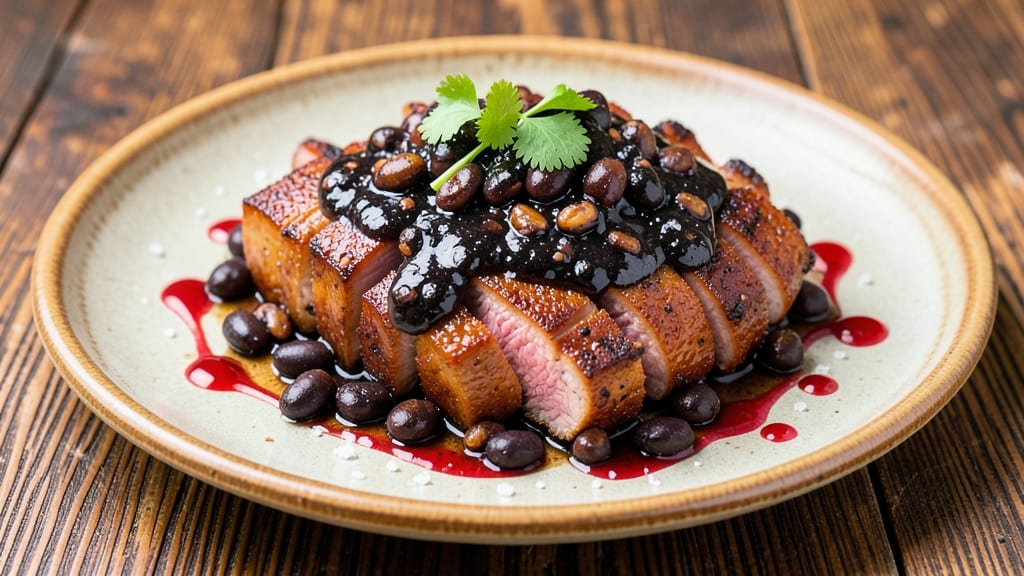
This black bean sauce pork recipe transforms humble ingredients into a restaurant-worthy meal with just one pan and 30 minutes of hands-on time. The secret lies in balancing fermented black beans and soy sauce to create a silky, umami-rich glaze that caramelizes beautifully on tender pork.
I developed this technique after years of perfecting pork dishes for my restaurant, where it became a customer favorite for its perfect balance of sweet, salty, and tangy flavors.
The recipe begins with a quick marinade that tenderizes the pork while building deep flavor, then finishes with a fast stir-fry that locks in juices and develops that signature glossy glaze.
Unlike many Asian-inspired dishes, this version uses accessible ingredients without any hard-to-find specialty items. The pork stays succulent while developing a crisp exterior, and the sauce clings perfectly to each bite.
What you'll end up with is a dish that's rich yet balanced—sweet from the caramelized sauce, savory from the pork, and complex from the fermented beans. The texture is where it truly shines: tender pork with a glossy, slightly sticky glaze that's neither too sweet nor too salty.
This is the kind of meal that transforms a simple weeknight dinner into something special without requiring hours in the kitchen.
Serve it over steamed jasmine rice to soak up every bit of that silky sauce, or pair with quick-pickled vegetables for brightness. The leftovers reheat beautifully, making this an ideal recipe for meal prep. Let's get cooking—this pork dish will become your new go-to for impressing guests or treating yourself.
Ingredients for black bean sauce pork
Restaurant-quality umami comes from just fifteen accessible ingredients—no shortcuts needed.
| Ingredient | Amount | Notes |
|---|---|---|
| Boneless Pork Loin 🥩 | 1 ½ lb | Cut into 1-inch cubes for even cooking |
| Fermented Black Beans 🫘 | 1 cup | Rinse well before using |
| Light Soy Sauce 🥄 | ½ cup | Kikkoman preferred for balance |
| Dark Soy Sauce 🥄 | 1 tbsp | For deeper color and complexity |
| Honey 🍯 | 2 tbsp | Local raw honey for floral notes |
| Rice Vinegar 🍶 | 1 tbsp | Seasoned preferred for added depth |
| Sesame Oil 🫒 | 1 tbsp | Toasted for nutty aroma |
| Garlic Cloves 🧄 | 4 cloves | Minced for aromatic base |
| Fresh Ginger 🧅 | 1 tbsp | Finely grated, organic preferred |
| Neutral Oil 🫒 | 2 tbsp | Avocado or vegetable oil |
| Cornstarch 🌾 | 1 tbsp | For sauce thickening |
| Water 💧 | 2 tbsp | Room temperature for slurry |
| Green Onions 🧅 | 3 whole | Sliced for garnish |
| Sesame Seeds 🌾 | 1 tsp | Toasted for garnish |
| Diamond Crystal Kosher Salt 🧂 | 1 tsp | For seasoning |
The fermented black beans are the flavor foundation—look for the salty, funky kind in Asian markets or the canned variety at Trader Joe's. Rinse them well to remove excess salt before using. Pork loin is ideal for this dish; its leaner cut takes the sauce beautifully. If you can't find boneless pork loin, pork tenderloin works too, but trim any visible fat to avoid excess grease. For the soy sauces, Kikkoman light and Lee Kum Kee dark are my go-to brands—they strike the perfect balance of saltiness and depth. Fresh ginger and garlic are non-negotiable here; frozen won't cut it for this recipe's delicate flavors.
No fermented black beans? Substitute 1 cup of black soybeans (soaked overnight) or a mix of 1/2 cup black beans and 1/2 cup regular soybeans. Running low on honey? Maple syrup works 1:1, though it adds a distinct caramel note. The sesame oil is purely for aroma—use sparingly, as it can overpower if added generously. For the cornstarch slurry, make sure it's smooth to prevent lumps in your sauce. If you're watching sugar, reduce the honey to 1 tbsp and add 1 tbsp of erythritol for a similar texture without the sweetness. The green onions should be fresh—dried won't provide the same bright finish.
This dish reheats beautifully—3-4 days in the fridge or 3 months frozen. For best results, store the pork and sauce separately to maintain texture. When reheating, add a splash of water to the sauce and warm gently over low heat. The sauce thickens as it cools, so if it seems too thick when reheating, thin it with a teaspoon of water. Portion into meal prep containers with rice for easy grab-and-go lunches. Garnish with toasted sesame seeds just before serving to keep them crisp.
Why You'll Love This Recipe
- Sweet-Savory Magic: The fermented black beans and honey balance that deep soy umami like nothing else—rich, tangy, and just a little sticky. That first bite? It’s the kind of flavor that makes you pause mid-chew and think, I need more of this.
- One-Pan Wonder: Slice the pork, toss it in the sauce, and let it simmer—no chopping mountains of veggies or dealing with multiple pans. Honestly, I’ve made this on a weeknight with one hand while stirring a pot of rice. (Yes, even on a Tuesday night.)
- Leftover Goldmine: This sauce clings to the pork like glue, so leftovers reheat beautifully—better than takeout, even. I’ve packed it in lunches for days, and it’s still the star of my meal prep rotation. (My coworker asked for the recipe after one bite.)
- Budget-Friendly Luxury: Fermented black beans stretch the pork further than most cuts, and a little honey goes a long way. Between us, this is the kind of dish that feels fancy but won’t break the bank—especially when you’re feeding a crowd or just treating yourself.
Step-by-step instructions for black bean sauce pork with silky glaze
A perfect balance of sweet, savory, and umami unfolds in this one-pan technique.
Prep and Sear the Pork for Maximum Flavor
Cut the 1.5 lb boneless pork loin into 1-inch cubes—uniform size ensures even cooking. In a large skillet, heat 2 tablespoons neutral oil over medium-high heat until shimmering. Add the pork in a single layer and let it sear undisturbed for 3-4 minutes until deep golden brown on all sides. This initial sear locks in juices and builds a flavorful crust.
Resist the urge to crowd the pan—cook in batches if needed. Once browned, transfer the pork to a plate and set aside. The residual heat will carry through the cooking process, ensuring tender results without overcooking. This step is non-negotiable for developing that caramelized foundation.
Build the Umami-Packed Black Bean Sauce
In the same skillet (no need to clean it—the browned bits are flavor gold), add 1 tablespoon neutral oil and reduce heat to medium. Add 4 minced garlic cloves and 1 tablespoon finely grated fresh ginger, cooking for 30 seconds until fragrant—just until the raw aroma gives way to a warm, spicy scent. Add 1 cup rinsed fermented black beans and cook for 2 minutes to soften slightly.
Pour in 0.5 cup light soy sauce, 1 tablespoon dark soy sauce, and 1 tablespoon rice vinegar, stirring to combine. The dark soy sauce will deepen the color while adding complexity. Let the mixture simmer for 3 minutes until slightly reduced. This step transforms simple ingredients into a rich, flavorful base that will coat every bite of pork.
Create the Silky Glaze with Honey and Cornstarch
In a small bowl, whisk together 2 tablespoons honey, 1 tablespoon sesame oil, 1 tablespoon cornstarch, and 2 tablespoons water to create a smooth slurry. Return the pork to the skillet and pour the slurry over everything, stirring gently to coat. Increase heat to medium-high and let the sauce bubble vigorously for 3-4 minutes until it thickens to a glossy, syrupy consistency that clings to the pork.
Here's where the magic happens: the cornstarch slurry binds the sauce while the honey adds a delicate sweetness that balances the umami. If the sauce thickens too quickly, add 1 tablespoon water to loosen it. The goal is a sauce that coats the back of a spoon but remains silky, not gluey.
Finish with Aromatics and Garnish
Reduce heat to low and stir in 1 teaspoon Diamond Crystal kosher salt and 1 teaspoon toasted sesame seeds, allowing them to infuse for 1 minute. The sesame seeds add a nutty crunch that contrasts beautifully with the tender pork. Slice 3 whole green onions and sprinkle them over the top just before serving—this keeps them vibrant and adds a fresh, bright finish.
Let the dish rest for 5 minutes before serving. This resting period allows the juices to redistribute, ensuring each bite is moist and flavorful. The pork should be tender yet firm, with a glossy glaze that clings perfectly. Serve immediately over steamed rice or noodles to soak up every last drop of that irresistible sauce.
Pro Tips For Making Black Bean Sauce Pork
- Velvet the Pork First: Score the pork loin in a crosshatch pattern—deep enough to split the surface but not tear the meat. This lets the black bean sauce penetrate like butter, giving you that silky, fall-off-the-bone texture instead of a dry exterior hiding tender goodness.
- Toast the Beans: Dry-fry the fermented black beans in a hot pan for 30 seconds before adding liquid—just until they smell nutty and release their aroma. Skipping this step means your sauce will taste flat, like someone forgot to wake up the flavor.
- Simmer Slow and Low: Once the sauce starts bubbling, drop the heat to the lowest setting you can tolerate and let it cook uncovered. I used to rush this, and the sauce would turn gluey. Patience here turns the honey into a glossy sheen instead of a sticky mess.
- Balance the Soy Sauces: Use twice as much light soy sauce as dark—about 2 tablespoons light to 1 tablespoon dark—for brightness. Dark soy adds color, not depth, and too much makes the dish taste like it’s been sitting in a cupboard for a month. Trust the ratio.
Perfect pairings for black bean sauce pork
Rice Pairings
Steamed jasmine rice is my go-to base for this dish—its delicate floral aroma complements the umami sauce without overpowering it. Cook 1 cup jasmine rice with 1.5 cups water for perfectly fluffy grains that soak up every drop of the silky glaze.
For extra richness, I sometimes add ½ teaspoon toasted sesame oil to the cooking water. 🍚
If you prefer heartier grains, try short-grain sushi rice—its sticky texture makes it ideal for rolling up the pork and sauce into bite-sized onigiri-style balls. Just
Vegetable Sides
Quick-pickled cucumbers and carrots add a refreshing tang that cuts through the richness. Toss 1 cup thinly sliced cucumbers and 1 cup julienned carrots with 2 tbsp rice vinegar, 1 tsp sugar, and ½ tsp red pepper flakes. Let sit for 20 minutes before serving—this brightens the plate beautifully. 🥒
For a heartier option, sauté bok choy in 1 tbsp sesame oil with 2 minced garlic cloves for 3 minutes until just tender. The slight bitterness balances the sweet-savory pork perfectly. I often serve this alongside the rice for a complete, balanced meal.
Noodle Alternatives
Wide udon noodles are a fantastic substitute for rice—they're sturdy enough to hold up to the rich sauce while providing a satisfying chew. Cook 8 oz dried udon according to package instructions, then toss with 1 tbsp toasted sesame oil before serving.
The noodles absorb the sauce beautifully, creating a comforting one-bowl meal. 🍜
For a lighter option, try rice noodles (like vermicelli) with a cucumber-mint salad on the side. The cool, crisp textures contrast perfectly with the warm, sticky pork. Simply cook the noodles, drain, and toss with ½ cup chopped mint and 1 tbsp lime juice before serving.
Beverage Pairings
A crisp green tea like Sencha cleanses the palate between bites, highlighting the dish's umami depth. I recommend serving it slightly chilled to balance the warmth of the pork. For a non-tea option, a dry Riesling with its bright acidity complements the sweet-savory sauce beautifully. 🍷
If you prefer beer, a Japanese lager like Asahi Super Dry provides a clean, refreshing contrast. The subtle hop bitterness helps reset your taste buds between rich, flavorful bites. Avoid heavy ales or stouts—they'll overpower the delicate balance of this dish.
Nutrition facts
Frequently asked questions
Can I substitute regular black beans for fermented black beans?
Yes, but with adjustments! Use 1 cup cooked black beans (not canned) and add ½ teaspoon fish sauce or 1 teaspoon soy sauce extra to mimic fermented beans' funky depth. The texture will be softer, but the umami will still shine. For best results, simmer the beans with 1 clove minced garlic and ½ teaspoon ginger for 5 minutes before adding to the sauce.
Why did my sauce turn out too thick or gluey?
This usually happens from overcooking the cornstarch slurry. The sauce should thicken in 3-4 minutes—if it reduces too quickly, add 1 tablespoon water immediately. For prevention, whisk the cornstarch slurry vigorously and remove the skillet from heat for 30 seconds if it starts bubbling too fast. The goal is a glossy, coat-the-back-of-a-spoon consistency, not a paste.
Can I make this recipe with ground pork instead of pork loin?
Ground pork works beautifully—just use 1 lb and form it into walnut-sized patties before searing. Cook them for 2-3 minutes per side until browned, then proceed with the sauce as written. The smaller pieces absorb the sauce faster, so add 1 extra tablespoon water to the sauce if needed. For extra richness, stir in 1 teaspoon toasted sesame oil at the end.
How do I store leftovers to keep the pork tender?
Store the pork and sauce separately in airtight containers—this prevents the sauce from making the pork soggy. Reheat the sauce alone first, then add the pork to warm through (2-3 minutes on low heat). For extra tenderness, add 1 teaspoon water or broth to the sauce when reheating. Leftovers keep for 4 days refrigerated or 3 months frozen.
What’s the secret to getting that glossy glaze?
The gloss comes from three key steps: 1) searing the pork for a Maillard crust, 2) using honey + cornstarch slurry (the honey caramelizes while the cornstarch binds), and 3) finishing with sesame oil for shine. For extra sheen, add ½ teaspoon water to the sauce after removing from heat—this creates a steam effect that makes the glaze sparkle.