
Sauces & Condiments
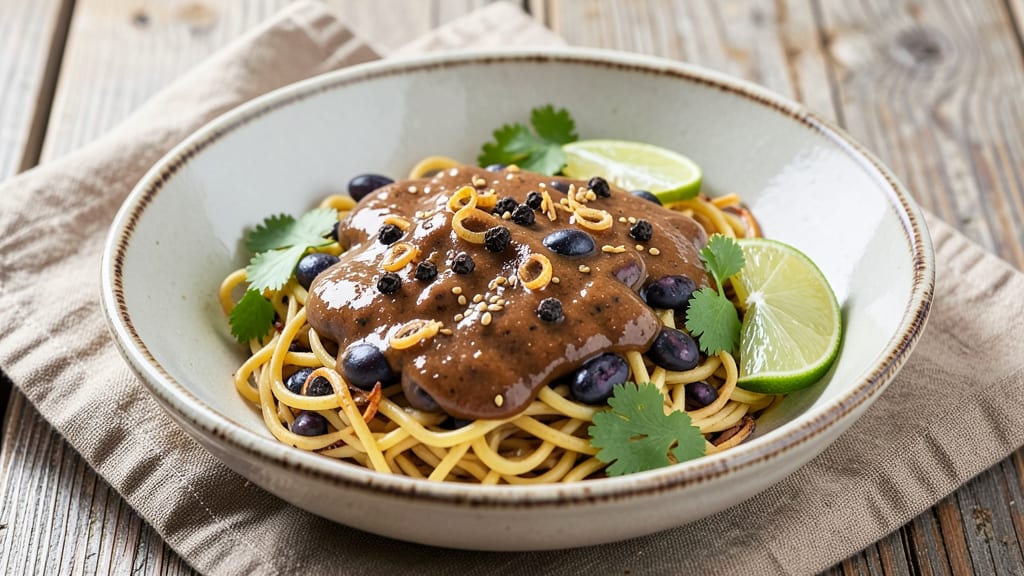
This one-pot black bean noodles sauce transforms simple pantry staples into a velvety, umami-packed condiment that elevates any dish. The secret lies in blending cooked black beans with aromatic garlic, ginger, and soy sauce, then simmering until thick and flavorful—no fancy ingredients required.
I developed this recipe during a particularly busy week when I needed a quick, plant-based sauce that could stretch across multiple meals without sacrificing depth.
The beauty of this sauce is its versatility and simplicity. With just 10 minutes of active prep and 20 minutes of simmering, you’ll create a rich, slightly sweet-savory sauce that’s perfect for tossing with noodles, drizzling over roasted vegetables, or even using as a marinade.
The black beans add natural creaminess and protein, while the soy sauce and umami-rich broth deepen the flavor profile, making it a pantry powerhouse.
What sets this sauce apart is its ability to deliver restaurant-quality depth without requiring specialty ingredients. The blend of garlic, ginger, and a touch of chili flakes creates a complex, balanced flavor that’s both comforting and exciting.
Once simmered to perfection, the sauce thickens slightly, coating ingredients in a glossy, cohesive layer that’s impossible to resist.
Store it in the fridge for up to 5 days or freeze for longer shelf life—this sauce keeps giving, whether you’re meal prepping for the week or craving a quick flavor boost. Let’s make it.
Ingredients for black bean noodles sauce
Ten pantry staples create a velvety, umami-rich sauce that transforms any dish with restaurant-quality depth.
| Ingredient | Amount | Notes |
|---|---|---|
| Cooked Black Beans 🫘 | 1 ½ cups | Drained and rinsed thoroughly |
| Garlic Cloves 🧄 | 4 cloves | Minced for aromatic depth |
| Fresh Ginger 🌿 | 1 tbsp | Finely grated, aromatic |
| Low-Sodium Soy Sauce 🍶 | ½ cup | For umami foundation |
| Vegetable Broth 💧 | 1 cup | Low-sodium preferred |
| Lime Juice 🍋 | 2 tbsp | Freshly squeezed |
| Maple Syrup 🍯 | 1 tbsp | For subtle sweetness |
| Chili Flakes 🔥 | ½ tsp | Adjust for heat preference |
| Extra-Virgin Olive Oil 🫒 | 1 tbsp | For glossy finish |
| Cumin Seeds 🌿 | ½ tsp | Toasted for depth |
The black beans are the sauce's heart—canned BPA-free brands like Eden or drys soaked overnight both work. Garlic and ginger should be freshly minced for maximum aromatic impact; pre-minced jarred versions lack complexity. Soy sauce quality matters: Kikkoman or Tamari provide the cleanest umami foundation. For the broth, Pacific Foods or Imagine low-sodium options prevent over-salting. Toast the cumin seeds in a dry pan for 30 seconds before adding—their nutty aroma becomes the sauce's secret weapon.
No fresh ginger? Ground ginger at half the amount works in a pinch, though texture differs. Substitute maple syrup with agave nectar or coconut sugar for similar sweetness. Vegetable broth unavailable? Water plus 1 tsp miso paste delivers umami depth. Chili flakes can be swapped for fresh jalapeño minced (reduce to 0.25 tsp). For extra richness, stir in 1 tbsp tahini at the end—it adds creaminess without dairy.
This sauce thickens as it cools, so stir in 1-2 tbsp water if too viscous. Store in a sealed glass jar in the fridge for 5 days or freeze in ice cube trays for 3 months. The sauce's natural thickening makes it perfect for meal prep—simply reheat with a splash of water. For best flavor, let it sit at room temperature for 10 minutes before serving to allow aromas to meld fully.
Why You'll Love This Recipe
- Pantry to Plate: I swear by this sauce when I’m staring into my fridge at 6:30 PM wondering what to eat. Cooked black beans? Already there. Garlic and ginger? I keep a jar of each. Soy sauce and broth? Open a cabinet, grab, done. No shopping lists, no stress—just stir, simmer, serve.
- Umami Bomb: That first spoonful of blended black beans, garlic, and ginger? It’s like a flavor explosion in your mouth. The soy sauce ties it all together with this deep, savory punch, and the broth keeps it rich without being heavy. Honestly, I’ve made it for friends who aren’t huge fans of beans, and they’ve come back for seconds.
- Lunchbox Hero: Between us, this sauce is my go-to for meal prep. Toss it with noodles, pack it in containers, and boom—you’ve got a lunch that’s got protein, flavor, and zero sad desk lunches. I’ll even add a fried egg on top for my husband, and it still holds up for days. (Yes, even on a Tuesday.)
- Budget Magic: I make this sauce at least once a week because it’s my wallet’s best friend. Black beans are cheap, soy sauce lasts forever, and I buy ginger in bulk. A single batch stretches to three meals, and the leftovers? Even better the next day. It’s the kind of recipe that makes me feel like I’m feeding a crowd without breaking the bank.
Step-by-step instructions for black bean noodles sauce
This one-pot sauce delivers deep umami flavor with minimal prep—perfect for busy weeknights.
Toast Cumin Seeds and Aromatics
Heat the 1 tablespoon extra-virgin olive oil in a large skillet or saucepan over medium heat until shimmering. Add the 0.5 teaspoon cumin seeds and toast for 30 seconds until fragrant and lightly golden. This releases their nutty aroma and prevents bitterness.
Immediately add the 4 cloves minced garlic and 1 tablespoon finely grated ginger. Cook for 1-2 minutes until the garlic turns translucent and the mixture smells intensely aromatic. Watch carefully—ginger burns quickly, so keep the heat at medium-low if needed. The base flavor here forms the foundation of your sauce, so don't rush this step.
Build the Sauce Base
Pour in the 0.5 cup low-sodium soy sauce and 1 cup vegetable broth, scraping up any browned bits from the bottom of the pan. This deglazing captures all the flavor you've built. Bring to a gentle simmer over medium heat and let it cook for 5 minutes until slightly reduced by about 25%.
Stir in the 1.5 cups cooked black beans, breaking them up with a wooden spoon. The beans will release starch as they heat, which naturally thickens the sauce. Add the 1 tablespoon maple syrup and 0.5 teaspoon chili flakes, then simmer for another 3 minutes until the mixture becomes slightly syrupy and coats the back of a spoon.
Finish with Bright Acid and Balance
Reduce heat to low and stir in the 2 tablespoons lime juice. The acidity brightens all the flavors and cuts through the richness. Taste and adjust seasoning—you may need a pinch more salt if your broth was particularly mild. The sauce should have a complex balance of sweet, salty, umami, and just a touch of heat.
Let the sauce sit off heat for 2-3 minutes to thicken slightly. This resting period allows the flavors to meld completely. If you're serving over noodles, add them now and toss to coat evenly. The sauce should cling beautifully to each strand, creating a rich, cohesive dish with every bite.
Serve Immediately for Maximum Flavor
Transfer the sauce to a serving bowl or directly over cooked noodles. Garnish with additional chili flakes if you prefer more heat or a sprinkle of fresh cilantro for brightness. Serve while warm—the sauce continues to develop flavor as it cools, but the texture will thicken noticeably after 10 minutes.
This one-pot sauce delivers restaurant-quality depth with pantry staples. The key lies in proper layering of flavors—starting with toasted spices, building umami through soy and beans, then brightening with acid. Each element plays its part in creating a harmonious, complex sauce that elevates simple noodles to something extraordinary.
Pro Tips For Making Black Bean Noodles Sauce
- Sear the Garlic Fast: Toss minced garlic into the hot pan right after you add the ginger—it’ll cook in 10 seconds flat instead of burning. I used to wait, and the whole sauce would taste bitter. High heat, then stir like you’re flipping pancakes.
- Mash Half the Beans: Rough up half the cooked black beans with a fork before adding them to the sauce. This releases starch and thickens the broth naturally—no cornstarch needed. (Yes, even if they’re not perfectly mushy.)
- Simmer, Don’t Boil: Once the soy sauce and broth hit the pan, drop the heat to medium-low and let it bubble gently. I learned this after watching my sauce turn cloudy and lose depth. A slow simmer keeps the flavors rich and the texture smooth.
- Toast the Ginger First: Fry the ginger slices in the dry pan for 30 seconds before adding garlic—it deepens the flavor and prevents that raw, medicinal bite. Sounds weird, but it works. (Your nose will thank you.)
Make-ahead tips for this recipe
Sauce Prep Timeline
This sauce is designed for meal prep efficiency. Start by toasting the cumin seeds and aromatics while your noodles cook—it takes just 3 minutes and sets the flavor foundation. While the sauce simmers (8 minutes total), use that time to prep your sides or garnishes.
The entire process fits into a 20-minute window, making it ideal for weeknight cooking. 🌟
Freezer-Friendly Portions
Divide the cooled sauce into 1-cup portions in silicone ice cube molds or small glass jars. Freeze solid, then transfer cubes to a ziplock bag for easy grab-and-thaw portions. When ready to use, thaw overnight in the fridge or microwave for 30 seconds.
The texture remains velvety after freezing—just stir in 1 tbsp water if too thick upon reheating.
Fridge Storage Secrets
Store in an airtight glass jar with the lid slightly loose for 24 hours to let flavors meld. After that, seal tightly and refrigerate for up to 5 days. The sauce thickens as it cools, so stir in 1-2 tbsp water before reheating.
For best results, let it sit at room temperature for 10 minutes before serving—this allows the aromas to fully develop. ❄️
Reheating for Best Texture
For stovetop reheating, warm over low heat with 2 tbsp water or broth—this prevents scorching and restores the glossy texture. If using the microwave, heat in 30-second intervals, stirring between each, until reaching 165°F.
The sauce should be warm through but not boiling—this preserves its natural thickening properties. Always taste and adjust seasoning after reheating.
Sauce Versatility Tips
This sauce doubles as a marinade for tofu or grilled veggies—simply brush on and grill for 10 minutes. It also works as a dipping sauce for spring rolls or dumplings.
For extra richness, stir in 1 tbsp tahini after reheating. The natural thickening makes it perfect for batch cooking—just reheat portions as needed throughout the week.
Flavor Boost Hacks
Need more depth? Add 1 tsp miso paste during simmering or finish with ½ tsp smoked paprika for a smoky note. For freshness, top with cilantro or green onions right before serving.
The sauce's natural sweetness also pairs well with crispy fried shallots for a gourmet touch. Keep these shortcuts handy for instant flavor upgrades! 💡
Nutrition facts
Frequently asked questions
Can I make this sauce without fresh garlic or ginger?
Yes! For garlic, use 1 teaspoon garlic powder instead of fresh. For ginger, substitute with ½ teaspoon ground ginger, though the texture will differ slightly. The sauce will still taste great, but freshly grated ginger and minced garlic provide the best aromatic depth.
How can I adjust the heat level in this sauce?
Start with the 0.5 teaspoon chili flakes as written, then adjust to taste. For more heat, add an extra ¼ teaspoon chili flakes or ½ teaspoon cayenne pepper. If you prefer a milder sauce, simply omit the chili flakes entirely. The lime juice also helps balance any spiciness, so don't be afraid to add a little extra if needed.
Can I use canned black beans directly from the can?
Just drain and rinse them thoroughly to remove excess sodium. The sauce will still thicken beautifully from the beans' natural starch. For extra flavor, consider using low-sodium canned beans to avoid over-salting. The texture remains creamy whether you use canned or cooked dried beans.
What's the best way to store leftover sauce?
Transfer to an airtight glass container and refrigerate for up to 5 days. The sauce thickens as it cools, so stir in 1-2 tablespoons water before reheating. For longer storage, freeze in 1-cup portions for up to 3 months. Thaw overnight in the fridge or microwave for 30 seconds to preserve texture.
Can I make this sauce in a slow cooker?
Yes! Combine all ingredients in your slow cooker and cook on low for 2-3 hours, stirring occasionally. The sauce will thicken more than the stovetop version, so reduce the broth by ¼ cup if you prefer a looser consistency. The slow cooker method is perfect for hands-off prep during busy days.