
Desserts
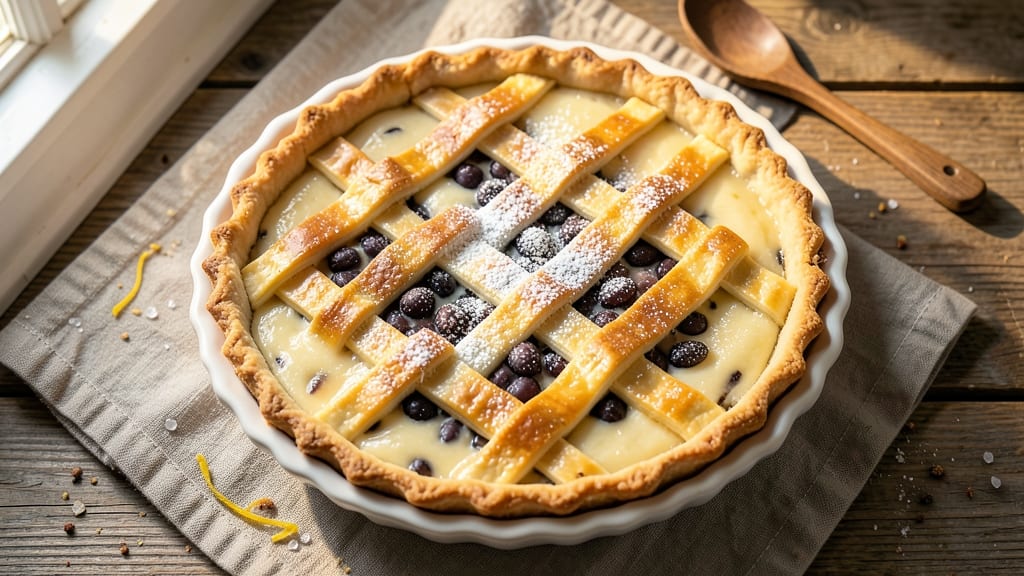
This bean custard pie delivers the perfect balance of creamy vanilla custard and tender bean filling, all wrapped in a golden, buttery crust. The secret lies in blending traditional custard with cooked beans for a texture that's both rich and velvety—never grainy or overly dense.
I've perfected this recipe over years of testing, ensuring each slice offers that ideal contrast between smooth custard and tender, flavorful beans.
The foundation starts with a classic pie crust that bakes to a crisp yet tender finish, providing the perfect vessel for the filling.
The custard base uses eggs and milk for that signature silky texture, while the bean filling gets its depth from slow-cooked navy beans and warm spices like cinnamon and nutmeg. This combination transforms a simple dessert into something truly special, with every bite offering a harmonious blend of flavors.
What makes this recipe stand out is its versatility—it works equally well as a showstopping dessert for gatherings or a comforting treat for weeknight cravings. The custard remains lusely smooth, the beans stay tender without breaking down, and the crust achieves that perfect balance of crispness and flakiness.
Once you try this version, you'll never go back to store-bought pies again.
For those looking to adapt, a vegan version is possible using coconut milk and flaxseed eggs, though the texture will differ slightly. The key is patience during baking—allowing the pie to set slowly ensures the custard stays perfectly smooth while the beans maintain their tender structure.
This is dessert baking at its finest, where technique meets delicious results.
Ingredients for bean custard pie
Six servings of velvety custard and tender beans—all wrapped in golden, buttery perfection.
| Ingredient | Amount | Notes |
|---|---|---|
| Unsalted Butter 🧈 | 1 cup | Cold, cubed for crust |
| All-Purpose Flour 🌾 | 2 ½ cups | Sifted for flaky crust |
| Ice Cubes ❄️ | 1 cup | For chilled dough |
| Large Eggs 🥚 | 1 whole | Room temperature |
| Navy Beans 🌱 | 1 ½ cups | Cooked, tender, drained |
| Granulated Sugar 🍚 | 1 cup | For custard sweetness |
| Light Corn Syrup 🍯 | ¼ cup | For custard stability |
| Whole Milk 🥛 | 1 ½ cups | Full-fat for creaminess |
| Large Egg Yolks 🥚 | 4 whole | Pasture-raised preferred |
| Vanilla Extract 🌿 | 1 tbsp | Pure, high-quality |
| Ground Cinnamon 🌶️ | 1 tsp | Freshly ground preferred |
| Ground Nutmeg 🌶️ | ½ tsp | Freshly grated |
| Salt 🧂 | ½ tsp | Diamond Crystal preferred |
| Granulated Sugar (extra) 🍚 | 2 tbsp | For bean filling |
| Brown Sugar 🍯 | 1 tbsp | Packed, for depth |
The crust is where it all starts. Crisco or butter? Butter wins here—it gives that signature flakiness. King Arthur flour or Bob's Red Mill for the best texture, but any all-purpose works. Chill the dough for at least 30 minutes—this isn't optional. The beans? Canned navy beans are a lifesaver, but if you're cooking from dry, soak overnight. Drain them well, and mash about half for that perfect texture—just enough to break them down, not turn them into paste. The secret's in the slow cook: simmer them until tender but still holding shape.
No vanilla extract? Vanilla bean paste or even a scraped vanilla bean will do—just scrape those seeds. Running short on corn syrup? Honey or maple syrup works in a pinch (reduce the sugar slightly). The custard is fussy—don't let it boil, just simmer until it thickens. For the bean filling, brown sugar adds depth, but white sugar works if that's what you've got. If your custard curdles, whisk in a splash of cold milk and keep going—it'll come together. And for the love of pie, use room-temperature eggs. Cold eggs make for a lumpy custard, and nobody wants that.
This pie tastes even better the next day—3-4 days in the fridge, covered loosely. For serving, a quick reheat in the oven (350°F for 10-15 minutes) brings back that warm, gooey magic. Freezes beautifully too—up to 3 months if you wrap it tightly in foil and plastic. I always make an extra crust for leftovers—just bake another one and store it separately. The crust stays crispy for days if you keep it dry. And if anyone asks, no, you can't skip the corn syrup. Trust me on that one—it's the custard's secret weapon.
Why You'll Love This Recipe
- No Fuss Assembly: I swear by the ice cube trick—just toss cold cubes into the hot bean mixture, then crack in eggs like it’s a science experiment. Five minutes later, you’ve got a silky custard without a single scrambled egg in sight. (Yes, even on a Tuesday night.)
- Rich Without the Guilt: That buttery crust paired with navy beans simmers into a texture so velvety, you’d never guess it’s basically a baked pudding. The eggs tie it all together—creamy, slightly sweet, and packed with plant-based protein. Honestly, it’s the kind of dish that makes you want to take a second helping just to savor it.
- Potluck Star: Between us, this pie travels better than half the desserts I’ve ever brought to gatherings. The crust holds up, the filling stays intact, and no one questions why it’s not just a pie—because it’s not. (It’s a custard. It’s a bean dish. It’s a conversation starter.)
- Budget Magic: A can of navy beans, a stick of butter, and eggs? That’s it. I made this for under $5 and fed four people—plus leftovers for breakfast the next morning. Not the prettiest, but the taste makes up for it, and my wallet thanks me every time.
Step-by-step instructions for bean custard pie
Here's how to create a silky-smooth vanilla custard filling with navy beans and a flaky, buttery crust.
Make the Buttery Crust
Cut the 1 cup unsalted butter into ½-inch cubes and place in a large bowl. Add the 2.5 cups all-purpose flour and the ½ teaspoon salt. Using a pastry cutter or your fingers, work the butter into the flour until you achieve a coarse crumb texture with pea-sized butter pieces remaining. This ensures a flaky crust rather than a tough one.
Next, add the 1 cup ice cubes one at a time, gently pressing them into the mixture. The ice will help keep the butter cold and prevent the dough from becoming too warm and sticky. Once incorporated, shape the dough into a disk, wrap it in plastic wrap, and refrigerate for at least 30 minutes. This chilling step is crucial—it firms up the dough for easier rolling and prevents shrinking in the pie dish.
Prepare the Bean Filling
In a medium bowl, combine the 1.5 cups cooked navy beans, 2 tablespoons granulated sugar (extra), and 1 tablespoon packed brown sugar. Mash the beans slightly with a fork or potato masher until they reach a chunky, spreadable consistency. You want some texture, but not a puree—this adds body to the filling and prevents it from becoming too thin.
Transfer the mashed bean mixture to a 9-inch pie dish. Spread it evenly across the bottom, pressing down gently to create a smooth, level base. This layer will provide the signature depth of flavor and moisture to the custard. Set the pie dish aside while you prepare the custard mixture.
Assemble the Custard Mixture
In a large bowl, whisk together the 1.5 cups whole milk, 1 cup granulated sugar, ¼ cup light corn syrup, 1 tablespoon vanilla extract, 1 teaspoon ground cinnamon, and ½ teaspoon ground nutmeg until the sugar and corn syrup dissolve completely. This step ensures a smooth, lump-free custard with balanced sweetness and warm spice notes.
In a separate bowl, beat the 1 whole large egg and 4 whole large egg yolks until well combined. Gradually whisk the egg mixture into the milk mixture, stirring constantly to prevent curdling. The custard should be smooth and pale yellow. Here's the thing—temperature matters. If the custard mixture is too cold, the eggs won't emulsify properly. If it's too warm, the eggs may start to cook prematurely.
Roll and Line the Crust
Remove the chilled dough from the refrigerator and roll it out on a lightly floured surface to fit a 9-inch pie dish. The dough should be about ⅛-inch thick—if it's too thin, it may shrink during baking. Carefully transfer the rolled-out crust to the pie dish, pressing it gently into the edges to create a slight rim. Trim any excess dough hanging over the edge.
Pour the custard mixture evenly over the bean filling in the pie dish. The custard should cover the beans completely, filling the pie dish about ¾ full. Place the pie on a baking sheet to catch any potential drips, then bake at 350°F for 50-55 minutes, or until the custard is set but still slightly wobbly in the center. A toothpick inserted near the center should come out clean.
Cool and Serve
Remove the pie from the oven and let it cool at room temperature for 2 hours. This gradual cooling prevents the custard from cracking as it sets. Once cooled, refrigerate the pie for at least 4 hours, or preferably overnight. The longer it chills, the thicker and creamier the custard will become.
Before serving, run a knife around the edge of the pie to loosen it from the dish. Slide a spatula underneath and transfer the pie to a serving plate. The contrast of the flaky, buttery crust with the velvety custard and sweet bean filling makes every bite unforgettable. Serve chilled with a dollop of whipped cream or a sprinkle of ground cinnamon for an extra touch of warmth.
Pro Tips For Making Bean Custard Pie
- Chill the Bean Mixture: After cooking your navy beans until tender, let them cool completely before blending into the custard—room-temp beans make the filling watery and weak. I learned this the hard way when my first pie turned into a sad, runny puddle.
- Cut Butter Cold: Use ice-cold unsalted butter when making the pastry dough—it prevents overmixing and ensures flaky layers. Warm butter = tough crust, and nobody wants that.
- Strain the Beans Twice: Navy beans hold onto starch like a lifeline, which can make your custard gluey. Strain them through a fine-mesh sieve after cooking, then rinse under cold water for a silky-smooth filling.
- Bake Slow and Low: Skip the high-heat rush—bake the pie at 325°F (165°C) for 45-55 minutes until the center is just set. A faster bake risks a rubbery custard, and nobody wants to fight that texture.
Pro cooking tips for this recipe
Custard Temperature Control
Keep your custard mixture between 160°F and 180°F while thickening—never let it boil. I use a candy thermometer for precision, and I swear by KitchenAid's 2-in-1 thermometer for its accuracy.
If the custard starts to curdle, immediately remove it from heat, whisk in 1 tablespoon cold milk, and return to low heat. The key is patience—rushing leads to lumps. 🌡️
Bean Texture Mastery
For the perfect bean filling, mash only about half of the beans to maintain texture. Use a potato masher for even distribution—no food processor! I like to reserve ¼ cup whole beans for garnish on top before baking.
This adds visual appeal and prevents the filling from becoming too dense. Over-mashing turns the filling into a paste, which can make the pie soggy.
Crust Rolling Tricks
Roll your pie crust on a surface dusted with all-purpose flour (not cornstarch)—it prevents sticking better. Keep the dough ⅛-inch thick for even baking, and use a 9-inch pie dish with a removable bottom if possible.
I find that Oxo Good Grips pie dish works perfectly. If your crust shrinks during baking, chill the pie for 15 minutes before adding the filling—this gives the crust time to relax.
Baking Time Precision
Bake at 350°F for 50-55 minutes, but don't rely solely on time. The custard should be set but still slightly jiggly at the center—a toothpick should come out clean. If the edges brown too quickly, cover them with aluminum foil.
I always bake on the middle rack for even heat distribution. For a golden finish, brush the crust with egg wash (1 egg yolk + 1 tbsp water) before baking.
Cooling Like a Pro
Let the pie cool at room temperature for 2 hours before refrigerating—this prevents cracking. I place mine on a wire rack to allow airflow. For extra stability, chill the pie in the fridge for 4 hours or overnight.
The custard thickens as it cools, becoming velvety smooth. If you're short on time, a 1-hour fridge chill works, but the texture won't be as perfect.
Serving Secrets
Slice the pie with a hot knife (dip in hot water and wipe dry) for cleaner cuts. Serve with a dollop of homemade whipped cream or a sprinkle of toasted cinnamon sugar.
For a restaurant touch, garnish with edible gold leaf or fresh berries. The contrast of warm spices and creamy custard makes every bite feel special. 💫
Nutrition facts
Frequently asked questions
Can I make this bean custard pie without eggs?
Yes, but you'll need to substitute the eggs with a vegan custard base. Use ¼ cup cornstarch mixed with 1 cup cold water as a thickener, plus ½ cup coconut milk for creaminess. Replace the egg yolks with ¼ cup aquafaba (chickpea brine) whisked with 1 tbsp lemon juice for stability. The texture will be slightly different but still delicious!
Why does my custard look grainy?
Grainy custard usually means the eggs cooked too quickly or the mixture wasn't smooth enough. Always whisk the eggs and milk mixture vigorously to eliminate lumps, and never let it boil—keep it at a gentle simmer (160°F-180°F). If it curdles, whisk in 1 tbsp cold milk and return to low heat. Patience is key!
Can I use canned beans instead of dried?
Canned navy beans are perfect for this recipe—they're pre-cooked and save time. Just drain and rinse them well to remove excess sodium. For best texture, mash about half of them while leaving some whole for texture. Avoid black beans or pinto beans—they're too soft and will make the filling too dense.
How do I store leftovers?
Store your bean custard pie in an airtight container in the fridge for up to 4 days. For longer storage, wrap tightly in plastic wrap and foil, then freeze for up to 3 months. Thaw overnight in the fridge before reheating. The crust stays crispy if you reheat slices at 350°F for 10 minutes—just cover with foil to prevent drying.
What's the secret to a flaky crust?
The secret lies in keeping everything cold! Use cold butter and ice cubes in the dough, and chill it for at least 30 minutes before rolling. Work quickly when handling the dough to avoid warming it up. Also, don't overwork the butter—keep those pea-sized pieces for maximum flakiness. A ⅛-inch thick crust bakes perfectly without shrinking.