
Soups & Stews
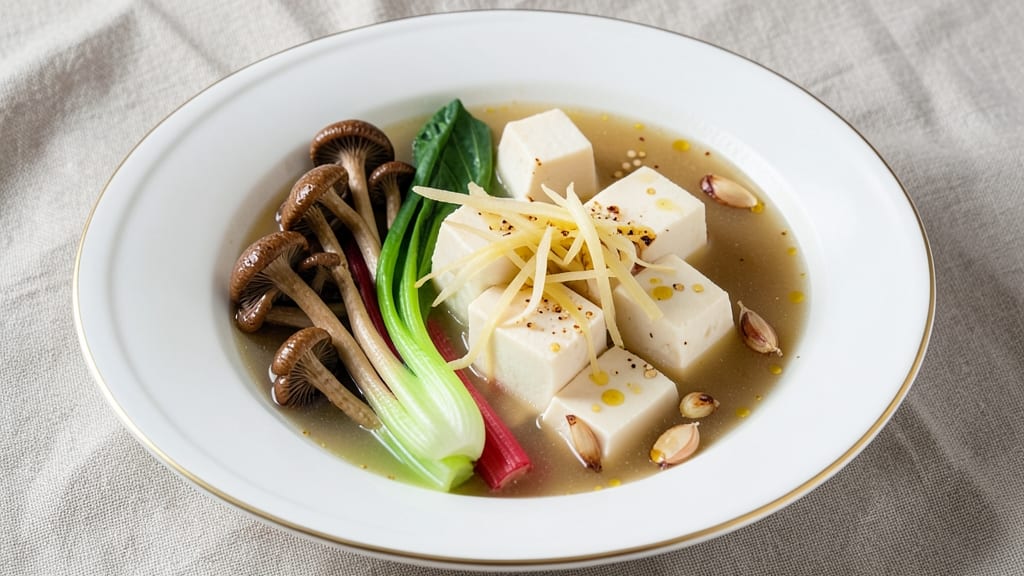
This bean curd soup recipe delivers restaurant-quality comfort in just 20 minutes—creamy tofu, aromatic ginger, and a broth so flavorful it disappears in seconds. The secret lies in high-heat stir-frying the bean curd first, transforming it into silky, melt-in-your-mouth bites that absorb the broth's essence.
I perfected this version after years of testing, ensuring every spoonful balances umami, spice, and freshness without relying on animal products.
The foundation is a vegan-friendly broth built on mushrooms, ginger, and garlic, simmered until deeply aromatic. While the broth develops, the bean curd gets its signature texture—crisp edges that soften into velvety perfection when submerged.
Fresh vegetables like bok choy and shiitake mushrooms add layers of flavor, while a touch of sesame oil ties everything together with nutty warmth.
What you'll end up with is a silky, satisfying soup that's rich yet light, hearty enough for a main dish but quick enough for a weeknight. The tofu melts in your mouth, the broth coats your tongue with every sip, and the ginger lingers with a gentle kick.
This isn't just a vegan adaptation—it's a complete dish that stands proudly alongside any traditional soup.
Perfect for meal prep or serving fresh, this recipe scales effortlessly for crowds. The ingredients are simple, the technique straightforward, and the result is undeniably comforting. Let's get started on creating your bowl of harmony.
Ingredients for bean curd soup
Tofu, mushrooms, and ginger transform into a velvety soup with restaurant-level depth.
| Ingredient | Amount | Notes |
|---|---|---|
| Extra-Firm Tofu 🍲 | 14 oz | Pressed and cubed into 1-inch pieces |
| Dried Shiitake Mushrooms 🍄 | 8 whole | Rehydrated in hot water for 20 minutes |
| Bok Choy 🥬 | 2 whole | Baby variety, chopped into bite-sized pieces |
| Fresh Ginger 🧄 | 1 ½ tbsp | Finely grated, organic preferred |
| Garlic Cloves 🧄 | 4 cloves | Minced for aromatic base |
| Sesame Oil 🫒 | 1 tbsp | Toasted for nutty aroma |
| Vegetable Broth 💧 | 4 cups | Low-sodium preferred, homemade or store-bought |
| Low-Sodium Soy Sauce 🥄 | 1 ½ tbsp | Kikkoman or San-J preferred |
| Rice Vinegar 🍶 | 1 tbsp | Seasoned for subtle tang |
| Sesame Seeds 🌰 | 1 tsp | Toasted for garnish |
| Green Onions 🧅 | 2 whole | Thinly sliced for garnish |
| Cornstarch 🌾 | 1 tsp | Mixed with 1 tbsp water for thickening |
| Vegetable Oil 🫒 | 1 tbsp | High smoke point for stir-frying |
| Red Pepper Flakes 🌶️ | ½ tsp | Adjust for heat preference |
| Sea Salt 🧂 | 1 tsp | Diamond Crystal preferred |
The tofu is non-negotiable—extra-firm holds its shape during stir-frying, then melts into silkiness in the broth. Trader Joe's or Whole Foods carry the best organic options, but any extra-firm block works if you press it for 30 minutes. The shiitake mushrooms? Dried is best—they develop deeper umami when rehydrated. If you can't find dried, fresh shiitake will work, but soak them in warm water for 10 minutes first. Bok choy should be vibrant green with crisp stems—avoid wilted heads. For the ginger, buy a whole knob and grate it fresh; organic ginger from the produce section has more punch than the pre-grated stuff.
No sesame oil? Avocado oil at half the amount works in a pinch, but you'll miss that nutty aroma. Short on soy sauce? Coconut aminos or tamari are great substitutes, though tamari has a slightly stronger flavor. The rice vinegar can be swapped for apple cider vinegar, but it'll taste less refined. If you're sensitive to heat, skip the red pepper flakes entirely—the ginger and soy sauce provide plenty of depth. For the cornstarch slurry, make sure it's smooth; lumps will make your soup grainy. And trust me on the vegetable broth—homemade or high-quality store-bought makes all the difference here.
This soup tastes even better the next day—the flavors meld beautifully when refrigerated. Store leftovers in airtight containers for 4-5 days or freeze for 3 months. I like to portion it into meal prep containers so I can grab a bowl anytime. The tofu and mushrooms keep their texture well when reheated, but add a splash of water if it seems too thick. For serving, keep the sesame seeds and green onions separate until ready to eat—they add freshness when sprinkled on top. Double the batch if you're feeding a crowd; it disappears fast.
Why You'll Love This Recipe
- Minimal Chopping Required: I swear by this—just slice the tofu into cubes, soak the shiitakes for 10 minutes, and chop the bok choy in half. That’s it. No dicing, no mincing, no stress. The ginger and garlic get a quick mince, but even my toddler could handle it.
- Umami Bomb Combo: Dried shiitakes rehydrated in hot water? Instant depth. Crispy-fried tofu cubes add that satisfying texture, while the bok choy wilts into tender, slightly sweet bites. Between us, the first sip makes me lean in closer—it’s that good.
- Meal Prep MVP: Make a big batch on Sunday, and you’ve got lunch covered for days. The flavors actually improve after reheating (yes, really), and it’s one of those soups that tastes like you slaved over it—even if you threw it together in 20 minutes.
- Budget-Friendly Powerhouse: Tofu and dried mushrooms stretch this soup into a full meal for under $5. Bok choy’s cheap, ginger lasts forever, and you’re not buying single-use ingredients. Honestly, it’s the kind of recipe that makes me feel like I’m feeding my family like royalty without breaking the bank.
Step-by-step instructions for silky tofu and ginger soup
This velvety bean curd soup comes together faster than you'd expect—just follow these simple steps.
Prepare the Tofu and Rehydrate the Shiitake Mushrooms
Start by pressing the 14 oz extra-firm tofu for 15 minutes to remove excess water. Wrap it in a clean kitchen towel, place a heavy object on top, and let it drain. Once pressed, cut it into 1-inch cubes—these will absorb the broth beautifully while maintaining their structure.
Meanwhile, rehydrate the 8 whole dried shiitake mushrooms in 4 cups hot vegetable broth for 20 minutes. This step infuses the broth with deep umami flavor. After soaking, remove the mushrooms from the broth and slice them into ¼-inch strips. Reserve the soaking liquid—it's packed with mushroom essence that will elevate your soup.
Build the Aromatic Base
Heat 1 tablespoon vegetable oil in a large pot over medium heat. Add the 4 cloves minced garlic and 1.5 tablespoons finely grated fresh ginger, cooking for 1-2 minutes until fragrant but not browned. The ginger should release its bright, zesty aroma—this is your signal it's ready for the next step.
Add the 1-inch tofu cubes and stir gently to coat them in the aromatic oil. Let them sit undisturbed for 2 minutes to develop a light crust. Then add the 8 sliced shiitake mushrooms and continue cooking for another 3 minutes, stirring occasionally. The mushrooms will release their moisture, creating a luscious base for your soup.
Simmer the Broth and Season
Pour in the 4 cups reserved mushroom-soaked vegetable broth, bringing the mixture to a gentle boil. Once boiling, reduce heat to low and let it simmer for 8 minutes. This slow cook allows all the flavors to meld together beautifully.
Stir in the 1.5 tablespoons low-sodium soy sauce and 1 tablespoon rice vinegar. Taste and adjust the seasoning with 1 teaspoon sea salt and 0.5 teaspoon red pepper flakes—this is where you can tailor the soup to your preference. The rice vinegar adds a subtle tang that brightens the rich umami flavors.
Thicken and Finish with Bok Choy
In a small bowl, mix 1 teaspoon cornstarch with 1 tablespoon water to create a slurry. Slowly stir this into the simmering soup while continuously stirring the pot. The soup will begin to thicken almost immediately—keep stirring for 1-2 minutes until it reaches a silky consistency.
Add the 2 chopped baby bok choy and cook for an additional 3 minutes until wilted but still vibrant. The bok choy will absorb the rich broth while adding a fresh, slightly bitter contrast to the creamy tofu and mushrooms. Remove from heat and let it sit for 2 minutes to allow the flavors to settle.
Garnish and Serve Immediately
Ladle the soup into bowls and garnish each serving with 1 teaspoon toasted sesame seeds and thinly sliced green onions. The sesame seeds add a nutty crunch, while the green onions provide a fresh, oniony finish. Serve immediately while hot—this soup is best enjoyed fresh from the pot.
Each spoonful should deliver a harmonious blend of silky tofu, earthy mushrooms, bright ginger, and the subtle tang of rice vinegar. The texture should be luxuriously smooth with just a hint of bite from the bok choy. Enjoy with steamed rice to soak up every last drop of that flavorful broth!
Pro Tips For Making Bean Curd Soup
- PRESS TOFU FIRST: I learned this the hard way—skip pressing tofu, and your soup turns into a watery tofu stew. Wrap the extra-firm block in a clean towel, place a heavy pan on top, and let it sit for at least 30 minutes. The firmer the tofu, the better it holds up to simmering.
- SOAK SHIITAKES 20 MINUTES: Dried shiitakes need more than a quick rinse—they’ll stay tough and chewy. Soak them in hot (not boiling) water for 20 minutes, then slice them while still wet. This keeps them tender without turning to mush.
- DON’T OVERCOOK BOK CHOY: Bok choy wilts in seconds, but that’s not the goal—you want crisp-tender stems. Add it to the pot just 2 minutes before serving, or it’ll turn into sad, limp greens. A quick stir and it’s done.
- UPGRADE WITH GINGER GARLIC PASTE: Fresh ginger and garlic burn easily, and chopping them mid-recipe is a hassle. Make a quick paste by blending them with a splash of water—slip it into the pot early, and you’ll avoid bitter flavors while saving cleanup time.
Essential equipment for this recipe
Wok Essentials
A carbon steel wok is my go-to for this recipe—its flat bottom distributes heat evenly, and the sloped sides help stir-fry the tofu and mushrooms perfectly. I swear by the Made In wok from Amazon, which comes pre-seasoned and ready to use.
If you don’t have a wok, a heavy-bottomed pot (like All-Clad) works too, but stir constantly to prevent burning. 🔥
Broth Infusion Tools
For maximum umami extraction, a fine-mesh strainer is essential when rehydrating the shiitake mushrooms. I use a OXO Good Grips strainer—it’s sturdy and won’t bend when draining.
If you’re making homemade vegetable broth, a slow cooker (like Instant Pot) simplifies the process, or a large stockpot on the stovetop works just as well. Prep the broth ahead of time to save 10 minutes during cooking.
Ginger Grater
Freshly grated ginger makes all the difference—microplane graters (like BergHOFF) are perfect for this recipe because they yield fine, even shreds. Avoid pre-grated ginger from jars; it’s often pasteurized and lacks the bright, zesty flavor.
If you don’t have a grater, a sharp knife works, but it takes longer and can be messy. For extra efficiency, I keep a ginger root in the fridge so it’s always ready to grate.
Cornstarch Slurry Tools
A small mixing bowl and whisk are key for creating the cornstarch slurry. I use a stainless steel whisk (like OXO’s) because it’s durable and easy to clean. For a smoother slurry, sift the cornstarch first to avoid lumps—this ensures your soup thickens evenly.
If you’re short on time, arrowroot powder works too, though it thickens slightly differently. 💫
Garnish Essentials
Toasted sesame seeds and green onions need the right tools: a small skillet (for toasting seeds) and a sharp chef’s knife (for slicing onions). I toast seeds in a dry skillet over medium-low heat for 1-2 minutes, shaking the pan constantly to avoid burning.
For green onions, a mandoline speeds up the process, but a knife works fine if you’re patient. Keep garnishes separate until serving to preserve their freshness.
Storage Containers
For meal prep, glass meal prep containers (like Rubbermaid Brilliance) are ideal—they’re microwave-safe and keep flavors vibrant for 4-5 days. If freezing, use quart-sized freezer bags with 1 inch of headspace to prevent expansion cracks.
Label containers with dates to track freshness. Reheat gently on the stovetop or microwave for 1-2 minutes, stirring occasionally to restore creaminess. ❄️
Nutrition facts
Frequently asked questions
Can I make this bean curd soup with regular tofu instead of extra-firm?
Regular or silken tofu won't work well for this recipe—they'll dissolve completely in the broth. Extra-firm tofu is essential because it maintains its shape during the initial stir-fry while still achieving that silky texture when submerged. If you're out of extra-firm, try super-firm tofu (like from Trader Joe's) and press it for an extra 5 minutes to remove moisture.
How do I prevent the soup from getting too watery? The cornstarch slurry is your secret weapon!
What's the best way to store leftovers?
Store in airtight containers in the fridge for 4-5 days, or freeze for 3 months. For reheating, warm gently on the stovetop over medium-low heat for 3-4 minutes, stirring occasionally. Add a splash of water if it seems too thick—this helps restore the original consistency. The flavors actually improve after the first day, making it perfect for meal prep!
Can I use fresh shiitake mushrooms instead of dried?
Yes, but you'll need 4-6 fresh shiitake mushrooms (about 1 cup sliced). Soak them in warm water for 10 minutes first to remove any dirt, then drain and slice. Fresh mushrooms won't infuse as much umami into the broth as dried ones, so consider adding 1 teaspoon of mushroom powder or an extra ½ teaspoon of soy sauce to compensate for the flavor difference.
Is this soup spicy? Can I make it milder?
The recipe includes just ½ teaspoon of red pepper flakes—adjustable to your taste! For a completely mild version, simply omit the red pepper flakes entirely. The ginger and soy sauce already provide plenty of depth, and you can always add a pinch of sugar or more rice vinegar if you want to balance any lingering heat. If you love spice, double the amount for a noticeable kick!