
Main Courses
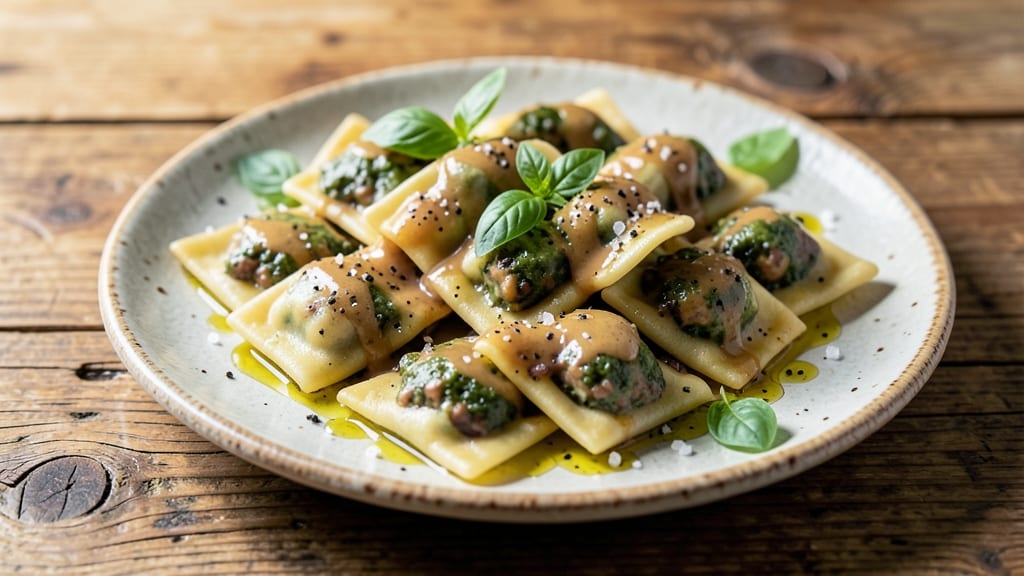
This black bean ravioli recipe delivers restaurant-quality pasta with a creamy filling and chewy edges that hold up perfectly. The secret lies in balancing tender black beans with ricotta or vegan alternatives, creating a filling that's rich yet light enough for delicate dough.
I've perfected this technique over years of testing—no store-bought shortcuts here, just handmade satisfaction.
The dough starts with simple ingredients: flour, eggs, and a touch of olive oil, rolled paper-thin for that signature chewy texture. Meanwhile, the filling combines mashed black beans with herbs, garlic, and a splash of lemon to brighten the earthy flavors.
The assembly is where the magic happens—folding the dough around the filling with precision for plump, professional-looking ravioli.
Cooked just right, these ravioli transform into golden bites with a creamy interior that melts in your mouth. Serve them with a simple brown butter sauce, marinara, or even a light pesto to let the filling shine.
The result? A vegetarian main course that's hearty enough for dinner parties but simple enough for weeknights.
Whether you're making them for a crowd or treating yourself, this recipe proves homemade ravioli doesn't require fancy equipment—just patience and a little practice. The payoff? Handmade pasta that tastes like it came from an Italian trattoria, not a box.
Ingredients for black bean ravioli
Simple ingredients transform into restaurant-quality black bean ravioli with chewy edges and creamy filling.
| Ingredient | Amount | Notes |
|---|---|---|
| Black Beans 🌿 | 1 ½ cups | Canned, drained and rinsed |
| Ricotta Cheese 🧀 | 1 cup | Whole-milk preferred |
| All-Purpose Flour 🌾 | 2 ½ cups | Plus 1 tbsp for dusting |
| Large Eggs 🥚 | 3 whole | Room temperature |
| Extra-Virgin Olive Oil 🫒 | ½ cup | Plus 1 tbsp for dough |
| Fresh Garlic 🧄 | 4 cloves | Minced for filling |
| Fresh Parsley 🌿 | ¼ cup | Chopped, stems removed |
| Lemon Juice 🍋 | 1 tbsp | Freshly squeezed |
| Sea Salt 🧂 | 1 ½ tsp | Diamond Crystal preferred |
| Ground Black Pepper 🌶️ | ½ tsp | Freshly cracked |
| Semolina Flour 🌾 | ½ cup | For rolling and dusting |
| Unsalted Butter 🧈 | 2 tbsp | For brown butter sauce |
| Vegetable Broth 💧 | ½ cup | Low-sodium preferred |
The ricotta and black beans form the heart of this recipe. Whole-milk ricotta delivers the richest texture, while high-quality canned black beans (like Eden Organic or Bimbo) ensure tender filling. For the dough, King Arthur flour yields the best chewy texture—avoid instant varieties. Fresh herbs matter here: bright parsley from the grocery store's refrigerated section adds vibrant flavor, but dried oregano at half the amount works in a pinch. The garlic should be freshly minced—pre-minced jars lack the aromatic punch. For the filling, lemon juice brightens the earthy beans, and Diamond Crystal kosher salt
No ricotta? Cottage cheese blended smooth works surprisingly well, though texture differs slightly. Substituting tofu ricotta (blended silken tofu with lemon juice and salt) creates a vegan version. For the dough, whole wheat flour can replace up to half the all-purpose, though the texture will be denser. The semolina flour is non-negotiable for that signature chewy bite—don't skip it. If you're short on parsley, basil or cilantro at the same amount provides a similar freshness. The brown butter sauce requires unsalted butter to control seasoning—salted will overpower the delicate filling. Fresh pasta dough must be used immediately or refrigerated for up to 24 hours before rolling. The filling can be prepped 1 day ahead and stored in an airtight container. For long-term storage, freeze the assembled ravioli on a floured tray before transferring to bags—this prevents sticking. Cooked ravioli reheat beautifully in vegetable broth for 2-3 minutes to restore that al dente texture. The brown butter sauce keeps for 3 days refrigerated, though it's best used fresh to prevent butter separation.
Why You'll Love This Recipe
- No Pasta Machine Needed: I’ll admit, the first time I made these, I panicked—no fancy tools required. Just mash those black beans with ricotta, fold in flour and eggs, and roll them out thin (or use a glass). The dough’s forgiving, and the filling’s so rich, no one will guess they’re secretly veggie-packed.
- Umami Bomb Filling: Here’s what sold me—the black beans bring this filling to life. Creamy ricotta meets earthy, slightly sweet beans, and that olive oil finish ties it all together. It’s not just flavor; it’s that textural magic—soft but with a little bite, like a hug from your abuela’s kitchen.
- Game for Any Meal: Between us, I’ve served these as a light lunch with just olive oil and chili flakes, or piled them high with marinara and Parmesan for a weeknight dinner. Freeze half the batch for when you’re too tired to cook. They reheat like a dream, and the leftovers? Even better the next day.
- Budget-Friendly Protein: I’m always calculating how far my grocery money goes, and this recipe wins. Black beans and ricotta stretch further than you’d think, and the eggs add richness without breaking the bank. Plus, no fancy cheese or specialty ingredients—just pantry staples that actually work. My wallet and my taste buds thank me.
Step-by-step instructions for black bean ravioli
Master the art of handmade pasta with this method—perfectly chewy edges and rich filling every time.
Prepare the Black Bean Filling
In a food processor, combine the 1.5 cups drained black beans, 1 cup ricotta cheese, 4 cloves minced garlic, 0.25 cup chopped parsley, 1 tablespoon lemon juice, 1.5 teaspoons sea salt, and 0.5 teaspoon black pepper. Pulse until smooth but still slightly textured—you want a thick, spreadable consistency that won't leak through the pasta dough.
Transfer the mixture to a bowl and fold in 2 tablespoons unsalted butter, mixing until fully incorporated. The filling should be cool to the touch before using. If it's too warm, chill for 15 minutes—this prevents the dough from softening when stuffed. The butter adds richness that balances the earthy beans, creating that creamy texture we're aiming for.
Make the Pasta Dough
On a clean surface, mound the 2.5 cups all-purpose flour and create a well in the center. Add the 3 room-temperature eggs and 0.5 cup extra-virgin olive oil, then gradually incorporate the flour using a fork, mixing until a shaggy dough forms. Once combined, knead for 8-10 minutes by hand until smooth and elastic.
Wrap the dough tightly in plastic wrap and let it rest for 30 minutes at room temperature. This resting period relaxes the gluten, making it easier to roll thin without tearing. I press the dough into a disk shape before resting—this prevents air pockets that could interfere with rolling later. The dough should feel slightly tacky but not sticky when ready.
Roll and Cut the Dough
Divide the rested dough into 4 equal pieces and work with one piece at a time. Using a pasta machine or rolling pin, roll each piece progressively thinner until you reach the thinnest setting (typically 1-2 millimeters). Dust the dough and rolling surface with 0.5 cup semolina flour as you work—this prevents sticking and creates that signature rustic texture.
Cut the rolled sheets into 3-inch squares using a sharp knife or pasta cutter. Place a 1-teaspoon portion of the black bean filling at the center of each square, then fold the dough over to form a half-moon shape. Seal the edges by pressing firmly with your fingers or a fork, ensuring no filling escapes. The edges should be tightly pinched to prevent leaks during cooking.
Cook the Ravioli
Bring a large pot of well-salted water to a rolling boil. Add the ravioli in batches and cook for 2-3 minutes, stirring gently to prevent sticking. They're done when they float to the surface and the edges become opaque but still tender. Remove with a slotted spoon and transfer to a plate.
For the brown butter sauce, melt the 2 tablespoons unsalted butter in a skillet over medium heat until golden brown, about 2 minutes. Immediately add the 0.5 cup vegetable broth and 1 tablespoon lemon juice, stirring to create a silky sauce. Toss the cooked ravioli in this sauce just before serving to enhance the creamy filling and add depth of flavor.
Pro Tips For Making Black Bean Ravioli
- Drain and Rinse Beans: Black beans straight from a can are packed with starch, which turns your filling into glue. After draining, give them a quick rinse under cold water—this cuts down on stickiness and makes rolling the ravioli dough way easier. (Yes, even if you’re impatient like me.)
- Warm the Ricotta: Cold ricotta is stubborn. Let it sit at room temperature for 10-15 minutes before mixing it with the beans—this makes it creamier and blends smoother. I used to skip this, and the filling always felt dense instead of light.
- Rest the Dough: Once you’ve mixed the flour, eggs, and olive oil into dough, wrap it in plastic and let it rest for at least 30 minutes. This relaxes the gluten, so it rolls out evenly without cracking. (Your future self will thank you.)
- Roll Thin, Seal Tight: Use a pasta machine set to its thinnest setting (usually #5 or #6) and roll the dough twice through each thickness. This ensures even cooking and prevents leaks when filling. If the edges tear, patch them with a bit of water—no one will notice.
Pro cooking tips for this dish
Dough Perfection
For chewy edges that hold up during cooking, use King Arthur flour and knead the dough for a full 8-10 minutes—this develops gluten without overworking it. I press the dough into a disk before resting to eliminate air pockets, which prevents tearing when rolling.
Resting for 30 minutes is non-negotiable; it relaxes the gluten for that signature tender-chewy texture. 💪
Work with one piece of dough at a time to maintain temperature control—room-temperature dough rolls more evenly. If your kitchen gets warm, chill the dough for 10 minutes before rolling to prevent stickiness. The semolina flour isn't just for texture; it creates that rustic, golden crust when cooked.
Filling Balance
The black bean filling needs to be cool before stuffing to prevent the dough from softening. I chill mine for 15 minutes after mixing in the butter—this ensures clean edges when sealing.
For extra richness, add 1 tablespoon grated Parmesan to the filling, but omit if making vegan ravioli. The lemon juice brightens the earthy beans, so don't skip it.
Use a food processor for the filling to achieve a smooth but slightly textured consistency—this prevents leaks through the dough. If your filling is too wet, add 1 tablespoon more semolina flour to absorb excess moisture.
The filling should be thick enough to hold its shape when dropped from a spoon.
Assembly Secrets
Portion the filling with a 1-teaspoon measuring spoon for consistency—this ensures even cooking. Seal the edges by pressing firmly with your fingers or a fork, then twist the ravioli slightly to create a tight seal.
I use a 3-inch square cutter for uniform shapes, but freehand works too if you're patient.
To prevent sticking during cooking, dust the ravioli with extra semolina before boiling. Cook in batches to avoid crowding the pot—this ensures even heat distribution. The ravioli are done when they float and the edges turn opaque (2-3 minutes total).
Sauce Pairings
The brown butter sauce in this recipe elevates the dish by adding nutty depth. For a lighter option, toss the ravioli with lemon zest and olive oil. A simple marinara sauce works too, but avoid heavy creamy sauces that mask the filling's flavor. 🍋
For a vegetarian-friendly option, blend ½ cup basil, 2 cloves garlic, and ¼ cup olive oil for a quick pesto. The acidity in the sauce cuts through the richness of the black bean filling beautifully.
Always toss the sauce with the ravioli just before serving to maintain that al dente texture.
Nutrition facts
Frequently asked questions
Can I make this recipe without a pasta machine?
Use a rolling pin to roll the dough progressively thinner, starting with 1/8-inch thickness and gradually reducing. For even results, chill the dough for 10 minutes between rolls to prevent sticking. A 3-inch square cutter or even a glass can help create uniform shapes without a machine.
How do I store leftover black bean ravioli?
Cooked ravioli keep for 3 days in an airtight container in the fridge. For longer storage, freeze them on a floured tray before transferring to a bag—this prevents sticking. To reheat, boil in fresh water for 1-2 minutes or microwave with a splash of broth for 30 seconds. Never reheat in the oven as it dries them out.
What's the best way to make this vegan?
Replace the ricotta with blended silken tofu (mixed with 1 tbsp lemon juice and ½ tsp salt) and use a vegan egg substitute like flax eggs (1 tbsp ground flax + 3 tbsp water per egg) in the dough. For extra richness, add 2 tbsp nutritional yeast to the filling. The dough will be slightly denser but still delicious.
Why did my ravioli filling leak during cooking?
This usually happens when the filling is too warm (softens dough) or the edges aren't sealed tightly. Always chill the filling for 15 minutes before stuffing, and press the edges firmly with your fingers or a fork. If the dough feels too soft, chill it for 10 minutes before rolling. A slightly thicker dough (2mm) helps prevent leaks too.
Can I make these ahead for a dinner party?
Yes! Assemble the ravioli up to 24 hours ahead and refrigerate on a floured tray. Cook them fresh before serving or freeze uncooked ravioli for up to 1 month. For a showstopper presentation, serve with a brown butter sauce or light pesto and garnish with fresh parsley. The filling flavor actually improves after resting overnight!