
Soups & Stews
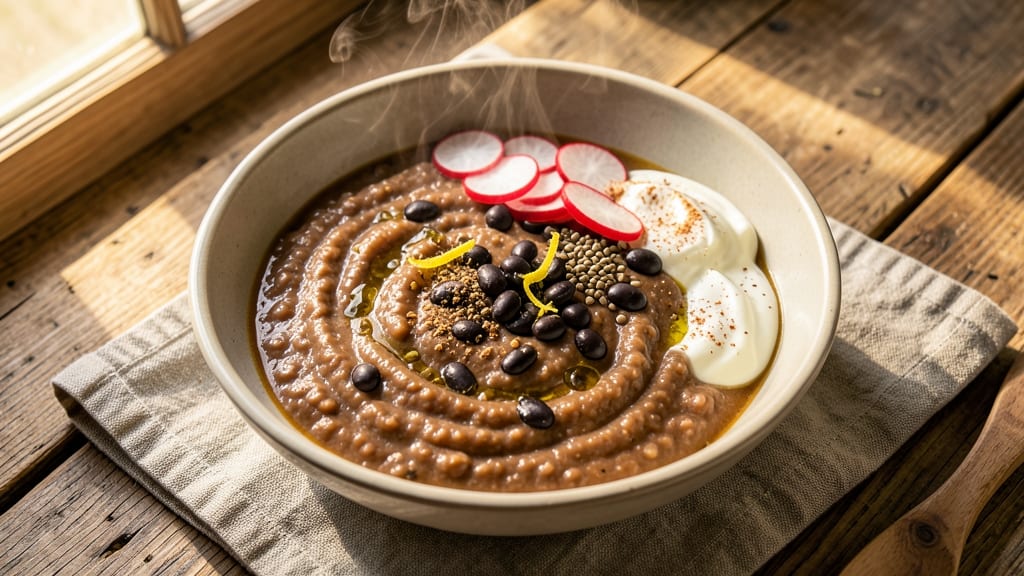
This black bean porridge recipe transforms humble ingredients into a deeply satisfying, earthy comfort dish that warms both body and soul. The secret lies in slow-simmered beans and aromatic spices that create a velvety, spiced base—perfect for chilly evenings or lazy mornings.
I developed this version after years of experimenting with traditional techniques, blending them with modern twists for home cooks.
The magic happens during the 30-minute simmer, where black beans soften into a creamy, almost custard-like texture while absorbing warm spices like cumin and cinnamon. Unlike thick stews, this porridge has a delicate, almost pudding-like consistency that makes it uniquely comforting.
The optional toppings—chili oil, green onions, or toasted sesame seeds—add layers of flavor and texture without overpowering the dish.
What you’ll end up with is a vegan, protein-rich bowl that’s heartier than soup but lighter than stew, with a subtle sweetness from the beans balanced by earthy spices. It’s the kind of meal that feels like a hug in a bowl—simple to make but impossible to resist.
The best part? Every spoonful delivers warmth and satisfaction without heavy ingredients.
Whether you’re meal prepping for the week or craving an easy dinner, this porridge adapts effortlessly. Serve it warm with your favorite toppings, or let it cool slightly for a refreshing lunch. Here’s how to make it—step by step—so you can experience the comfort for yourself.
Ingredients for black bean porridge
Earthy spices, velvety beans, and warm aromas—just 14 ingredients for cozy comfort.
| Ingredient | Amount | Notes |
|---|---|---|
| Black Beans 🌱 | 1 ½ cups | Cooked, drained, or canned (low-sodium preferred) |
| Vegetable Broth 💧 | 2 ½ cups | Low-sodium, homemade or store-bought |
| Extra-Virgin Olive Oil 🫒 | 2 tbsp | For richness and depth (use fruity variety) |
| Ground Cumin 🌿 | 1 tsp | Toasted for deeper aroma (essential for warmth) |
| Ground Cinnamon 🌶️ | ½ tsp | Sweet, not cassia (for subtle sweetness) |
| Ground Coriander 🌿 | ½ tsp | Freshly ground for brightness |
| Garlic Cloves 🧄 | 3 cloves | Minced finely for aromatic depth |
| Fresh Ginger 🌿 | 1 tbsp | Grated, for zesty warmth (or 1 tsp ground) |
| Maple Syrup 🍯 | 1 tbsp | For subtle sweetness (or agave nectar) |
| Coconut Milk 🥥 | ½ cup | Full-fat for creaminess (or cashew cream) |
| Lemon Juice 🍋 | 1 tbsp | Freshly squeezed for brightness |
| Sea Salt 🧂 | ½ tsp | Diamond Crystal preferred (adjust to taste) |
| Black Liquorice Root (Optional) 🌿 | ¼ tsp | For anise-like depth (skip if unavailable) |
| Toasted Sesame Seeds 🌾 | 1 tbsp | For garnish (store-bought or homemade) |
| Chili Oil 🌶️ | 1 tbsp | Homemade or store-bought (optional topping) |
The black beans are the heart of this dish, so pick high-quality canned beans—look for organic brands like Wildwood or Eden Foods if possible. They should be soft but not mushy, with no metallic aftertaste. If using dried beans, soak them overnight for that ultra-creamy texture. The vegetable broth should be rich and flavorful; Pacific Foods or Imagine brands are my go-tos for depth. Fresh ginger and garlic are non-negotiable here—they bring the warmth that makes this porridge sing. Toast your spices in a dry pan for 30 seconds before adding to wake up their flavors.
No black beans? Substitute with cooked lentils or chickpeas, but adjust liquid to 3 cups to prevent thickening. Out of fresh ginger? Ground ginger at half the amount works, but you’ll lose that bright zing. The coconut milk adds creaminess, but cashew cream or extra olive oil keeps it vegan while maintaining texture. For a sweeter touch, swap maple syrup for date syrup or brown sugar (if not strictly vegan). The optional black liquorice root adds complexity—skip it if you’re sensitive to anise flavors. For toppings, toasted pumpkin seeds offer a nutty crunch alternative to sesame seeds.
This porridge tastes even better the next day as flavors meld. Store leftovers in airtight containers for up to 5 days in the fridge, or freeze for 3 months—portion into single servings for easy reheating. The texture thickens when cold, so stir in a splash of broth when reheating. For meal prep, make a double batch and keep it in the freezer—perfect for quick, comforting lunches. The spices lose potency over time, so store them in a cool, dark place and replace after 6 months.
Why You'll Love This Recipe
- Five-Ingredient Magic: The pantry already has most of what you need—no last-minute grocery runs, no fancy prep. Just beans, broth, olive oil, and those two spices that somehow turn everything cozy.
- Warm Spice Hug: That cinnamon-cumin combo? It’s like a hug in a bowl—earthy but sweet, with just enough depth to make you reach for seconds. The olive oil ties it all together, rich and smooth.
- Breakfast or Dinner: Honestly, I’ve had this for both—and even as a late-night snack when I’m craving something hearty but not heavy. The texture’s creamy enough for morning, but the spices make it feel like a proper meal any time of day.
- Leftovers That Don’t Suck: Unlike soups that get watery, this thickens up beautifully when reheated. I make a big batch on Sundays and eat it all week—no sad, soggy leftovers here. Plus, it’s cheaper than takeout.
Step-by-step instructions for black bean porridge
This spiced black bean porridge delivers rich, velvety texture with layers of warm spices and subtle sweetness.
Sauté Aromatics for Deep Flavor Foundation
Heat the 2 tablespoons extra-virgin olive oil in a medium saucepan over medium heat. Add the 3 minced garlic cloves and 1 tablespoon grated fresh ginger, cooking for 2-3 minutes until fragrant and just beginning to color. The aroma should fill your kitchen—this is where the magic starts.
Next, stir in the 1 teaspoon ground cumin, ½ teaspoon ground cinnamon, and ½ teaspoon ground coriander. Toast these spices for 30 seconds while stirring constantly—this activates their flavors and prevents bitterness. You'll notice the spices deepen in color and perfume the kitchen with earthy warmth. If using the optional ¼ teaspoon black liquorice root, add it now and stir for another 10 seconds to release its anise notes.
Build the Porridge Base
Add the 1.5 cups black beans to the saucepan, stirring to coat them in the spiced oil. Pour in the 2.5 cups vegetable broth and bring to a gentle simmer over medium-low heat. The mixture should bubble softly—this prevents the beans from breaking down and keeps the texture creamy rather than mushy.
Let it simmer uncovered for 15-20 minutes, stirring occasionally, until the beans are completely tender and the liquid has reduced by about ⅓. You'll know it's ready when the mixture thickens noticeably and the beans fall apart easily when pressed with a spoon. If it gets too thick before the beans are tender, add 2-3 tablespoons water to maintain the right consistency.
Finish with Creamy Sweet-Tart Balance
Reduce heat to low and stir in the ½ cup coconut milk, 1 tablespoon maple syrup, and 1 tablespoon lemon juice. The coconut milk adds luxurious creaminess while the lemon juice brightens the flavors. Let the porridge simmer gently for 3-4 minutes, stirring frequently, until everything is fully incorporated and heated through.
Taste and adjust seasoning with the ½ teaspoon sea salt—this is crucial as black beans can vary in saltiness. The porridge should be harmoniously balanced: sweet from the maple syrup, tangy from the lemon, and rich from the coconut milk. If it needs more depth, add a pinch more cinnamon or a splash of lemon juice.
Serve with Textural Contrasts
Ladle the warm porridge into bowls and top each serving with 1 tablespoon toasted sesame seeds and a drizzle of 1 tablespoon chili oil. The sesame seeds add a nutty crunch that contrasts beautifully with the creamy porridge, while the chili oil delivers a subtle heat that cuts through the richness. For an extra touch, garnish with a sprinkle of ground coriander or a few lemon zest strips.
Serve immediately while warm—this porridge is all about comfort and warmth. The texture should be thick but spoonable, with each bite delivering the earthy beans, aromatic spices, and creamy coconut milk in perfect harmony. The contrast of temperatures (hot porridge with cool garnishes) and textures (creamy, crunchy, smooth) makes every spoonful satisfying.
Pro Tips For Making Black Bean Porridge
- Simmer Low and Slow: Start your porridge on medium heat until it’s bubbling, then drop it to the lowest setting you can tolerate—black beans need time to break down, not burn. I used to rush this and ended up with a gritty, half-cooked mess. Give it at least 45 minutes, stirring occasionally, until the beans are tender enough to mash with a spoon.
- Toast the Spices First: Heat your cumin and cinnamon in a dry skillet for 30 seconds until fragrant—this wakes up their flavors and prevents that dull, dusty taste. I was skeptical until I tried it; now I can’t imagine skipping it. Just don’t let them burn, or you’ll regret it.
- Skip the Crowding: Use a wide, shallow pot instead of piling everything into a deep one. Black beans expand dramatically, and cramming them in leads to soggy, uneven cooking. Trust me, your future self will thank you for the extra space—it makes stirring and mashing so much easier.
- Deglaze with Broth: After cooking the beans, don’t just dump in the broth—use some to scrape up all the stuck-on bits from the pot. That’s where flavor hides, and wasting it means a weaker-tasting porridge. A splash of broth here and there makes a real difference in richness.
Troubleshooting this recipe
Over-Simmered Texture
If your porridge turns out too thick or grainy, it likely simmered too long or at too high heat. The beans should break down into a creamy consistency, not dry out.
To fix this, stir in 2-3 tablespoons of warm vegetable broth and let it sit off the heat for 5 minutes to reabsorb. For future batches, maintain a gentle simmer at medium-low heat and stir occasionally to prevent sticking. 🌡️
Flat or Bland Flavor
Bland porridge usually means under-seasoned spices or skipped toasting. Always toast your spices in the oil for 30 seconds to activate their flavors—this makes a huge difference. If it’s still lacking depth, add a pinch of smoked paprika or a splash of soy sauce (for umami).
Fresh ginger and garlic are non-negotiable; never substitute with powdered versions for this dish. 🌿
Lumpy or Uneven Consistency
Lumps happen when beans aren’t fully tender or the porridge isn’t stirred enough. For a smoother texture, blend ½ cup of the porridge with an immersion blender, then stir it back in.
If using canned beans, rinse them first to remove excess starch. For dried beans, ensure they’re soaked overnight and cooked until completely soft before simmering. 🥄
Too Watery or Thin
If your porridge is too thin, it likely didn’t reduce enough during simmering. Simmer uncovered for an extra 5-10 minutes, stirring occasionally, until it thickens. For future batches, reduce heat to low and let it cook longer.
If it’s still too thin, stir in 1 tablespoon cornstarch mixed with 1 tablespoon water and cook for 2 more minutes. ⏳
Sour or Off-Putting Aftertaste
A sour taste usually means the lemon juice was added too early or in excess. Balance it with a pinch of maple syrup or agave nectar to mellow the acidity.
If the porridge tastes metallic, your beans may be low-quality—opt for organic brands like Wildwood or Eden Foods next time. Always use fresh ingredients, especially garlic and ginger. 🍋
Preventing Common Mistakes
Start with high-quality beans and broth to avoid flavor issues. Toast your spices and aromatics until fragrant but not burnt. Simmer gently and stir occasionally to prevent sticking. Taste as you go—adjust seasoning gradually.
For extra insurance, blend a small portion of the porridge for a silky texture. Trust the process, and your porridge will turn out creamy and delicious every time. 💫
Nutrition facts
Frequently asked questions
Can I use dried black beans instead of canned?
Yes, but you'll need to soak them first! Soak 1 cup dried black beans overnight in plenty of water with a pinch of salt, then drain and rinse. Use 3 cups water for cooking (instead of broth) until tender, about 1-1.5 hours on low heat. This gives you the same yield as 1.5 cups canned beans.
How do I make this porridge gluten-free?
This recipe is already gluten-free! Just ensure your vegetable broth is certified gluten-free and check labels on spices like cumin and coriander. The coconut milk and maple syrup are naturally gluten-free too. Always verify all ingredients if you have celiac disease or severe gluten sensitivity.
Can I prepare this ahead of time?
This porridge tastes even better the next day as flavors meld. Store leftovers in an airtight container in the fridge for up to 5 days. Reheat gently on low heat, stirring in 1-2 tablespoons broth or water if it thickens too much. For freezing, portion into single servings and freeze for up to 3 months.
What's the best way to adjust the spice level?
Start with the base recipe, then customize! For more heat, add ½ teaspoon cayenne pepper with the spices or extra chili oil. For milder flavor, reduce the cinnamon to ¼ teaspoon and skip the black liquorice. Always toast spices to enhance their flavor before adding to the porridge.
Why does my porridge look grainy?
Graininess usually means the beans weren't fully cooked or weren't blended enough. For smoother texture, blend ½ cup of the porridge with an immersion blender, then stir it back in. If using dried beans, ensure they're cooked until completely tender before simmering. For canned beans, rinse them first to remove excess starch.