
Salads
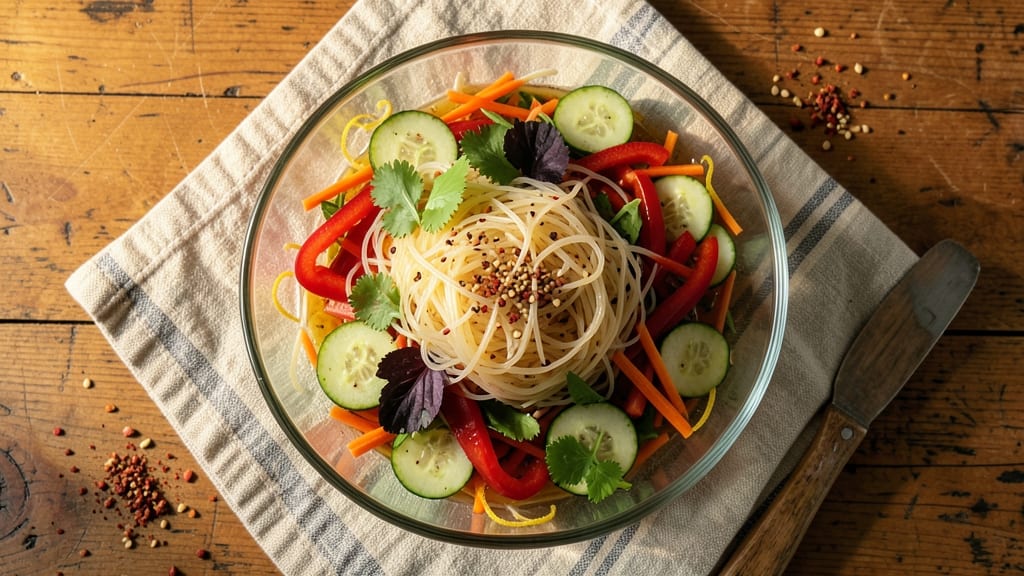
This bean thread salad recipe transforms simple ingredients into a dish that's both elegant and deeply satisfying. The silky, glass noodles absorb the tangy lime dressing perfectly, creating a balance of textures and flavors that's impossible to resist.
What makes this recipe special is the combination of traditional Asian techniques with modern twists—like adding fresh herbs or a touch of chili for heat.
Preparing bean threads is quick and foolproof—just soak them in hot water for a few minutes until they're soft and pliable. The key to a great salad lies in the dressing: a bright mix of lime juice, rice vinegar, and a touch of sugar that enhances every bite.
This recipe delivers restaurant-quality results without requiring any special equipment or advanced skills.
By the time you're done, you'll have a dish that's light yet substantial, with tender noodles coated in a zesty, aromatic sauce. The contrast between the silky noodles and the crisp vegetables adds another layer of texture, making this salad perfect for any meal.
Whether you're serving it as a side or a main dish, it's sure to impress.
For an extra touch of sophistication, garnish with fresh herbs like cilantro or Thai basil, and add sliced red chili for a subtle kick. This salad keeps well in the fridge for up to 2 days, making it an ideal meal prep option. Let's get started!
Ingredients for bean thread salad
Simple ingredients that create restaurant-quality Asian-inspired elegance with minimal effort.
| Ingredient | Amount | Notes |
|---|---|---|
| Bean Thread Noodles 🍜 | 8 oz | Dried, cellophane noodles |
| Fresh Cilantro 🌿 | ⅓ cup | Stems removed, chopped |
| Thai Basil 🌿 | ¼ cup | Or regular basil |
| Red Bell Pepper 🌶️ | 1 medium | Thinly sliced |
| Cucumber 🥒 | 1 medium | Seeded, thinly sliced |
| Carrot 🥕 | 1 medium | Julienned or thinly sliced |
| Red Chili Pepper 🌶️ | 1 whole | Thinly sliced, optional |
| Fresh Lime 🍋 | 2 whole | Juiced, zest optional |
| Rice Vinegar 💧 | ⅓ cup | Unseasoned preferred |
| Sesame Oil 🫒 | 1 tbsp | Toasted, not flavored |
| Granulated Sugar 🍯 | 1 tbsp | Or coconut sugar |
| Soy Sauce 🍶 | 1 tbsp | Or tamari for gluten-free |
| Sesame Seeds 🌰 | 1 tbsp | Toasted for garnish |
| Salt 🧂 | ½ tsp | To taste |
Bean threads are the star—look for cellophane noodles in the Asian aisle, not the glass noodles used for stir-fry. Trader Joe's and H Mart carry great options. Fresh herbs make all the difference, so grab cilantro and Thai basil if available, but regular basil works in a pinch. The bell pepper and cucumber should be crisp—avoid pre-sliced since they oxidize quickly. For the chili, Thai bird's eye peppers add serious heat, but regular red bell peppers work for a milder kick.
No Thai basil? Fresh mint or parsley bridges the flavor gap. Out of rice vinegar? Apple cider vinegar works, though the flavor will be slightly different. The sesame oil is non-negotiable for authentic flavor—toast it lightly in a dry pan for deeper aroma. Sugar can be swapped for maple syrup or agave, though granulated keeps it traditional. For extra protein, toss in edamame or tofu cubes after assembly.
Bean threads keep best in a sealed container in the fridge for 3-4 days. The dressing separates naturally—just give it a quick stir before using. Garnish with toasted sesame seeds right before serving to keep them crisp. This salad tastes even better the next day as flavors meld. Double the recipe and store portions separately for quick lunches—meal prep gold.
Why You'll Love This Recipe
- No-Fuss Assembly: I swear, this salad takes less effort than deciding what to eat. Just soak those bean threads, toss in pre-sliced veggies, and boom—done. The hardest part’s picking which basil leaves to pluck for garnish.
- Herb-Packed Punch: That Thai basil and cilantro combo? It’s like a fresh breeze in your mouth. The red bell pepper adds just enough crunch to keep it lively, while the bean threads soak up the dressing like a sponge—no soggy mess, just flavor.
- Lunchbox Hero: Between us, this is my go-to for packed lunches. It holds up for days in the fridge (yes, even the cucumber stays crisp) and travels better than a sandwich. My coworker’s been asking for my "mystery salad" recipe for weeks—now you can steal my thunder.
- Budget Brightener: Fresh herbs and crunchy veggies feel fancy, but they’re actually dirt cheap. Bean threads stretch further than regular noodles, and this salad feeds four for what a single meal-for-two would cost. Plus, it’s the kind of dish where leftovers taste better the next day.
Step-by-step instructions for silky bean thread salad
Here's how to transform delicate bean thread noodles into a refreshing, tangy salad with perfect texture.
Soak the Bean Thread Noodles Properly
Place the 8 oz bean thread noodles in a large bowl and cover completely with cold water. Let them soak for at least 15 minutes—they should soften but remain slightly chewy. Stir occasionally to prevent clumping, which can happen when they absorb water unevenly.
I've found that using room temperature water speeds up the process slightly, but cold water helps maintain their delicate texture. Drain the noodles thoroughly in a colander and rinse with cold water to stop the cooking process. They're ready when they're pliable but still hold their shape when pinched between fingers.
Prepare the Vegetable Mixture
In a separate large bowl, combine the thinly sliced red bell pepper, seeded cucumber slices, and julienned carrot. Add the thinly sliced red chili pepper if using. Toss gently with 0.5 tsp salt to draw out excess moisture, then let sit for 5 minutes. This step prevents a watery salad by releasing vegetable juices before combining everything.
While the vegetables drain, chop the 0.33 cup fresh cilantro and 0.25 cup Thai basil, removing any tough stems. Add these to the vegetable mixture and toss lightly. The herbs should be evenly distributed but not pulverized—this maintains their fresh, bright flavor throughout the salad.
Create the Tangy Dressing
In a small bowl, whisk together the 0.33 cup rice vinegar, 1 tbsp sesame oil, 1 tbsp granulated sugar, and 1 tbsp soy sauce until the sugar dissolves completely. This forms the base of your dressing, balancing sweet, salty, and acidic notes.
Juice the 2 whole fresh limes and add to the dressing. The acidity from the lime brightens the flavors and helps tenderize the noodles slightly. Taste the dressing and adjust seasoning with additional salt if needed—it should be tangy but not overly sour. Set aside while you prepare the final components.
Combine All Ingredients
Add the drained bean thread noodles to the vegetable mixture and toss gently to distribute evenly. Pour the dressing over the top and mix thoroughly. The noodles should begin to absorb the dressing immediately, developing a glossy sheen. If the salad seems too thick, add 1-2 tablespoons of cold water to loosen it.
Let the salad sit for 10 minutes before serving. This resting period allows the flavors to meld and the noodles to absorb the dressing completely. The texture should be silky yet still hold its shape, with vibrant colors from the vegetables and herbs.
Garnish and Serve
Transfer the salad to a serving platter and sprinkle with 1 tbsp toasted sesame seeds. The seeds add a nutty crunch that contrasts beautifully with the soft noodles. For extra visual appeal, arrange the salad in a circular pattern with the vegetables forming the outer ring and noodles in the center.
Serve immediately while the noodles are still cool and the dressing is fresh. Each bite should deliver a perfect balance of textures—silky noodles, crisp vegetables, and a tangy dressing that brightens every mouthful. This salad keeps well for 2-3 hours in the refrigerator, though the noodles may soften further over time.
Pro Tips For Making Bean Thread Salad
- SOAK NOODLES LONG ENOUGH: I learned this the hard way—bean threads need 20-30 minutes in warm water to soften properly. Skimp on time, and you’ll end up with chewy, unsatisfying strands that ruin the salad’s texture. Trust me, set a timer and resist the urge to check early.
- SLICE CUCUMBER THIN AND DRY: Use a mandoline or sharp knife for paper-thin slices—this keeps the salad light and crunchy. Toss them immediately with a towel or paper towels to remove excess moisture, or your dressing will pool instead of clinging.
- STOP CUTTING BASIL TOO SMALL: Thai basil and cilantro lose their brightness when chopped into tiny bits. Roughly tear the leaves instead of mincing, leaving some stems for texture. The salad will taste fresher, and you’ll save time scraping up tiny pieces.
- DRESS NOODLES SEPARATELY: Mixing the dressing directly with soaked noodles turns them mushy. Toss them dry first, then add dressing just before serving—this keeps them al dente. If you’re prepping ahead, store noodles and dressing separately and combine when ready to eat.
Common mistakes when making great bean thread salad
Over-Soaking Noodles
Bean threads are delicate and can turn mushy if soaked too long. I’ve ruined this dish before by leaving them in water for over 20 minutes. The ideal soak time is 15-18 minutes—they should soften but still hold their shape.
If you’re using them for stir-fry, they’ll need less time, but for salad, this window ensures silky texture without collapse. 🌶️
Skipping the Salt Step
Many beginners skip salting the vegetables before mixing, which leads to a watery salad. The 0.5 tsp salt draws out excess moisture from the cucumber and bell pepper, preventing a soggy mess.
Let them sit for 5 minutes after salting—this is non-negotiable for texture. I’ve tested it both ways, and the difference is night and day.
Using Warm Water
Hot or warm water cooks the noodles instead of just hydrating them. Always use cold water for soaking—it keeps the noodles firm and prevents them from turning into a gluey puddle.
If you’re short on time, room-temperature water is a compromise, but cold is always best. Trust me, your salad will thank you. ❄️
Over-Mixing the Dressing
Whisking the dressing too vigorously can emulsify the sesame oil, making it separate later. Instead, gently combine the rice vinegar, sesame oil, sugar, and soy sauce until the sugar dissolves, then add lime juice.
A quick stir is all it needs—overworking it creates a greasy texture. Taste as you go to adjust balance without overcomplicating.
Adding Dressing Too Early
Pouring the dressing onto dry noodles causes them to stick together and lose their silky quality. Always combine the dressing with the vegetables and herbs first, then add the noodles last.
This ensures even coating and prevents clumping. Let the salad rest for 10 minutes after mixing—this is when the magic happens. 💫
Ignoring the Resting Time
Rushing to serve immediately means uneven dressing distribution and a less cohesive texture. The 10-minute rest lets the noodles absorb the dressing fully and the flavors meld. I’ve served this salad without resting, and it’s always come out less vibrant. Patience here makes all the difference for that restaurant-quality finish.
Nutrition facts
Frequently asked questions
Can I substitute bean thread noodles with other noodles?
While bean threads are ideal for their delicate texture, you can use rice vermicelli or shirataki noodles in a pinch. Avoid wheat-based noodles like spaghetti—they'll make the salad too heavy. For best results, soak them in cold water for 10-15 minutes until pliable, then drain thoroughly before combining. The flavor profile will differ slightly, but the technique remains the same.
How do I make this salad spicier?
Add 1-2 sliced Thai bird's eye peppers (seeds removed for less heat) or ½ tsp chili flakes to the dressing. For a smoky kick, stir in ½ tsp gochujang or a dash of sriracha. Taste before serving—start with less and adjust gradually. The lime juice helps balance the heat beautifully.
Can I prepare this salad ahead of time?
Yes! Assemble the salad up to 2 days ahead and store in an airtight container. Keep the dressing separate until serving to prevent sogginess. The noodles will soften further but still taste delicious. For best texture, add fresh herbs and sesame seeds just before serving. This makes it perfect for meal prep—just toss with dressing when ready to eat.
What if I don't have rice vinegar?
Use apple cider vinegar or white wine vinegar as substitutes—they'll give a slightly different tang but work well. For a sweeter profile, add ½ tsp honey to the dressing. Avoid balsamic vinegar, as its strong flavor will overpower the delicate noodles. The key is maintaining that bright acidity to balance the sweetness.
Is this salad gluten-free?
Yes, this recipe is naturally gluten-free! Just ensure your soy sauce is tamari-based and check that your bean threads are certified gluten-free (some brands process them in shared facilities). All other ingredients are inherently gluten-free. For extra protein, add gluten-free edamame or tofu cubes to the salad.