
Soups & Stews
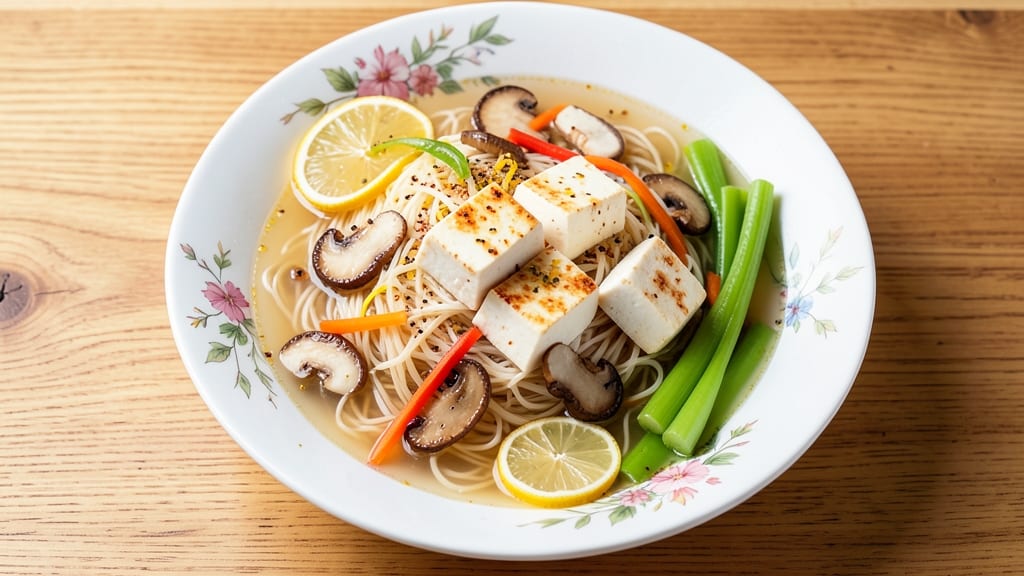
Bean thread noodles soup transforms simple ingredients into a dish that's both comforting and elegant—silky, slippery noodles gliding through a rich, savory broth. The key lies in the noodles themselves, which require precise cooking to achieve that signature texture without becoming mushy.
I've refined this recipe over countless batches to balance tradition with approachable techniques, ensuring restaurant-quality results at home.
This dish starts with a hearty broth—whether you choose a mushroom and vegetable base or a tofu-infused version—simmered low and slow to develop deep umami flavors.
The noodles, made from dried mung bean starch, demand gentle handling; they cook in just 3-4 minutes but must be removed at the perfect moment to maintain their delicate texture. Toppings like crispy shallots, chili oil, and scallions add layers of contrast and aroma.
What you'll end up with is a bowl of soup that's visually stunning and deeply satisfying—slippery strands of noodles suspended in a fragrant broth, each bite offering a perfect harmony of textures and flavors.
The dish is versatile enough for weeknight dinners yet impressive enough for guests, making it a staple for any home cook's repertoire.
The secret to success lies in the details: using the right water-to-noodle ratio, controlling the heat when cooking the broth, and timing the noodles precisely. With these techniques mastered, you'll create a dish that feels both traditional and modern, proving that comfort food can be refined without losing its soul.
Ingredients for bean thread noodles soup
Silky noodles and umami-rich broth—just 15 ingredients for restaurant-quality comfort.
| Ingredient | Amount | Notes |
|---|---|---|
| Bean Thread Noodles 🍜 | 8 oz | Dried mung bean starch noodles |
| Shiitake Mushrooms 🍄 | 8 oz | Fresh or rehydrated dried |
| Firm Tofu 🍲 | 12 oz | Extra-firm, pressed and cubed |
| Carrots 🥕 | 2 medium | Whole, peeled and sliced |
| Celery Stalk 🧅 | 2 whole | Fresh, cut into 1-inch pieces |
| Fresh Ginger 🌿 | 1 inch | Peeled and sliced thin |
| Green Onions 🧅 | 3 whole | White and green parts separated |
| Vegetable Broth 💧 | 4 cups | Low-sodium, homemade preferred |
| Sesame Oil 🫒 | 1 tbsp | Toasted for aroma |
| Soy Sauce 🍶 | 2 tbsp | Tamari for gluten-free option |
| Rice Vinegar 🍶 | 1 tbsp | For brightness |
| Chili Oil 🌶️ | 1 tbsp | For heat and aroma |
| Sesame Seeds 🌾 | 1 tsp | Toasted for garnish |
| Sea Salt 🧂 | 1 tsp | Diamond Crystal preferred |
| Black Peppercorns 🌶️ | ¼ tsp | Freshly cracked |
The bean thread noodles are non-negotiable. Look for authentic dried mung bean starch noodles at Asian markets—the ones labeled 'vermicelli' or 'glass noodles' won't work. Trader Joe's carries a decent version if you can't find specialty stores. For the mushrooms, shiitake is ideal but shiitake powder works too if you're in a pinch. Press the tofu between paper towels for 20 minutes—this makes all the difference in texture. Fresh ginger should smell vibrant; if it's musty, skip it.
No shiitake mushrooms? Cremini or oyster mushrooms will do in a bind. Short on time? Dried shiitake rehydrated in hot water gives the same depth. The vegetable broth can be store-bought, but homemade from carrot tops and celery leaves elevates everything. For the tofu, extra-firm is essential—silken or soft tofu will turn mushy. The celery and carrots should be organic if possible to avoid bitterness. If you're making this ahead, prep the broth first—it only gets better with time.
The noodles cook in 3-4 minutes max—set a timer and don't walk away. Store broth in the fridge for up to 5 days or freeze for 3 months. Keep the noodles dry in an airtight container for 6 months. For leftovers, reheat gently with a splash of water to restore silkiness. The chili oil and sesame seeds should be added fresh before serving—they lose potency fast.
Why You'll Love This Recipe
- No-Fuss Prep: I swear, the hardest part is boiling water. Toss in the pre-sliced mushrooms and tofu, then let the noodles soak—no chopping, no fuss. Even my roommate, who burns toast, can handle it.
- Umami Bomb: Those shiitake mushrooms? They turn the broth into liquid gold. The crispy tofu edges melt into the silky noodles, and suddenly, you’ve got a bowl that tastes like a restaurant’s secret menu.
- Lunchbox Hero: Between us, this is my go-to for meal prep. Pack the leftovers in jars—no soggy noodles, just perfect texture. My kids grab it for school lunches, and honestly? They always finish theirs first.
- Budget Magic: A handful of mushrooms and a block of tofu stretch into four servings. I’ve made this for $3 a bowl, and it’s still the dish my family begs for. Cheap, filling, and no one complains.
Step-by-step instructions for bean thread noodles soup
Here's how to create a luxurious bowl of slippery noodles with rich umami broth.
👨🍳 Step 1: Prepare the Vegetable Base
Start by cutting the 2 medium carrots into thin half-moons and the 2 whole celery stalks into 1-inch pieces. Peel and slice the 1 inch fresh ginger into thin slivers. Separate the 3 whole green onions, keeping the white and green parts distinct. This prep work ensures everything cooks evenly and adds depth to the broth.
Heat 1 tablespoon sesame oil in a large pot over medium-high heat. Add the carrots, celery, and ginger, stirring for 2 minutes until fragrant. The oil should shimmer but not smoke—this prevents bitterness. Add the 4 cups vegetable broth, 2 tablespoons soy sauce, and 1 teaspoon sea salt, then bring to a gentle boil. Reduce heat to medium-low and simmer uncovered for 15 minutes to develop the flavors. Skim off any foam that rises to the surface for a cleaner broth.
🍳 Step 2: Cook the Shiitake Mushrooms and Tofu
While the broth simmers, prepare the 8 oz shiitake mushrooms by cleaning them and slicing into ¼-inch pieces. In a separate pan, heat 1 tablespoon sesame oil over medium heat and cook the mushrooms for 5-6 minutes until golden brown. Remove and set aside.
Cut the 12 oz firm tofu into ½-inch cubes and press out excess water. In the same pan, add the tofu and cook for 4-5 minutes until lightly browned on all sides. The tofu should hold its shape but develop a subtle crust. Transfer both the mushrooms and tofu to the simmering broth, then add the white parts of the 3 whole green onions. Let everything cook together for 5 minutes to meld the flavors.
🍳 Step 3: Cook the Bean Thread Noodles
Bring a separate pot of water to a rolling boil and add ½ teaspoon sea salt. Add the 8 oz bean thread noodles and cook for exactly 2 minutes. These noodles cook in seconds—overcooking turns them mushy. Drain immediately and rinse briefly under cold water to stop the cooking process. This keeps them silky and slippery.
Here's the thing—bean thread noodles absorb liquid instantly. To prevent them from sticking together, toss them with 1 tablespoon rice vinegar right after draining. This also adds a bright, tangy note that balances the rich broth. Keep them in a bowl while you finish the soup.
🥘 Step 4: Assemble and Finish the Soup
Return the broth to a gentle simmer and stir in 1 tablespoon chili oil and 1 tablespoon rice vinegar. Taste and adjust seasoning—you might need a pinch more soy sauce or sea salt depending on your broth. The broth should be savory, slightly tangy, and subtly spicy.
Divide the cooked noodles among 4 bowls, then ladle the hot broth over them. Top each serving with the reserved green onion greens and sprinkle generously with 1 teaspoon toasted sesame seeds. The contrast of the slippery noodles against the hearty broth is what makes this dish truly special. Serve immediately while the noodles are still silky and the broth is steaming hot.
Pro Tips For Making Bean Thread Noodles Soup
- SOAK NOODLES 15 MINUTES: The package might say 10, but bean thread noodles need that extra 5 to soften properly—especially if you’re using them in a hot broth. I learned this the hard way when my soup turned out chewy instead of silky. Trust the clock, even if you’re eager to start cooking.
- SLICE MUSHROOMS THIN: Shiitake mushrooms shrink like crazy when cooked, so cut them paper-thin—about 1/8-inch slices. Thicker pieces stay tough, and you’ll end up with a watery soup instead of a rich, umami-packed base. A sharp knife makes this easier (and safer).
- STIR-FRY TOFU FIRST: Don’t toss the tofu straight into the broth—give it a quick sear in oil or broth first. This adds texture and prevents it from turning mushy. Just 2-3 minutes on medium-high heat makes all the difference, even if you’re impatient like me.
- SALT THE BROTH LAST: Adding salt early dilutes the flavor as the broth absorbs the noodles’ starch. Wait until the very end, when everything’s cooked, to season properly. Taste as you go—you’ll need more than you think, especially if your mushrooms or tofu are fresh.
Best sauces and condiments for bean thread noodles soup
Chili Oil Magic
The chili oil in this soup is where the flavor really comes alive—it adds heat, aroma, and a subtle smokiness that cuts through the richness of the broth.
I love using Lao Gan Ma brand chili oil for its balanced spice level, but you can make your own by infusing neutral oil with 1 tbsp chili flakes and 1 tsp Sichuan peppercorns per ½ cup oil, then straining.
For a milder version, reduce to ½ tbsp chili oil and add ½ tsp honey to balance. 🌶️
Sesame Oil Secrets
Never use regular sesame oil here—the toasted sesame oil (found in the refrigerated section) adds depth that regular oil can't match. Toast it yourself by heating 2 tbsp neutral oil in a pan, then adding 1 tbsp whole sesame seeds and cooking until golden.
Strain and use immediately. For extra aroma, add a pinch of white pepper to the toasted oil before using.
Soy Sauce Swaps
If you need gluten-free, tamari works perfectly, but for deeper flavor, try dark soy sauce (like Lee Kum Kee)—it adds a caramelized richness. For umami bomb, mix 1 tbsp soy sauce with ½ tsp miso paste.
If your broth tastes flat, add ½ tsp fish sauce (vegan-friendly seaweed sauce works too) for a restaurant-quality depth.
Brightening Agents
The rice vinegar is non-negotiable—it prevents the broth from tasting flat. For extra brightness, add ½ tsp lime zest or a splash of mirin (just ½ tbsp). If you're feeling adventurous, swap rice vinegar for black vinegar (1 tsp), which adds a funky, slightly sweet complexity.
Always add vinegar at the end to preserve its freshness.
Garnish Game-Changers
Beyond sesame seeds, try crispy fried shallots (1 tbsp) for crunch—toss them in ½ cup oil at 350°F for 3-4 minutes until golden. For color contrast, add red chili threads or pickled mustard greens.
A sprinkle of toasted nori flakes (½ tsp) adds oceanic depth. Garnish just before serving to keep everything vibrant.
Broth Boosters
If your broth lacks depth, stir in 1 tsp mushroom powder or ½ tsp nutritional yeast for umami. For a smoky note, add ¼ tsp smoked paprika or a dash of liquid smoke (⅛ tsp).
If it's too thin, simmer uncovered to reduce, or thicken with 1 tsp cornstarch mixed with 2 tbsp water**. Always taste and adjust—this is where home cooks shine. ✨
Nutrition facts
Frequently asked questions
Can I substitute bean thread noodles with regular noodles?
Not ideal—they won't give the same slippery texture! If you must, try rice vermicelli (soaked first) or udon noodles, but neither will be as delicate. The key is the mung bean starch in authentic bean thread noodles, which dissolves into silkiness when cooked properly.
How do I prevent the noodles from sticking together?
After draining, immediately toss them with 1 tablespoon rice vinegar or a splash of cold water. The vinegar also adds brightness! Keep them in a bowl while finishing the soup—never let them sit in water or they'll turn mushy. Stir gently when adding to bowls.
Can I make this soup ahead of time?
Prepare the broth up to 3 days ahead and store it in the fridge. Reheat gently, then cook the noodles fresh when serving. For the best texture, don't add the noodles until reheating—cook them separately in boiling water for 2 minutes right before assembling.
What if my broth tastes too bland?
Boost umami with ½ tsp miso paste or 1 tsp soy sauce while reheating. For depth, add 1 tsp mushroom powder or a pinch of MSG (optional). If using store-bought broth, reduce it by 25% to concentrate flavors—simmer uncovered until thicker.
Are there gluten-free options for this recipe?
Yes! Use tamari instead of soy sauce and ensure your vegetable broth is gluten-free. For extra safety, check that all ingredients (like chili oil) are certified gluten-free. The bean thread noodles are naturally gluten-free, but always verify packaging.