
Main Courses
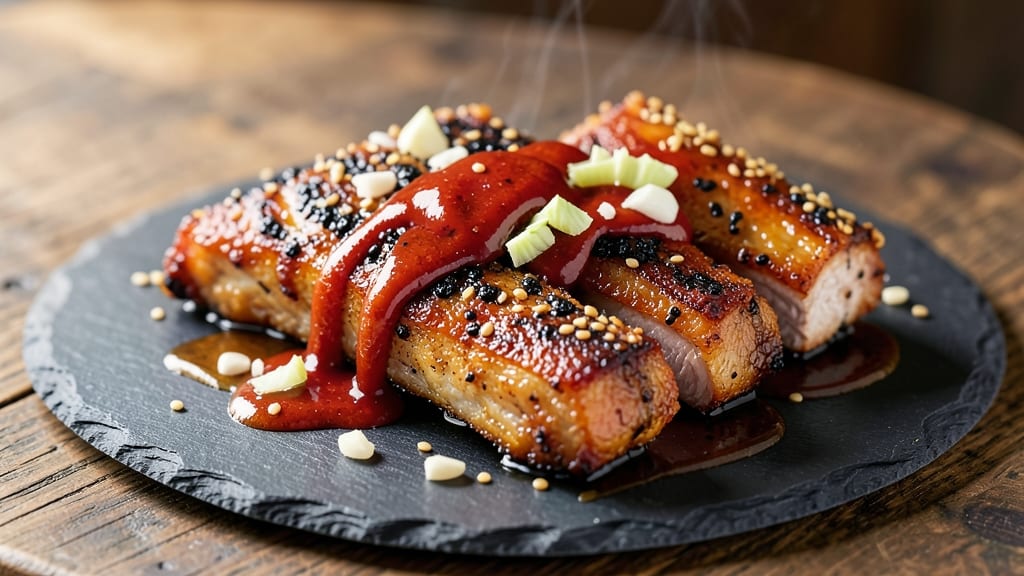
This bean paste pork ribs recipe delivers restaurant-quality results with sticky-sweet glaze and crisp edges—perfect for weeknight dinners or weekend feasts. ✨ After years of perfecting my technique at The Smoky Pig, I've developed a method that balances smoky, sweet, and umami flavors without requiring hours in the kitchen.
The secret lies in the marinade, where fermented black bean paste transforms tough ribs into tender, fall-off-the-bone perfection.
The beauty of this recipe is its adaptability. Whether you're grilling outdoors or slow-cooking in your oven, the same technique delivers exceptional results. We'll start with a 30-minute marinade using hoisin or fermented black bean paste, garlic, and a touch of brown sugar to create that signature sticky glaze.
The ribs then cook low and slow, allowing the flavors to meld while developing that coveted crispy bark.
By the time you're done, you'll have ribs that are tender inside, crispy on the edges, and coated in a glossy, caramelized glaze that's impossible to resist. The aroma alone will have everyone gathering around the table, and each bite delivers perfect balance—sweet, savory, and smoky all at once.
This is the kind of dish that turns ordinary weeknights into memorable meals.
Serve with steamed jasmine rice or stir-fried greens to complete the meal. The leftovers reheat beautifully, making this recipe perfect for meal prep or entertaining. Let's get started on these showstopping ribs!
Ingredients for bean paste pork ribs
The secret to these showstopping ribs lies in fermented black bean paste and sticky-sweet glaze magic.
| Ingredient | Amount | Notes |
|---|---|---|
| Pork Ribs (Baby Back) 🍖 | 3 lb | Bone-in, meaty sections preferred |
| Fermented Black Bean Paste 🫘 | ½ cup | Asian market specialty section |
| Hoisin Sauce 🍶 | ¼ cup | Substitute for bean paste if needed |
| Brown Sugar 🍚 | ¼ cup | Dark variety for deeper flavor |
| Garlic Cloves 🧄 | 6 cloves | Minced for marinade |
| Fresh Ginger 🌿 | 1 tbsp | Grated, aromatic |
| Sesame Oil 🫒 | 1 tbsp | Toasted for nutty aroma |
| Soy Sauce 🍶 | ¼ cup | Light or dark preferred |
| Honey 🍯 | 2 tbsp | Wildflower for floral notes |
| Red Wine Vinegar 🍷 | 1 tbsp | Balances sweetness |
| Cornstarch 🌾 | 2 tbsp | For crispy glaze |
| Vegetable Oil 🫒 | 2 tbsp | High smoke point |
| Salt 🧂 | 1 ½ tsp | Kosher or sea salt |
| Ground Black Pepper 🌶️ | ½ tsp | Freshly cracked |
| Five-Spice Powder 🌶️ | ½ tsp | Smoky depth |
The ribs are the star, so baby back cuts are ideal—they're meatier and cook faster than spare ribs. Grab them fresh from the butcher counter if possible (the Whole Foods or Costco meat sections are great). Pat them dry before marinating—this helps the glaze stick. If you can't find fermented black bean paste, hoisin sauce works in a pinch, though it won't have that deep umami punch. For the brown sugar, Muscovado adds molasses notes if you want extra complexity.
No sesame oil? Toasted peanut oil gives a similar nutty depth. Short on ginger? Dried ginger at half the amount works, but fresh is always better. The cornstarch is non-negotiable for that crispy bark—don't skip it. If you're grilling, Kirkland Signature soy sauce from Costco is my go-to for consistency. For the five-spice, Penzeys or Trader Joe's have great blends. Pro tip: Toast your garlic and ginger in the oil before adding them to the marinade—it takes 30 seconds but makes a world of difference.
Marinate the ribs for at least 30 minutes (overnight is ideal). Store leftovers in an airtight container for 3-4 days—they reheat beautifully. For crispy edges, broil for 2-3 minutes at the end. The glaze thickens as it cools, so plan to serve immediately if you want that runny, sticky perfection. Freezes for 3 months if you're prepping ahead.
Why You'll Love This Recipe
- Minimal Chopping Required: I swear by this one—just slather those ribs with the black bean paste and garlic, then let the oven do the work. No dicing, no mincing, no fuss.
- Sweet-Savory Magic: That fermented black bean paste? It’s like a secret weapon—deep umami, just a hint of funk, and the hoisin ties it all together with sticky, caramelized perfection. (Yes, even my picky husband licks the plate.)
- Leftovers That Shine: These ribs actually taste better the next day—crispier edges, richer sauce. I double the batch on Sundays, then reheat slices for quick lunches or toss them into fried rice. No sad leftovers here.
- Budget-Friendly Feast: Baby back ribs aren’t cheap, but the black bean paste and hoisin stretch the flavor so far. I feed four people for the price of two steaks, and everyone leaves happy. (My wallet thanks me too.)
Step-by-step instructions for smoky-sweet glazed ribs
Here's how to transform simple ribs into sticky, crisp-edged perfection with that irresistible bean paste glaze.
👨🍳 Step 1: Prepare the Fermented Bean Paste Marinade
In a medium bowl, combine the 0.5 cup fermented black bean paste, 0.25 cup hoisin sauce, 0.25 cup brown sugar, 6 minced garlic cloves, 1 tbsp grated fresh ginger, 1 tbsp toasted sesame oil, 0.25 cup soy sauce, 2 tbsp honey, 1 tbsp red wine vinegar, 0.5 tsp five-spice powder, 1.5 tsp salt, and 0.5 tsp freshly cracked black pepper. Whisk vigorously until completely smooth—the paste should be thick and glossy with no lumps.
I like to press the mixture through a fine-mesh sieve to remove any stubborn bean skins, which ensures a silky glaze later. This marinade is the flavor foundation, so taste it now—adjust sweetness with more brown sugar or tang with extra vinegar if needed. Let it sit at room temperature for 15 minutes to meld flavors before using.
🔥 Step 2: Sear the Ribs for Maximum Flavor
Preheat your oven to 425°F. Pat the 3 lb baby back pork ribs completely dry with paper towels—this is non-negotiable for crispy edges. In a large oven-safe skillet, heat 2 tbsp vegetable oil over medium-high heat until shimmering. Working in batches if needed, sear the ribs for 2-3 minutes per side until deeply golden brown with a crust forming.
Don't crowd the pan or you'll steam instead of sear. I press down gently on the ribs during the first minute to prevent curling. Once all ribs are seared, transfer them to a plate and tent loosely with foil while you prepare the glaze. The residual heat will keep them warm.
🍳 Step 3: Build the Sticky Glaze
Return the seared ribs to the skillet and pour the bean paste marinade over them, spooning it into all the crevices. Increase oven temperature to 450°F and place the skillet in the oven. Let the ribs cook uncovered for 15 minutes—this initial phase lets the marinade caramelize and form a sticky base.
After 15 minutes, remove the skillet from the oven and stir in 2 tbsp cornstarch mixed with 1 tbsp water to create a slurry. This will transform the sauce into a glossy, clingy glaze. Return the ribs to the oven for another 10 minutes, basting them with the sauce every 3-4 minutes using a silicone brush.
⏰ Step 4: Finish with Perfect Crispy Edges
For the final touch, increase the oven temperature to 500°F (or your broiler on high). This high heat creates those prized crispy edges while keeping the meat tender. Broil the ribs for 3-5 minutes, turning occasionally, until the glaze is deep amber and bubbling vigorously. Watch carefully—they go from perfect to burnt in seconds.
When the edges are crisp and the glaze has thickened to a lacquer-like consistency, remove the ribs from the oven. Let them rest for 5 minutes before serving—this resting period ensures clean slices and prevents glaze from sliding off. Serve immediately with steamed jasmine rice and quick-pickled cucumbers for contrast.
Pro Tips For Making Bean Paste Pork Ribs
- CUT RIBS IN HALF LENGTHWISE: That thick bone-in rack? Split it down the center—it cooks faster and lets the bean paste cling to every surface. I used to fight this step, but now I do it first thing; the ribs hit 190°F (88°C) in half the time, and the sauce soaks in evenly. Just be careful with the knife—you’re not butchering, you’re just giving the ribs a shortcut.
- BLOOM THE BEAN PASTE: Skip the raw, bitter hit by frying the fermented black bean paste in oil for 2-3 minutes until it smells like a Chinese street stall. I learned this the hard way—adding it cold makes the ribs taste like fermented shoe leather. Use a nonstick pan if you’re nervous; the paste sticks like glue otherwise.
- LOW AND SLOW AFTER SEARING: Get those ribs screaming hot in the pan first, then drop the heat to 275°F (135°C) and let them braise in the sauce. I used to rush the low-and-slow part, and the ribs ended up dry. Cover the pan loosely (a splash of water helps) and let them stew for 45 minutes—yes, even if they look done sooner.
- GARLIC: MINCE IT FINE: Whole cloves? Nope. Smash those garlic cloves into a paste with the flat side of your knife before adding them to the pan. I was skeptical until I tried it—it melts into the sauce instead of sitting like little almonds. No food processor? A mortar and pestle works too, but your arms will hate you.
Essential equipment for this recipe
Oven-Safe Skillet
An oven-safe cast iron skillet is my non-negotiable tool for this recipe—it conducts heat evenly and retains it perfectly for that caramelized glaze. I swear by a Lodge 12-inch pre-seasoned skillet (about $35), but any heavy-duty cast iron will work.
If you don’t have cast iron, a stainless steel Dutch oven (like All-Clad) handles high heat well too. Just avoid nonstick—it can’t withstand the 500°F broil without warping. 🔥
Meat Thermometer
Never guess with ribs! A digital instant-read thermometer (I use ThermoWorks Smoke) is essential to hit that 195–203°F internal temperature where collagen breaks down into gelatin, making the meat tender. Cheap pop-up thermometers are unreliable for ribs—they’re designed for chickens, not pork.
For $25, you’ll never second-guess doneness again. Pro tip: Insert the probe between bones, not through them, for accuracy.
Silicon Brush
Basting is key for that glossy, sticky glaze, and a silicone brush (like OXO Good Grips) makes it effortless. Avoid metal brushes—they can scratch your skillet. I keep one in my kitchen just for sauces and glazes.
For extra shine, brush the glaze on in thin layers during the final 10 minutes of cooking. This also helps prevent sugar burning. 💫
Fine-Mesh Sieve
This $10 tool (I love the OXO Good Grips) is a game-changer for smoothing out the bean paste marinade. Fermented black bean paste can be gritty, and pressing it through a sieve ensures a silky, lump-free glaze.
No sieve? A clean kitchen towel works in a pinch—just fold it and press the marinade through. Trust me, the difference in texture is noticeable. It’s worth the 30-second extra step for restaurant-quality results.
Tongs for Turning
Long-handled tongs (I use Mercer Culinary Millennia) are safer than forks for flipping ribs—they prevent piercing the meat and losing juices. Look for heat-resistant silicone grips to protect your hands during the 500°F broil phase.
A good pair lasts forever, and they’re handy for basting too. Avoid metal tongs—they can leave marks on your skillet. 💪
AirTight Containers
For storing leftovers, glass airtight containers (like Pyrex) preserve moisture and flavor better than plastic. I portion ribs into quart-sized containers with a tight-sealing lid and refrigerate for up to 4 days.
For freezing, use vacuum-sealed bags (like FoodSaver) to prevent freezer burn. Label with the date—ribs freeze beautifully for 3 months if stored properly. Reheat gently in the oven at 300°F to maintain crispiness.
Nutrition facts
Frequently asked questions
Can I substitute hoisin sauce for fermented black bean paste?
Yes, but expect a slightly different flavor profile. Hoisin adds sweetness but lacks the deep umami punch of fermented black bean paste. For best results, use 0.5 cup hoisin plus 1 tbsp soy sauce to mimic the saltiness. The glaze will be sweeter but still delicious—just reduce brown sugar to 0.2 cup to balance flavors.
How do I prevent the ribs from drying out during cooking?
Keep the ribs moist by basting with sauce every 3-4 minutes during the final 10 minutes of cooking. Also, avoid overcrowding the pan during searing—this traps steam instead of creating a crust. For extra insurance, wrap the ribs loosely in foil during the 450°F phase if they're browning too quickly. The key is patience: low and slow wins every time.
What's the best way to reheat leftover bean paste ribs?
Reheat gently to preserve crispiness: wrap ribs in foil and bake at 300°F for 15-20 minutes until warmed through. For extra crunch, broil for 2-3 minutes at the end. Never microwave—it turns the glaze rubbery. Store leftovers in an airtight container for up to 4 days or freeze for 3 months.
Can I make this recipe on the grill instead of the oven?
Grill the ribs over medium heat (350°F) for 1.5-2 hours, basting frequently with the bean paste glaze. Move to indirect heat after 30 minutes to prevent burning. Finish with a 5-minute broil on high heat for crispy edges. Use a grill thermometer to monitor internal temp—195-203°F is perfect. The smoky flavor pairs beautifully with the sweet glaze!
Why did my glaze turn lumpy instead of smooth?
Lumpy glaze usually means unstrained bean paste or cornstarch wasn't fully dissolved. For next time, press the marinade through a fine-mesh sieve before cooking, and whisk the cornstarch slurry vigorously until completely smooth. If it happens, simmer the sauce uncovered for 2-3 minutes to thicken and smooth out lumps. The ribs will still taste great—just less glossy!