
Soups & Stews
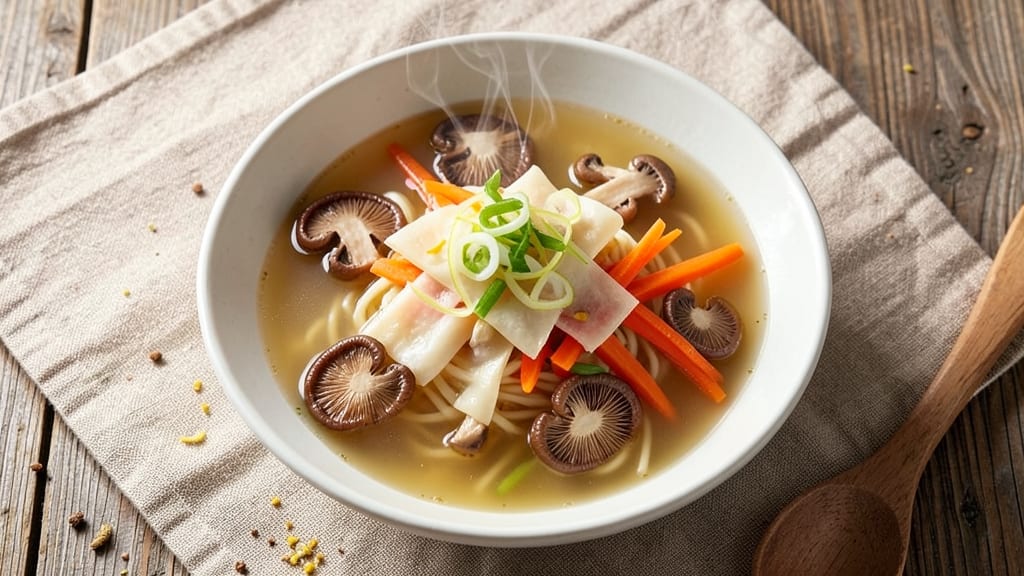
This bean curd skin soup recipe transforms humble ingredients into a luxurious, silky dish that delivers restaurant-quality umami in every spoonful. The key lies in the delicate bean curd skins—naturally chewy yet tender—simmered in a deeply flavorful broth until they absorb all the aromatic essence.
What makes this recipe special is the balance: crisp vegetables provide texture, while the broth carries layers of savory depth from mushrooms, ginger, and soy sauce.
The process begins with preparing the bean curd skins—soaking them just long enough to soften without losing their signature texture. A rich, aromatic broth forms the foundation, built from mushrooms, kombu, and ginger that infuse the liquid with earthy, briny complexity.
Unlike traditional soups, this one relies on minimal ingredients working in harmony, with each component playing a crucial role in creating that signature umami richness.
By the time you serve this soup, you'll have a bowl of velvety goodness where each spoonful delivers perfectly textured bean curd skins floating in a fragrant, deeply flavorful broth.
The contrast between the delicate skins and the hearty broth creates a dining experience that's both comforting and sophisticated—ideal for any occasion where you want to impress without complexity.
This recipe works beautifully as a light main course or vegetarian centerpiece, and the leftovers reheat just as well. The technique is straightforward, but the result feels like a culinary achievement. Let's create this silky, umami-packed soup that will become a staple in your recipe collection.
Ingredients for bean curd skin soup
Silky bean curd skins meet umami-rich broth in this refined yet approachable vegan soup recipe.
| Ingredient | Amount | Notes |
|---|---|---|
| Bean Curd Skins (Dougan) 🍜 | 8 pieces | Dried, soaked 20 minutes |
| Shiitake Mushrooms 🍄 | 4 whole | Fresh, stems removed |
| Kombu Seaweed 🌊 | 1 piece | 4x6 inches, cut into strips |
| Fresh Ginger 🧅 | 1 inch | Thinly sliced, peeled |
| Carrots 🥕 | 2 medium | Julienned, 2-inch pieces |
| Green Onions 🧅 | 3 whole | White and green parts separated |
| Vegetable Stock 💧 | 4 cups | Homemade or quality store-bought |
| Light Soy Sauce 🥢 | 2 tbsp | Kikkoman preferred |
| Sesame Oil 🌿 | 1 tsp | Toasted, for finishing |
| Toasted Sesame Seeds 🌰 | 1 tbsp | For garnish |
| Rice Vinegar 🍶 | 1 tbsp | For brightness |
| Diamond Crystal Kosher Salt 🧂 | 1 tsp | For seasoning |
| White Peppercorns 🌶️ | ½ tsp | Freshly cracked |
The bean curd skins are the star—look for dried dougan at Asian markets or online (or sub with thin rice noodles in a pinch). Kombu from specialty stores adds that signature briny depth, but dried sheets work too. Shiitake mushrooms should be plump and firm, not slimy. Trader Joe's carries great pre-sliced ones if you're short on time. Fresh ginger matters here: organic ginger from the produce section has more punch than the powdered kind.
No kombu? Dulse flakes at 1/4 tsp mimic that oceanic flavor. Subbing mushrooms? Cremini or oyster mushrooms work best. The soy sauce can be tamari for gluten-free, but Kikkoman light soy is ideal—it's sweeter and less salty. For extra umami, add 1 tsp mushroom powder (blend dried shiitake into powder). The carrots should be julienned at a 2-inch length for perfect texture contrast—too short and they'll disappear into the broth.
This soup tastes even better the next day as flavors meld. Store in an airtight container for 4-5 days in the fridge or freeze for 3 months. Reheat gently on low—high heat makes the bean curd skins rubbery. Garnish with sesame seeds and green onions right before serving to keep them crisp. Double the batch if you're feeding a crowd—it's that good.
Why You'll Love This Recipe
- No-Fuss Simmer: I swear by this soup because it’s the kind of dish that forgives a distracted cook. Toss in pre-sliced shiitake, a few sheets of kombu, and those chewy bean curd skins—no fancy techniques, just a slow simmer until the flavors meld. Honestly, the hardest part is waiting for the carrots to soften.
- Umami Bomb: That combo of kombu and shiitake? Pure flavor magic. The seaweed dissolves into the broth, adding a deep, savory richness, while the ginger and bean curd skins bring a satisfying chew. It’s the kind of soup where every spoonful tastes like you put in effort—even when you didn’t.
- Lunchbox Hero: Between us, this soup is my go-to for meal prep. The bean curd skins hold up perfectly when reheated, and the broth stays hearty enough to pack for days. My kids actually finish their lunches with this—(yes, even on a Tuesday night)—because it’s warm, filling, and not boring.
- Pantry Staple: I keep a bag of dried shiitake and kombu in my cupboard just for this. It’s one of those recipes that turns cheap, basic ingredients into something special without breaking the bank. Plus, leftovers? They taste just as good the next day—no sad, watery soup here.
Step-by-step instructions for bean curd skin soup
Mastering this soup requires precise technique and patience for the perfect silky texture.
Prepare the Bean Curd Skins for Soaking
Place the 8 pieces of dried bean curd skins in a large bowl and cover them completely with hot water. Let them soak for exactly 20 minutes—this rehydrates them without making them mushy. You'll know they're ready when they become pliable and translucent, resembling delicate noodles rather than brittle sheets.
Drain the skins thoroughly and rinse them under cold water to remove any surface starch. Gently squeeze out excess water with your hands, being careful not to tear them. The skins should now resemble delicate, translucent sheets with a slight sheen. This preparation transforms them into edible noodles that dissolve beautifully into the broth.
Build the Umami Broth Foundation
In a large pot, combine the 4 cups of vegetable stock with the 1 piece of kombu seaweed cut into strips and the 1 inch of thinly sliced ginger. Bring to a gentle simmer over medium heat and let it cook uncovered for 10 minutes. The kombu will infuse the broth with deep oceanic notes while the ginger adds subtle warmth.
Remove the kombu strips immediately after simmering—they should be tender but still hold their shape. Strain the broth through a fine-mesh sieve to remove any remaining ginger pieces, ensuring a perfectly clear foundation. This step creates the umami-rich base that defines the soup's character.
Cook the Aromatics and Vegetables
In the same pot over medium heat, add the 2 medium carrots julienned into 2-inch pieces and the white parts of the 3 green onions. Cook for 3-4 minutes until the carrots soften slightly but maintain their shape and color. Add the 4 whole shiitake mushrooms (stems removed) and cook for another 4-5 minutes until they release their moisture and develop golden edges.
This cooking process develops the vegetables' natural sweetness while concentrating their flavors. The shiitake mushrooms should release their umami essence into the broth, creating a complex flavor profile. Keep the heat at medium to prevent burning while allowing the vegetables to develop their full character.
Assemble and Simmer the Soup
Return the strained broth to the pot and bring it back to a gentle simmer. Add the prepared bean curd skins and cook for 8-10 minutes on low heat, stirring occasionally. The skins should soften completely, dissolving into the broth while maintaining their delicate texture. This is where the magic happens—the skins transform from chewy sheets into silky strands that coat your spoon.
Season with the 2 tablespoons of light soy sauce, 1 tablespoon of rice vinegar, and 1 teaspoon of diamond crystal kosher salt. Stir well and taste—this is where you adjust the balance between umami and brightness. The soup should be flavorful but not overpowering, with a delicate acidity from the vinegar that cuts through the richness.
Finish and Serve with Precision
Remove the pot from heat and let the soup rest for 5 minutes to allow the flavors to meld. Just before serving, add the 1 teaspoon of sesame oil and the 0.5 teaspoon of freshly cracked white peppercorns. The sesame oil adds a nutty aroma while the peppercorns provide subtle heat that enhances the overall complexity.
Divide the soup among bowls and garnish with the toasted sesame seeds and the green parts of the green onions. Serve immediately while the bean curd skins maintain their delicate texture. Each spoonful should deliver a perfect balance of silky texture, umami depth, and bright acidity that makes this soup truly memorable.
Pro Tips For Making Bean Curd Skin Soup
- SOAK THE KOMBU FIRST: I learned this the hard way—tossing dried kombu straight into boiling water makes it taste bitter and chewy. Instead, cover it with cold water for 10 minutes before adding to the pot. This softens it and lets the umami really bloom when you simmer.
- CUT CARROTS UNEVENLY: Thin, even slices turn to mush in this soup. Go for ½-inch chunks on the bias—thicker at the base, tapering toward the edges. They’ll hold shape but still soften just enough to melt into the broth.
- SIMMER LOW AND LONG: Bean curd skins need patience. After the initial boil, drop the heat to a bare simmer (tiny bubbles, not rolling) and let it cook for 45 minutes. Rushing this step makes the skins rubbery instead of tender.
- USE FRESH GINGER JUICE: Grated ginger loses its punch when cooked too long. Instead of adding it whole, grate it fine and squeeze out the juice with your hands (discard the pulp). A tablespoon of this bright liquid goes in at the very end—it cuts through the richness without overpowering.
Dietary considerations for this dish
Vegan-Friendly Foundation
This soup is naturally vegan and packed with plant-based protein from the bean curd skins and mushrooms. The kombu seaweed provides umami depth without any animal products, while the ginger and soy sauce deliver savory complexity.
Even those avoiding soy can substitute with tamari or extra mushroom powder for that rich flavor. 🌱
Gluten-Free Adaptation
For gluten-free diners, simply swap the light soy sauce for tamari or coconut aminos. The rest of the ingredients are already naturally gluten-free, so no additional substitutions are needed. Always check your vegetable stock label to ensure it's certified gluten-free if you're highly sensitive.
Low-Carb Options
To reduce carbs, omit the carrots and serve the soup with a side of steamed bok choy or shredded cabbage instead. The bean curd skins remain the star, providing satisfying texture without the extra carbs from vegetables. This version keeps the soup light yet filling.
Allergen Considerations
This recipe is free of common allergens like dairy, eggs, and nuts. The only potential allergen is soy (from the soy sauce), which can be easily substituted.
For sesame allergies, omit the sesame oil and seeds or use a neutral oil like avocado oil for finishing. Always double-check ingredient labels for hidden allergens.
Protein Boost
For an extra protein kick, add ½ cup cooked edamame or tofu cubes to the soup during the final 5 minutes of simmering. These additions blend seamlessly into the broth while adding plant-based protein.
The bean curd skins already provide 10-12g of protein per serving, making this a satisfying vegan meal.
Nutrition facts
Frequently asked questions
What are bean curd skins and where can I find them?
Bean curd skins (dougan or fu skin) are thin, translucent sheets made from tofu byproducts. They have a delicate, slightly chewy texture when properly prepared. Look for dried bean curd skins in the Asian foods section of grocery stores or online retailers like Amazon or Asian specialty markets. If unavailable, thin rice noodles can be substituted in a pinch.
How do I know when the bean curd skins are properly soaked?
The skins are ready when they become pliable and translucent after 20 minutes of soaking in hot water. They should resemble delicate noodles rather than brittle sheets. Over-soaking will make them mushy, while under-soaking leaves them too chewy. Test one piece by squeezing gently—it should hold its shape but soften easily.
Can I make this soup without kombu seaweed?
Yes! If you don't have kombu, use ¼ teaspoon of dulse flakes for oceanic flavor or ½ teaspoon of seaweed seasoning. For a different umami boost, add 1 teaspoon of mushroom powder (blend dried shiitake into powder) or an extra ½ cup of mushrooms to the broth. The soup will still be delicious but with slightly different depth.
Why does my soup taste flat or bland?
Flat flavor usually means the umami base needs strengthening. Increase the soy sauce to 3 tablespoons or add ½ teaspoon of white miso paste to the broth. For extra depth, simmer the kombu for 15 minutes instead of 10. Taste as you go—adjust seasoning gradually rather than all at once. Fresh ginger and mushrooms are key for natural umami.
How long can I store leftovers and how do I reheat?
Store leftovers in an airtight container in the fridge for 4-5 days or freeze for 3 months. To reheat, warm gently on low heat—never microwave directly from frozen. For best texture, add 1-2 tablespoons of water when reheating to prevent the bean curd skins from drying out. The soup actually tastes better the next day as flavors meld!