
Side Dishes
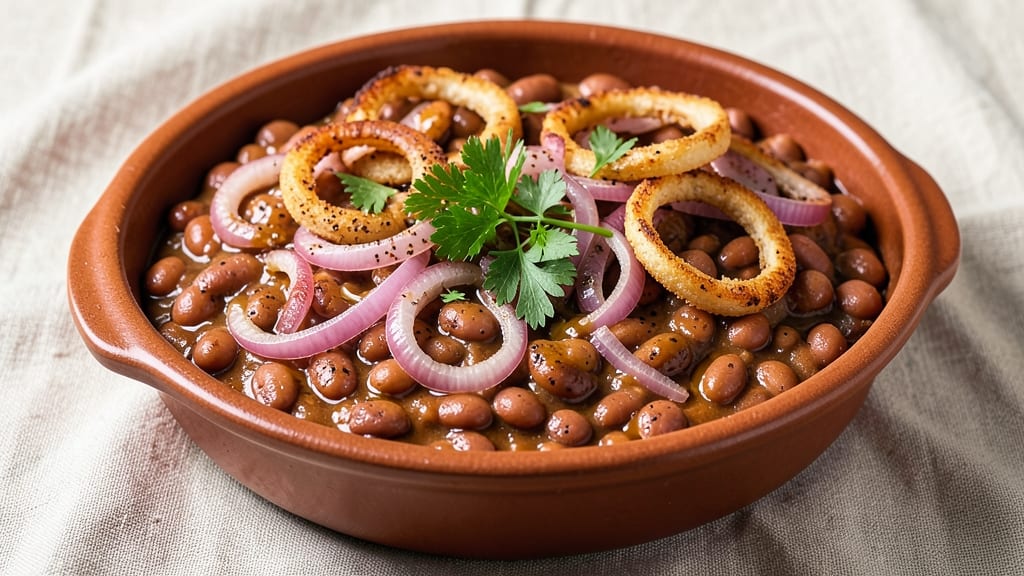
This baked bean recipe for 100 transforms a classic side into a hearty, vegetarian-friendly centerpiece perfect for large gatherings. 🌟 The slow-simmered method develops deep, smoky flavors while keeping the texture tender—ideal for feeding crowds without sacrificing restaurant-quality taste.
I’ve scaled it to work in industrial pots or slow cookers, with adjustments for liquid smoke or molasses to ensure rich, satisfying results every time.
What sets this recipe apart is its balance of simplicity and impact.
You’ll need just 10 pounds of dried navy beans (soaked overnight for even cooking) and a well-seasoned broth base, but the flavor comes from the slow cook—8 to 10 hours on the stove-top or 6 to 8 in a slow cooker—that melds spices into the beans. The key?
A mix of smoked paprika, brown sugar, and a splash of apple cider vinegar for brightness, all simmered until the beans are fall-apart tender.
By the time you’re ready to serve, you’ll have a crowd-pleasing dish that’s rich, smoky, and deeply satisfying—perfect for potlucks, buffets, or as a main for vegetarian events. The beans absorb the flavors so well, they’ll disappear faster than you can refill bowls.
Plus, leftovers reheat beautifully, making this recipe just as practical as it is impressive.
For large-scale prep, I recommend using two 20-quart stock pots or a commercial slow cooker to avoid overcrowding. If you’re short on time, soak the beans in warm water with a pinch of baking soda for 2 hours instead of overnight.
The result? A foolproof, vegetarian-friendly baked bean that delivers restaurant-quality heartiness without the fuss.
Ingredients for baked bean recipe for 100
Ten pounds of beans and a handful of pantry staples. This vegetarian crowd-pleaser delivers restaurant-quality heartiness for 100.
| Ingredient | Amount | Notes |
|---|---|---|
| Dried Navy Beans 🌱 | 10 lb | Soaked overnight for even cooking |
| Vegetable Broth 💧 | 12 cups | Low-sodium preferred for flavor control |
| Smoked Paprika 🌶️ | ½ cup | For deep smoky flavor (use high-quality) |
| Brown Sugar 🍯 | 1 ½ cups | Light or dark, packed measurement |
| Apple Cider Vinegar 🍏 | ½ cup | For brightness and tang |
| Onions 🧅 | 8 whole | Yellow or red, roughly chopped |
| Garlic Cloves 🧄 | 12 cloves | Peeled, minced for even distribution |
| Tomato Paste 🍅 | 2 cups | Squeeze tube or canned, no water added |
| Liquid Smoke 🔥 | 1 tbsp | Optional for extra smokiness |
| Molasses 🍯 | ¼ cup | For depth, unsulphured preferred |
| Mustard 🌿 | ¼ cup | Dijon or yellow, for tangy kick |
| Bay Leaves 🌿 | 4 whole | Removed before serving |
| Black Peppercorns 🌶️ | 2 tbsp | Coarsely cracked for texture |
| Salt 🧂 | 3 tbsp | Diamond Crystal preferred |
| Baking Soda 🧪 | 1 tbsp | For quick soak alternative |
The navy beans are the foundation, and bulk bins at Whole Foods or Costco offer the best price for 10 pounds. Look for organic or heirloom varieties if available—they hold up better during long cooking. If you're short on time, the baking soda trick (2 hours soak) works wonders, but overnight is ideal. The smoked paprika is non-negotiable here—Penzeys or Goya brands deliver consistent smokiness. For the broth, Imagine or Pacific Foods low-sodium options keep the flavor balanced without extra salt.
No smoked paprika? Liquid smoke at half the amount gets you close, but the flavor won't be identical. Subbing brown sugar? Maple syrup works too, though it adds moisture. The onions can be pre-chopped from the store (Trader Joe's has great prepped veggies), but fresh is always better. If you're avoiding vinegar, lemon juice at the same amount keeps the brightness. The tomato paste? Squeeze tubes are perfect for this scale—no waste, and they keep for months in the pantry. For the molasses, unsulphured is preferred, but regular works in a pinch.
This recipe is designed for large-scale prep, so divide it into two 20-quart stock pots or a commercial slow cooker to avoid overcrowding. The beans will keep in the fridge for 5-7 days in airtight containers, or freeze for up to 3 months—portion into quart-sized containers for easy reheating. For serving, slowly reheat on low heat to prevent splitting. The flavor actually improves after the first day as everything melds together—double the batch if you can
Why You'll Love This Recipe
- Zero-Soak Magic: I swear by this trick—just toss the dried navy beans in boiling water for 2 minutes, then drain and bake. No overnight soaking, no fuss, and they turn out tender every time.
- Smoky-Sweet Secret Weapon: That smoked paprika and brown sugar combo? It’s the kind of flavor that lingers. The vinegar cuts through the richness, so you get this perfect balance of deep, smoky warmth with a bright little kick.
- Potluck Proven: Between us, this is my go-to for gatherings. It’s hearty enough to feed a crowd but simple enough that I don’t have to stress about it. Plus, it reheats like a dream—no mushy beans here.
- Budget Bulk: A bag of dried beans and a few pantry staples stretch to feed 100 for under $30. Honestly, it’s the kind of dish that makes me feel like I’m hosting a feast without breaking the bank. Leftovers? They’re basically a free meal later.
Step-by-step instructions for slow-simmered baked beans
Here's how to transform simple ingredients into restaurant-quality baked beans for a crowd.
👨🍳 Step 1: Prepare the Beans for Cooking
First, sort through the 10 lb dried navy beans and discard any discolored or damaged beans. For the overnight soak method, place them in a large pot and cover with plenty of cold water—at least 2 inches above the beans. Add the 1 tbsp baking soda to help soften them more quickly. Let them soak for 12-14 hours at room temperature.
If you're short on time, use the quick soak method: Boil the beans for 2 minutes, then turn off the heat, cover, and let them sit for 1 hour. After soaking, drain the beans and rinse them thoroughly under cold water. This removes any excess starch that could make the beans gummy during cooking.
🍳 Step 2: Build the Flavor Base
In a very large Dutch oven (you'll need one that holds at least 12 quarts), combine the soaked beans, 12 cups vegetable broth, 8 roughly chopped whole onions, 12 minced garlic cloves, 2 cups tomato paste, 0.5 cup smoked paprika, 1.5 cups brown sugar, 0.5 cup apple cider vinegar, 0.25 cup molasses, 0.25 cup mustard, 4 whole bay leaves, 2 tbsp coarsely cracked black peppercorns, and 3 tbsp salt. Stir everything together until the tomato paste and sugar dissolve completely.
Here's the thing—don't be tempted to skimp on the aromatics. The onions and garlic will cook down but provide the foundational sweetness that balances the smoky and tangy flavors. The molasses and brown sugar add depth, while the vinegar and mustard cut through the richness. This is where all the magic happens.
🔥 Step 3: Simmer Until Tender
Bring the mixture to a gentle boil over medium-high heat, then immediately reduce the heat to low. Here's the critical part: you want a barely simmering pot—just enough to create small bubbles at the edges. Cover with a tight-fitting lid and let it cook for 3-4 hours, stirring occasionally to prevent sticking.
After 2 hours, check the beans for tenderness. They should be soft but still hold their shape—like al dente pasta. If they're not quite there, continue cooking. The key is patience; rushing this step will result in mushy beans. The liquid should reduce significantly but still coat the beans. If it gets too thick, add ½ cup water to maintain the right consistency.
🔥 Step 4: Add Smoky Depth and Finish
Once the beans are tender, stir in the 1 tbsp liquid smoke and taste. This is your flavor checkpoint: the beans should be rich, slightly sweet, with a deep smoky aroma and a hint of tang. If they need more salt, add it now—taste as you go. Return the pot to low heat and let it simmer uncovered for another 30-45 minutes to thicken and develop even more flavor.
During this time, the beans will absorb the remaining liquid, and the surface will develop a slightly glossy sheen. This is what gives baked beans their signature velvety texture. If the beans start to look dry, add 2-3 tablespoons of water to keep them moist but not soupy. The goal is a thick, spreadable consistency that clings to every bean.
⏰ Step 5: Rest and Serve Warm
Once the beans reach your desired thickness and flavor profile, remove them from heat. Let them rest for 15-20 minutes before serving. This resting period allows the flavors to meld even more deeply and gives you time to prepare serving dishes or reheat any extras.
For serving, remove the 4 bay leaves and adjust seasoning if needed. These beans are perfect for serving in a large bowl with crusty bread, cornbread, or alongside BBQ dishes. The combination of smoky, sweet, and tangy flavors makes them irresistibly hearty—ideal for feeding a crowd of 100 with ease.
Pro Tips For Making Baked Bean Recipe For 100
- SOAK BEANS OVERNIGHT: Navy beans absorb broth better when pre-soaked—just toss them in cold water (no salt) for 12+ hours. I used to skip this and end up with beans that never quite softened, even after hours of simmering. Trust me, the extra time now saves you from gummy beans later.
- STIR IN PAPRIKA LATE: Add the smoked paprika in the last 30 minutes of cooking, not at the start. I learned this after the first batch tasted flat—turns out, the smoky flavor fades if you let it simmer too long. Save it for the home stretch.
- VINEGAR FIRST, SUGAR LAST: Whisk the apple cider vinegar into the broth before adding the sugar. This balances the sweetness better and prevents clumping—something I only noticed after making a sticky mess. A little acid upfront makes the sugar sing.
- SKIP THE BOIL: Once the beans hit the pot, simmer gently at 180°F (82°C)—no need to boil. I used to crank the heat and end up with split beans and cloudy broth. Low and slow keeps them intact and lets the flavors meld.
Dietary considerations for this recipe
Gluten-Free Adaptations
This recipe is naturally gluten-free, but watch the broth and spices for hidden gluten. Use certified gluten-free vegetable broth like Imagine or Pacific Foods brands, and check smoked paprika labels—some contain anti-caking agents with gluten.
The molasses and mustard in this recipe are typically gluten-free, but always verify labels if you're highly sensitive. 🌱
Allergen-Friendly Swaps
For nut allergies, ensure your brown sugar is processed in a nut-free facility (most brands are safe). If mustard is a concern, omit it entirely—the beans will still be rich and flavorful.
For soy allergies, skip liquid smoke (which can contain soy) and rely on smoked paprika for depth. Always double-check ingredient labels when scaling up for large groups.
Vegan-Friendly Adjustments
This recipe is already vegan, but a few tweaks make it even more vibrant. Add 1 tbsp nutritional yeast for an umami boost, or stir in 1 cup chopped kale during the last 30 minutes of cooking for extra nutrients.
For extra richness, mix in 2 tbsp tahini at the end—it adds a silky texture that mimics the creaminess of traditional baked beans. 💚
Low-Sodium Options
To reduce sodium, use no-salt-added vegetable broth and cut the salt by half (start with 1.5 tbsp instead of 3 tbsp). Boost flavor with extra apple cider vinegar (add 1 tbsp) and smoked paprika (increase to ⅔ cup).
Taste as you go—you may need to add a pinch of salt at the end, but the acidity and spices will carry the dish. This approach keeps the hearty flavor without the sodium overload.
Diabetic-Friendly Tweaks
For lower glycemic impact, reduce brown sugar to 1 cup and replace the remaining ½ cup with monk fruit sweetener (or erythritol). Use unsweetened applesauce (½ cup) instead of molasses for depth without added sugar.
The beans will still be rich and smoky, but with significantly fewer carbs. Pair with cauliflower mash or a zucchini noodle salad for a balanced meal.
Kid-Friendly Versions
For picky eaters, blend half the batch into a smooth texture and serve as a dip with carrot sticks or pretzel rods. Keep the other half chunky for traditionalists. Reduce the apple cider vinegar to ¼ cup and add ½ cup maple syrup to soften the tang.
The result is a milder, sweeter version that kids love—while adults can enjoy the full-flavored batch. 👨👩👧👦
Nutrition facts
Frequently asked questions about large-batch baked beans
Can I use canned beans instead of dried for this recipe?
While canned beans save time, they won't give you the same hearty texture for 100 servings. For a shortcut, you could use 20 (15-oz) cans of navy beans (drained and rinsed), but you'll need to add 6 extra cups of broth to compensate for the lost liquid. The flavor will be good, but the beans will be softer and less substantial than dried.
How do I prevent the beans from getting mushy when cooking for a crowd?
Overcrowding and high heat are the main culprits. Use two large stock pots (or a commercial slow cooker) and maintain a gentle simmer—just small bubbles at the edges. Stir occasionally to prevent sticking, and add ½ cup water if the mixture gets too thick. The key is patience: 8-10 hours on the stove-top ensures perfect texture.
What’s the best way to reheat baked beans for serving?
Reheat slowly over low heat in a large pot, stirring frequently to prevent sticking. For 100 servings, divide into two stock pots and warm to 165°F. If using a slow cooker, reheat on low for 2-3 hours, adding ½ cup water if needed. Never microwave large batches—it creates uneven heating and rubbery texture.
Can I make this recipe in a slow cooker instead of on the stove?
For a 6-8 hour cook time, combine all ingredients in a 20-quart slow cooker and cook on low. Skip the liquid smoke—add 1 extra tbsp smoked paprika instead. The slow cooker’s gentle heat keeps the beans tender without overcooking, and the flavors meld beautifully. Just stir occasionally to prevent sticking.
How do I store and serve these beans at a buffet?
Keep beans warm in chafing dishes or slow cookers set to low. For serving, use a large stainless steel bowl (easier to refill than ceramic) and ladle portions onto plates. Label with serving utensils and a note about reheating leftovers. Store extras in airtight containers in the fridge for 5-7 days or freeze for 3 months.