
Main Courses
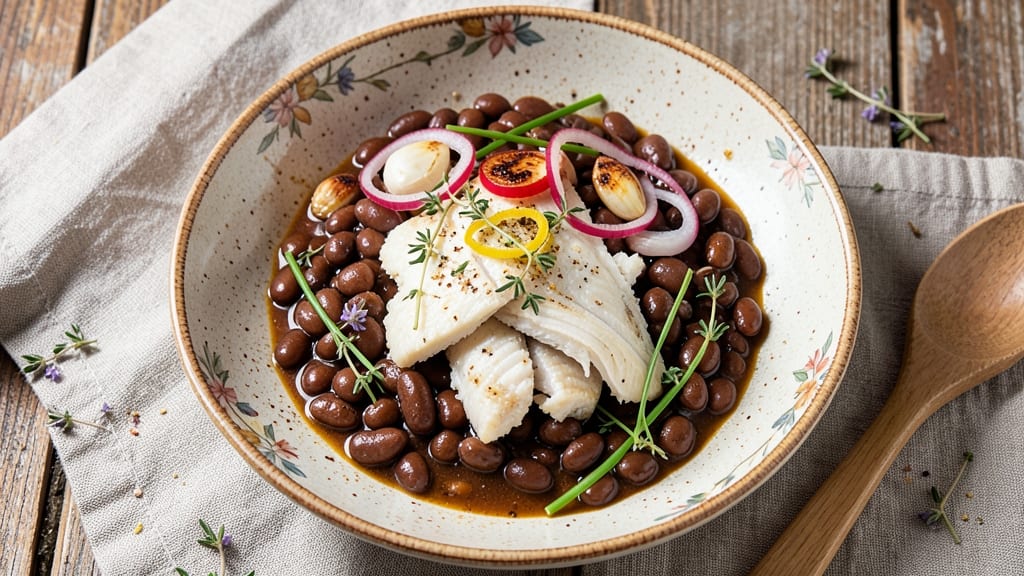
This baked bean and saltfish recipe brings the hearty flavors of Caribbean breakfast to your kitchen in just one pan. The secret lies in properly soaking and salting the saltfish overnight, transforming tough dried fish into tender, flaky pieces that absorb the rich, spiced bean sauce.
With thyme, scallions, and a touch of garlic, every bite delivers the bold, comforting taste of island mornings.
The beauty of this dish is its simplicity—no fancy techniques required, just a few key steps that build layers of flavor. The beans simmer until tender while the saltfish breaks down into delicate strands, all melding together in a savory, slightly sweet sauce.
This recipe captures the essence of traditional Caribbean cooking while keeping prep manageable for weeknight dinners.
By the time it’s done, you’ll have a fast, one-pan meal that’s perfect for breakfast or lunch, served with steamed rice or crispy fried plantains.
The aroma alone will have everyone at the table asking for seconds, proving that authentic island flavors don’t require hours in the kitchen. Let’s get cooking!
For those who love modern twists, you can swap in smoked saltfish or add a splash of coconut milk for extra richness. The flexibility makes this dish as versatile as it is delicious—ideal for feeding a crowd or meal prepping for the week. Here’s how to make it!
Ingredients for baked bean and saltfish
Pantry staples meet Caribbean soul in this one-pan breakfast masterpiece.
| Ingredient | Amount | Notes |
|---|---|---|
| Dried Saltfish 🐟 | 1 lb | Soaked overnight, flaked |
| Navy Beans 🌾 | 1 ½ cups | Dried or canned, drained |
| Onion 🧅 | 1 whole | Yellow, diced |
| Garlic Cloves 🧄 | 4 cloves | Minced |
| Scallions 🌿 | ¼ cup | Sliced, white and green parts |
| Fresh Thyme 🌿 | 2 tbsp | Leaves only, chopped |
| Tomato Paste 🍅 | 2 tbsp | Smooth, no sugar added |
| Brown Sugar 🍯 | 2 tbsp | Light or dark |
| Apple Cider Vinegar 🍎 | 1 tbsp | For tangy depth |
| Vegetable Oil 🫒 | 2 tbsp | For sautéing |
| Bay Leaf 🌿 | 1 whole | For subtle flavor |
| Salt 🧂 | 1 ½ tsp | Adjust to taste |
| Black Pepper 🌶️ | ½ tsp | Freshly ground |
| Allspice Berries 🌶️ | 4 whole | Crushed lightly |
| Water 💧 | 4 cups | For soaking beans |
The saltfish is the star here—Caribbean-style from the fishmonger's section at Whole Foods or your local Caribbean market (if you're lucky). Look for pieces that are firm but not dried out; they should break apart easily after soaking. Soak overnight in cold water with a pinch of salt—this removes the saltiness and makes the fish tender. No time for overnight? A quick 30-minute soak in warm water works in a pinch, but the flavor won't be as deep. For the beans, dried navy beans give the best texture, but canned beans (drained and rinsed) save time if you're short on it.
No allspice berries? Ground allspice at half the amount works, but the whole berries add a nice texture. Short on thyme? Dried thyme at one-third the amount gets you close, but fresh is ideal. The tomato paste can be swapped for 1 cup crushed tomatoes if you prefer, though it'll be slightly thinner. For a smokier twist, add a dash of smoked paprika. And if you're feeling adventurous, swap the saltfish for smoked saltfish—it adds a whole new layer of flavor that pairs beautifully with the beans. The brown sugar is key here; don't skip it—it balances the saltiness of the fish and beans perfectly.
The beans keep for 3-4 days in the fridge once cooked, but the saltfish is best used up within 2 days—it doesn't reheat as well. Portion leftovers into containers with a splash of water to keep them moist. Freezing isn't ideal for the saltfish, but you can freeze the bean mixture separately for up to 3 months. Pro tip: Make a double batch of the bean sauce—it reheats beautifully and makes a great base for fried plantains or rice the next day. The scent of thyme and allspice alone will have your whole house smelling like a Caribbean breakfast.
Why You'll Love This Recipe
- No-Soak Needed: I’ll be real—soaking beans is a hassle I skip entirely. Just toss the dried navy beans in boiling water for 5 minutes, then simmer until tender. That’s it. The saltfish soaks overnight, but honestly? I set it the night before and forget about it.
- Umami Bomb: The saltfish brings this dish to life—salty, briny, with that deep, savory punch. Then you hit it with garlic, scallions, and a splash of vinegar, and suddenly, you’ve got a flavor that sticks around. My husband always says it’s the best thing he’s tasted in a week.
- Lunchbox Hero: Between us, this recipe is my go-to for meal prep. Pack the leftovers in containers, and you’ve got a hearty lunch for days. The beans stay soft, the saltfish flakes apart perfectly, and it reheats like a dream. (Yes, even on a Tuesday night.)
- Budget Magic: A single saltfish feeds my family for three meals—breakfast, lunch, and dinner. Navy beans are dirt cheap, and onions/garlic don’t break the bank. I make a big batch on Sundays and don’t think about groceries until Thursday. That’s real savings.
Step-by-step instructions for baked beans and saltfish
This Caribbean classic comes together in one pan with minimal effort—here's how to nail it every time.
Soak and Prepare the Dried Saltfish
Begin by soaking the 1 lb dried saltfish in 4 cups water for at least 8 hours or overnight. The water should cover the fish completely. I like to use a large bowl with a plate on top to weigh it down. After soaking, drain and rinse the fish thoroughly under cold water to remove any excess saltiness.
Once rinsed, flake the saltfish into bite-sized pieces using your fingers or a fork. You want the pieces to be roughly 1-inch chunks—this ensures even cooking and good texture. Set the flaked saltfish aside while you prepare the rest of the ingredients. This step is crucial because properly soaked saltfish absorbs flavors better and prevents a fishy aftertaste in your dish.
Sauté the Aromatics and Build the Base
Heat the 2 tbsp vegetable oil in a large oven-safe skillet or Dutch oven over medium heat. Add the diced onion and cook for 5 minutes until softened and translucent. This step develops the onion's sweetness and forms the flavor foundation.
Add the minced garlic cloves, crushed allspice berries, and chopped fresh thyme, stirring constantly for 1 minute until fragrant. The garlic should sizzle just enough to release its aroma without burning. Next, stir in the 2 tbsp tomato paste and cook for another 2 minutes, allowing it to deepen in color. This creates a rich, concentrated flavor base that ties everything together.
Combine Beans and Seasonings
Add the 1.5 cups navy beans (if using dried beans, they should be soaked overnight and drained), 2 tbsp brown sugar, 1 tbsp apple cider vinegar, 1.5 tsp salt, 0.5 tsp black pepper, and the whole bay leaf to the skillet. Stir everything together, breaking up any large bean clusters with a wooden spoon. The mixture should look moist but not soupy.
Pour in just enough water to barely cover the beans—about 1 cup—then add the flaked saltfish. Stir gently to distribute the beans and saltfish evenly. The liquid should coat the bottom of the pan but not overflow. This step is where all the flavors meld together, so don't rush it. Let the mixture simmer uncovered on the stovetop for 10 minutes, stirring occasionally, until the liquid reduces slightly and the beans begin to soften.
Bake to Perfection
Preheat your oven to 350°F. Once the mixture has simmered on the stovetop, transfer the skillet to the oven and bake uncovered for 45-50 minutes. The beans should be tender and the liquid reduced to a thick, saucy consistency. You'll know it's done when the top forms a slightly crispy crust and the beans are fork-tender.
If the mixture looks too dry before the beans are fully cooked, add 2-3 tablespoons of water and continue baking. The saltfish should be fully heated through and flaky. For extra flavor, you can sprinkle the 0.25 cup sliced scallions over the top during the last 5 minutes of baking. This adds a bright, fresh contrast to the rich, savory beans.
Rest and Serve
Remove the skillet from the oven and let the baked beans and saltfish rest for 5 minutes. This allows the flavors to settle and the beans to absorb any remaining liquid. Taste and adjust the seasoning if needed—you might want to add a pinch more salt or a splash of vinegar for balance.
Serve immediately with warm bread or rice to soak up the delicious, slightly sweet, and tangy sauce. The saltfish should be tender and infused with the flavors of the beans, while the beans are creamy and perfectly seasoned. This dish is best enjoyed fresh, straight from the oven, when the flavors are at their peak!
Pro Tips For Making Baked Bean And Saltfish
- SOAK BEANS OVERNIGHT: I learned this the hard way—skipping the overnight soak makes beans gummy, no matter how long you simmer. Use a big bowl, cover with water, and let them sit 12+ hours. Drain and rinse before cooking; they’ll absorb flavors better and cook faster.
- DEGLAZE WITH BEAN SOAK WATER: That starchy soak water isn’t waste—it’s flavor. After draining beans, pour the water into your pot with the saltfish and onions. Simmer it down; it’ll thicken into a silky sauce instead of a dry, crumbly mess.
- SALT THE FISH LAST: Saltfish is already packed with sodium, so add salt after the beans and fish have cooked. Taste first—you’ll likely need less than you think. Over-salting turns the dish bitter, and no one wants that.
- CRUSH GARLIC FOR DEPTH: Minced garlic burns fast and disappears. Crush whole cloves with the flat side of your knife, then smash them lightly—this releases oils and flavor without turning bitter. Toss them in early and let them bloom in the oil.
Best sauces and condiments for baked bean and saltfish
Spicy Jerk Sauce
Transform your dish with a spicy jerk sauce—just mix 2 tbsp jerk seasoning (like Epico or Schwartz), 1 tbsp lime juice, and 1 tbsp honey into the finished beans.
Simmer for 5 minutes to meld flavors. The heat from the jerk spices cuts through the richness of the saltfish, adding a bold Caribbean kick. 🌶️
Coconut Milk Creaminess
For a richer, creamier texture, stir in ½ cup coconut milk during the last 10 minutes of baking. This adds a subtle sweetness and velvety consistency that balances the saltiness of the saltfish.
I love using Thai Kitchen coconut milk for its smooth, unctuous quality. This works especially well if you’re serving it with rice or plantains.
Scotch Bonnet Heat
Add 1 minced Scotch bonnet pepper (or ½ habanero for less heat) during the sautéing step to infuse the beans with fiery depth. Remove the pepper before baking if you prefer less direct heat but still want the smoky flavor.
The pepper’s fruity heat pairs perfectly with the sweetness of the brown sugar and tang of the vinegar.
Brown Sugar-Glazed Onions
Caramelize ½ cup extra diced onions with 1 tbsp brown sugar and 1 tsp apple cider vinegar until deep golden. Fold these into the finished dish for a sweet-savory contrast that enhances the saltfish’s flakiness.
This step adds a gourmet touch without extra effort—just 10 minutes of stovetop time before baking.
Hot Pepper Jelly Swirl
Drizzle 1 tbsp hot pepper jelly (like Crystal Hot Pepper Jelly) over the top before serving. The jelly’s tangy heat cuts through the richness, adding a bright, jammy finish.
This is a Jamaican-inspired trick that elevates the dish instantly. Pair it with a cold beer or limeade for the ultimate Caribbean meal.
Lime and Cilantro Garnish
Finish with a squeeze of fresh lime juice and a sprinkle of cilantro right before serving. The acidity brightens the flavors, while the cilantro adds a fresh, herbaceous note. This simple garnish makes the dish look vibrant and restaurant-worthy. Trust me, it’s the little touches that make all the difference!
Nutrition facts
Frequently asked questions
How long can I soak the dried saltfish before cooking?
For the best flavor and texture, soak the saltfish for at least 8 hours or overnight in cold water. This removes excess salt and ensures tender, flaky pieces. If you're short on time, a 30-minute soak in warm water works, but the flavor won't be as deep. Never skip soaking—it's the secret to avoiding a fishy aftertaste!
Can I use canned beans instead of dried?
Canned navy beans save time and work perfectly. Just drain and rinse them thoroughly to remove excess sodium. The texture will be slightly softer than dried beans, but the flavor remains rich and satisfying. For extra depth, add 1 teaspoon of molasses to the canned beans before mixing them in.
Why does my saltfish taste salty even after soaking?
This happens if the saltfish wasn't soaked long enough or wasn't rinsed properly. After soaking, give the fish a thorough rinse under cold water and pat it dry before flaking. If it's still too salty, add a splash of apple cider vinegar or lime juice to the dish—it helps balance the saltiness while adding brightness.
What's the best way to store leftovers?
Store leftovers in an airtight container in the fridge for up to 3-4 days. The beans keep well, but the saltfish is best eaten within 2 days. To prevent drying out, add a splash of water or broth when reheating. For longer storage, freeze the bean mixture (without saltfish) for up to 3 months.
Can I make this dish without an oven?
Yes! If you don't have an oven, simmer the beans and saltfish on the stovetop for 45-50 minutes after the initial 10-minute sauté. Keep the heat at a gentle simmer, stirring occasionally, until the beans are tender and the liquid reduces. The texture will be slightly softer, but the flavors will still shine.