
Sauces & Condiments
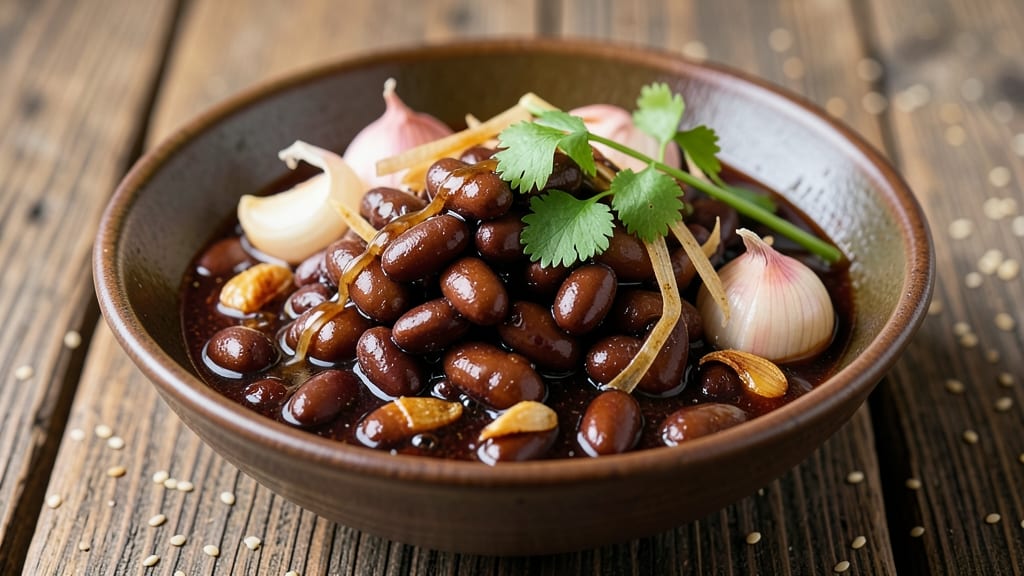
This authentic Chinese black bean sauce recipe transforms ordinary stir-fries into restaurant-quality meals with its deep, umami-rich flavor. 🌟 The secret lies in fermented black beans and a slow simmer that develops layers of complexity—no shortcuts, just traditional techniques.
I’ve perfected this vegetarian version to capture the soul of Cantonese cuisine without fish sauce or meat, proving how simple ingredients can deliver extraordinary results.
The sauce begins with fermented black beans, which provide that signature fermented depth, followed by soy sauce for saltiness and a touch of sugar to balance the flavors. Garlic and ginger add aromatic warmth, while a splash of rice vinegar brightens the finish.
The key is simmering the mixture until it thickens into a glossy, velvety paste—ready to elevate everything from noodles to dumplings.
What makes this sauce truly special is its versatility. Use it as a dipping sauce for spring rolls, a stir-fry glaze for tofu or vegetables, or even a marinade for meats. The fermented notes deepen over time, so it only gets better with storage.
With just a few pantry staples and patience, you’ll have a sauce that rivals anything you’d find in a Chinese restaurant.
Once you taste the difference, you’ll never go back to store-bought versions. The process is straightforward, but the reward—a sauce packed with authentic flavor—is unmatched. Let’s get started on creating this culinary game-changer.
Ingredients for authentic chinese black bean sauce
Nine simple ingredients transform into a sauce that rivals restaurant-quality Chinese flavors.
| Ingredient | Amount | Notes |
|---|---|---|
| Fermented Black Beans 🫘 | ½ cup | Rinse thoroughly before use |
| Light Soy Sauce 🥄 | ½ cup | Use high-quality brand |
| Dark Soy Sauce 🥄 | 2 tbsp | For richer color |
| Granulated Sugar 🍚 | 2 tbsp | Or brown sugar for depth |
| Garlic Cloves 🧄 | 6 cloves | Peeled and smashed |
| Fresh Ginger 🌿 | 2 tbsp | Grated, not minced |
| Rice Vinegar 🍶 | 1 tbsp | Seasoned preferred |
| Sesame Oil 🫒 | 1 tbsp | Toasted, for aroma |
| Water 💧 | ½ cup | Filtered preferred |
| Cornstarch 🌾 | 1 tsp | For thickening |
Fermented black beans are the heart of this sauce—look for them in the Asian aisle at Trader Joe's or H Mart, where they're freshest. The darker and more pungent, the better, but rinse them well before using to remove excess salt. For soy sauce, Kikkoman light soy is my go-to, but any good-quality brand works. The dark soy adds that signature deep color—don't skip it. If you can't find fermented black beans, black soybeans (douchi) are a decent substitute, though they lack the same fermented depth. The ginger should be fresh and aromatic—no rubbery roots here.
No rice vinegar? White vinegar in a pinch, but the flavor will be sharper. Sesame oil is non-negotiable for that nutty aroma—toast it briefly in a dry pan before adding to deepen the flavor. The cornstarch is key for that glossy finish, but if you're short, 1 tsp arrowroot powder works too. For extra umami, add 1 tsp vegetarian oyster sauce (check for fish-free versions). The sugar balances the saltiness, but if you prefer less sweetness, reduce to 1 tbsp. And trust me, toasting the garlic and ginger first makes all the difference—it unlocks their full potential.
This sauce only gets better with time—store it in a sealed jar in the fridge for up to 2 weeks, where the flavors meld beautifully. For longer storage, freeze in ice cube trays—perfect for single-use portions. The sauce thickens as it cools, so add a splash of water if needed. Use it within 3 months for peak flavor. I always make a double batch—one for immediate use, one to stash in the freezer for lazy weeknights. Pro tip: Let it come to room temperature before using—it coats better and tastes more complex.
Why You'll Love This Recipe
- Pantry Magic: I swear by this sauce because it uses what I already have—no special shopping trips. Those fermented black beans? I keep a jar in my cupboard for stir-fries, and when I open it, that funky, umami punch is instant flavor without extra effort.
- Umami Bomb: The dark soy sauce gives it that glossy, caramelized depth, while the garlic cloves sizzle into something crisp and aromatic. Honestly, the first time I tasted this, I thought, "Why didn’t I make this sooner?"—that’s how addictive the balance of salty, sweet, and funky is.
- Sauce for Everything: Slather it on rice, toss it with noodles, or drizzle it over grilled meats—this sauce is my secret weapon for lazy weeknights. Between us, I’ve even used it as a marinade for tofu, and it turned out ridiculously good.
- Budget Stretch: A little goes a long way, and this sauce keeps for weeks in the fridge. I make a big batch, freeze half, and suddenly I’ve got a flavorful, cheap way to dress up simple meals without breaking the bank. (Yes, even on a Tuesday night.)
Step-by-step instructions for fermented black bean sauce
This sauce captures the umami depth of traditional Chinese cooking—rich, complex, and perfect for stir-fries or dipping.
🍳 Step 1: Toast the Fermented Black Beans
Heat a dry skillet over medium heat and add the 0.5 cup fermented black beans. Toast them for 3-4 minutes, stirring constantly, until they release their nutty aroma and begin to turn a deeper brown. You'll see tiny oil droplets form—this is the flavor unlocking.
Don't walk away; they burn quickly. The beans should smell intensely aromatic, like a mix of soy sauce and toasted nuts. Once they're fragrant and slightly crispy, remove them from the pan and set aside. This toasting step is non-negotiable—it builds the sauce's authentic depth.
🍳 Step 2: Build the Sauce Base with Aromatics
In the same skillet, add 1 tablespoon sesame oil over medium-low heat. Add the 6 smashed garlic cloves and 2 tablespoons grated fresh ginger, cooking for 1-2 minutes until fragrant but not browned. You want the garlic to soften slightly while maintaining its fresh aroma.
Here's the thing—if you let the garlic brown, it'll turn bitter. Instead, focus on that sweet, pungent aroma that should fill your kitchen. Add the toasted black beans back to the pan and stir for 30 seconds to combine their flavors with the aromatics.
🥘 Step 3: Combine Wet Ingredients
Pour in the 0.5 cup light soy sauce, 2 tablespoons dark soy sauce, 2 tablespoons granulated sugar, and 1 tablespoon rice vinegar. Stir well to dissolve the sugar completely. The mixture will bubble gently as it comes together—this is where the sauce's complexity begins to form.
Let the sauce simmer for 3-4 minutes until it thickens slightly. You're looking for a consistency where it coats the back of a spoon but isn't syrupy. If it reduces too quickly, add 1-2 tablespoons of the 0.5 cup water to balance it out.
⏰ Step 4: Thicken and Finish
In a small bowl, whisk together the 1 teaspoon cornstarch with 2 tablespoons of the 0.5 cup water until smooth. Pour this slurry into the simmering sauce and stir constantly for 1-2 minutes until it thickens to a glossy, coatable consistency.
Taste and adjust seasoning—you might want to add a touch more light soy sauce for saltiness or sugar for balance. The sauce should be rich, slightly sweet, and deeply savory with that fermented black bean complexity. Let it cool slightly before using.
Pro Tips For Making Authentic Chinese Black Bean Sauce
- STIR CONSTANTLY ON MEDIUM: I learned this the hard way—black bean sauce burns faster than you’d think. Keep the heat at medium and stir every 10-15 seconds once it starts sizzling. The sauce needs to caramelize, not char, so don’t walk away.
- SOAK BEANS 30 MINUTES: Fermented black beans hold moisture like sponges. Toss them in warm water for 30 minutes before cooking to soften them up—this makes them release flavor more smoothly. (Yes, even if you’re impatient like me.)
- USE DARK SOY SAUCE LAST: Add dark soy sauce only in the final 30 seconds of cooking. It’s not just for color—it burns easily, and you’ll end up with bitter chunks if you add it too early. Trust me, your sauce will look (and taste) better.
- MINCE GARLIC FINE: Skip the rough chop. Finely minced garlic (almost paste-like) blends better into the sauce and prevents those annoying little chunks. I was skeptical until I tried it—now I won’t go back.
Pro cooking tips for great authentic chinese black bean sauce
Toast the Beans
Never skip toasting your fermented black beans—this unlocks their full nutty, umami potential. Use a non-stick skillet over medium heat and toast them for exactly 3-4 minutes, stirring constantly with a wooden spoon to prevent scorching.
The moment you smell that deep, soy-like aroma (like a cross between toasted nuts and fermented miso), they're ready. 🔥
Pro tip: If your beans are particularly salty, rinse them twice before toasting to balance the flavor. I've found H Mart brand fermented black beans have the perfect salt-to-aroma ratio, but always taste before proceeding.
Control the Heat
When cooking the garlic and ginger, medium-low heat is critical—too high and you'll burn them, creating bitter flavors. I use a cast-iron skillet because it maintains even heat distribution, but a stainless steel pan works too. Add the sesame oil first to help distribute the heat evenly.
Watch the garlic closely: it should soften in 1-2 minutes but never turn golden. The moment it starts browning, remove the pan from heat. This step makes the difference between a good sauce and a great one.
Simmer with Precision
After adding the wet ingredients, let the sauce simmer uncovered on low heat. This allows excess moisture to evaporate while preventing a skin from forming. Stir occasionally with a heatproof silicone spatula to prevent sticking—Lekue brand spatulas are my favorite for their heat resistance.
If your sauce reduces too quickly, add water gradually—1 tablespoon at a time—until you reach the desired consistency. The sauce should coat the back of a spoon but still flow smoothly. Patience here prevents a glue-like texture.
Thicken Like a Pro
The cornstarch slurry is your secret weapon for that restaurant-quality gloss. Whisk it thoroughly in a small bowl to eliminate lumps—Bob's Red Mill cornstarch works best for me. Pour it in slowly while stirring constantly with a chopstick for precision control.
Simmer for exactly 1-2 minutes after adding the slurry, stirring vigorously. The moment it reaches a glossy, velvety consistency, remove from heat. Overcooking will make it grainy—trust your eyes and taste buds here.
Flavor Balancing
Always taste your sauce before serving. The perfect balance should have: - Rich umami from the fermented beans - Bright acidity from the rice vinegar - Sweetness to cut through the salt Adjust with ½ teaspoon increments of soy sauce or sugar.
I often add a pinch of white pepper for depth—it's subtle but enhances the overall complexity.
Let the sauce rest for 10 minutes before using. This allows the flavors to meld completely, giving you that authentic restaurant-quality depth that takes home cooks to the next level. ✨
Nutrition facts
Frequently asked questions
What's the difference between fermented black beans and regular black beans?
Fermented black beans have a deep, funky umami flavor from natural fermentation, while regular black beans are plain and starchy. The fermented version is essential for authentic Chinese black bean sauce—it provides that signature tangy, savory depth that regular beans can't replicate. Look for them in the Asian grocery aisle, often labeled as "black bean garlic sauce" or "fermented black beans."
Can I make this sauce without dark soy sauce?
Yes, but your sauce will be lighter in color. Use 1 extra tablespoon of light soy sauce for similar saltiness, though the deep mahogany hue comes from dark soy. For a compromise, try 1 tablespoon dark soy + 1 teaspoon molasses to mimic the color and slight caramel notes.
How long does homemade black bean sauce keep?
Store in an airtight container in the fridge for up to 2 weeks, where flavors deepen over time. For longer storage, freeze in ice cube trays—thaw overnight in the fridge before using. The sauce thickens when chilled, so add a splash of water when reheating to restore smoothness.
What if my sauce turns out too salty?
Don't panic! Thin with 1-2 tablespoons water and add ½ teaspoon sugar to balance. For extra depth, stir in 1 teaspoon grated ginger or minced garlic to mask the saltiness. If the sauce is still too strong, mix it 50/50 with a neutral oil (like vegetable oil) when using as a stir-fry glaze.
Can I use this sauce for non-Chinese dishes?
It's perfect for Thai curries, Vietnamese pho, or even as a marinade for grilled meats. The fermented depth pairs beautifully with coconut milk in curries or enhances the umami in BBQ sauces. For a fusion twist, stir it into taco seasoning for a Chinese-Mexican fusion flavor bomb.