
Soups & Stews
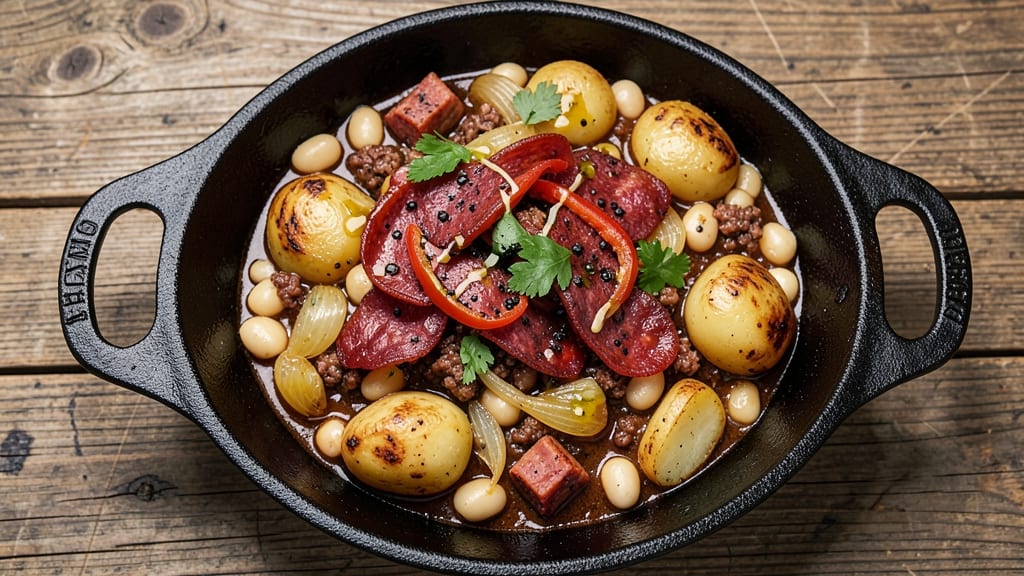
This Asturian bean stew recipe delivers the rich, comforting flavors of Spain’s most beloved winter dish—fabada asturiana—with tender white beans, smoky chorizo, and melt-in-your-mouth potatoes. The secret lies in slow simmering, where pork cuts and spices meld into a creamy, hearty broth that transforms simple ingredients into a restaurant-worthy meal.
What makes this recipe special is its balance of tradition and approachability, perfect for cozy weeknights or special gatherings.
Traditionally made with white beans, chorizo, morcilla (blood sausage), and tocino, this stew develops deep, savory notes over 2+ hours of simmering.
The key to achieving that signature creamy texture is cooking the beans until they’re tender but still hold their shape, while the pork infuses the broth with smoky, garlicky richness.
Unlike quicker stews, fabada asturiana rewards patience—each layer of flavor builds gradually, creating a dish that’s as satisfying as it is nourishing.
By the time you’re done, you’ll have a hearty, aromatic stew with perfectly tender beans, crispy chorizo, and fluffy potatoes—all swimming in a velvety broth that’s impossible to resist. The aroma alone will fill your kitchen with warmth, while the texture delivers the perfect balance of creaminess and heartiness.
This is the kind of meal that feels like a hug in a bowl, especially when served with crusty bread to soak up every last drop.
Whether you’re recreating a classic Asturian tradition or adapting it for modern tastes, this recipe stays true to its roots while being simple enough for home cooks. The long simmering time makes it ideal for meal prep, and the flavors only deepen over time.
Let’s get started on this foolproof, comforting classic that’s sure to become a family favorite.
Ingredients for asturian bean stew
These traditional ingredients transform into Spain’s most comforting winter stew—rich, smoky, and deeply satisfying.
| Ingredient | Amount | Notes |
|---|---|---|
| White Beans (Navy or Cannellini) 🌱 | 2 cups | Dried, soaked overnight (or 2 cans, drained) |
| Chorizo 🌭 | ¾ lb | Spanish chorizo, sliced into rounds |
| Morcilla (Blood Sausage) 🥓 | ½ lb | Spanish morcilla, sliced |
| Tocino (Spanish Pancetta) 🥓 | ½ lb | Diced, or substitute thick-cut bacon |
| Yukon Gold Potatoes 🥔 | 1 ½ lb | Peeled, cut into 1-inch chunks |
| Yellow Onions 🧅 | 1 whole | Diced, about 2 cups |
| Garlic Cloves 🧄 | 8 cloves | Minced, or 2 tsp pre-minced |
| Smoked Paprika 🌶️ | 2 tsp | Sweet or hot, for depth |
| Ground Black Pepper 🌶️ | 1 tsp | Freshly cracked, for heat |
| Bay Leaves 🌿 | 2 whole | For aromatic depth |
| Extra-Virgin Olive Oil 🫒 | ¼ cup | For sautéing, fruity variety |
| Dry Sherry 🍷 | ½ cup | Or substitute white wine |
| Chicken or Vegetable Broth 💧 | 4 cups | Low-sodium preferred |
| Salt 🧂 | 1 ½ tsp | Diamond Crystal kosher salt |
| Fresh Parsley 🌿 | ¼ cup | Chopped, for garnish |
The beans are the heart of this dish—dried navy or cannellini deliver that signature creamy texture. If using dried, soak overnight for perfect tenderness. For shortcuts, Trader Joe's or Whole Foods carry high-quality canned beans, but nothing beats the depth of dried. The chorizo and morcilla? Spanish specialty stores or the international aisle at Walmart often carry them—look for bright red chorizo and dark, moist morcilla. If you can't find morcilla, Italian blood sausage works in a pinch, but it won't be quite the same. The tocino (Spanish pancetta) adds that unmistakable smoky richness—substitute thick-cut bacon if needed, but don't skip it.
No sherry on hand? Dry white wine or even extra broth keeps the flavor profile intact. The smoked paprika is non-negotiable—it's what gives fabada its signature depth. Penzeys or La Boîte sell excellent varieties, but the regular grocery store stuff works fine. Fresh parsley might seem optional, but that bright green garnish cuts through the richness beautifully. For the broth, low-sodium is key—you'll be adding plenty of salt later. The potatoes should be Yukon Gold or similar waxy variety—they hold their shape better than russets during the long simmer. If you're feeling adventurous, add a few slices of pancetta along with the tocino for extra crispy bits.
This stew tastes even better the next day—plan ahead. Store leftovers in the fridge for 4-5 days or freeze for up to 3 months. The flavors meld beautifully over time, so don't hesitate to make extra. For serving, I always recommend crusty bread—a good sourdough or baguette from the bakery section at Costco or Whole Foods is perfect for soaking up that velvety broth. If you're making this ahead for a gathering, assemble everything except the broth, refrigerate overnight, then simmer the next day—the flavors develop more deeply this way.
Why You'll Love This Recipe
- One-Pot Magic: I swear by this recipe when I’m too tired to scrub pots—just toss everything in one deep skillet, let it simmer, and walk away. The beans soften while the chorizo and morcilla render their own fat, so you’re basically making flavor and cleanup disappear.
- Flavor Explosion: Between the smoky chorizo, the iron-rich morcilla, and the buttery Yukon Golds, every bite is a party in your mouth. The tocino adds this crispy, salty crunch that cuts through the richness—like a hug from your abuela’s kitchen.
- Weeknight Workhorse: This stew is my go-to for game days, lazy Sundays, or when I’ve got a houseful of people who won’t leave until they’re full. Double the batch, and you’ve got lunch tomorrow or a freezer meal for when you’re not feeling it.
- Budget Feast: I make this when I want to impress without breaking the bank—chorizo and morcilla stretch across multiple meals, and the beans bulk it up so everyone leaves happy (and full). Honestly, it’s the kind of dish that makes grocery day feel like a win.
Step-by-step instructions for Asturian bean stew
This hearty stew delivers deep, smoky flavors and tender textures - every step builds on the last.
Sauté the Spanish Cured Meats
Heat the 0.25 cup extra-virgin olive oil in a large Dutch oven over medium heat. Add the sliced 0.75 lb chorizo and 0.5 lb morcilla, cooking for 5-6 minutes until the chorizo releases its vibrant red oils and the morcilla begins to brown. Remove the meats with a slotted spoon and set aside.
In the same pot, add the diced 0.5 lb tocino and cook for another 4-5 minutes until golden and crispy around the edges. The tocino should render its fat while maintaining some texture. Here's the thing - don't overcrowd the pan or the tocino will steam instead of crisp. You want that beautiful caramelization that forms the flavor base for this stew.
Develop the Aromatic Base
Add the diced 1 whole yellow onion to the Dutch oven and cook for 5 minutes until softened and translucent. Stir in the 8 cloves minced garlic and cook for 30 seconds until fragrant - you should smell that sweet garlic aroma filling your kitchen.
Sprinkle in the 2 tsp smoked paprika and 1 tsp ground black pepper, stirring constantly for 1 minute to toast the spices. This releases their essential oils and deepens their flavor. The paprika will infuse the entire stew with its characteristic smokiness that defines Asturian cuisine. Add the 2 whole bay leaves next, as they'll simmer gently and contribute subtle earthy notes.
Build the Stew Foundation
Pour in the 0.5 cup dry sherry and scrape up any browned bits from the bottom of the pot. Let it simmer for 2 minutes until reduced by half. This step concentrates the flavors and creates a rich foundation for the stew. Add the 2 cups white beans (drained if using canned) and the 1.5 lb peeled, cubed Yukon Gold potatoes.
Pour in the 4 cups chicken or vegetable broth and bring to a gentle boil. Then reduce heat to low-medium and add the 1.5 tsp salt. Return the reserved meats to the pot and stir gently to combine. The liquid should just barely cover the ingredients - you want enough to create a thick, hearty stew but not a soup.
Simmer to Perfect Tenderness
Cover the Dutch oven and simmer for 45-50 minutes, stirring occasionally, until the potatoes are fork-tender and the beans are creamy. The stew should thicken naturally as the starches release from the potatoes. If it gets too thick before the potatoes are done, add ½ cup water to maintain the proper consistency.
Here's where patience pays off - the longer you simmer, the deeper the flavors develop. You'll know it's ready when the potatoes collapse easily under gentle pressure and the beans are tender but still hold their shape. The meats should be heated through and infused with all the stew's flavors. Taste and adjust seasoning if needed - you might want to add a bit more salt or a splash of sherry for brightness.
Finish and Serve
Remove the bay leaves and stir in the 0.25 cup chopped fresh parsley. The parsley adds freshness that cuts through the richness of the cured meats. Let the stew sit off the heat for 5 minutes to allow the flavors to meld completely. The parsley will release its vibrant green color and bright aroma, finishing the dish beautifully.
Ladle the stew into warm bowls and serve immediately with crusty bread to soak up every last drop of that smoky, savory sauce. This stew tastes even better the next day as the flavors continue to develop, so consider making extra for leftovers. The combination of tender beans, crispy meats, and creamy potatoes creates a truly comforting dish that captures the essence of Asturian home cooking.
Pro Tips For Making Asturian Bean Stew
- SOAK BEANS OVERNIGHT: I learned this the hard way—rushing the soak leads to gummy beans. Use cold water, swap it once, and let them sit 12+ hours. The texture difference is night and day, especially with navy beans which can stay firm even after long cooking.
- COOK CHORIZO LOW AND SLOW: Chorizo releases flavor when rendered gently, not fried. Slice it thin, add it to the pot after the beans and potatoes start simmering, then reduce heat to a bare simmer. High heat burns it before it melts—you’ll taste the difference.
- PEEL POTATOES AFTER COOKING: Yukon Golds hold their shape better if you peel them after boiling. Parboil them whole for 8 minutes first, then peel and slice—no more mushy edges. (Yes, it’s an extra step, but the stew stays together.)
- SKIP THE MORCILLA UNTIL THE END: Blood sausage breaks apart in long cooking. Add it sliced in the last 15 minutes so it stays intact and soaks up the stew’s rich flavors. If you’re impatient, wrap it in cheesecloth first—it’ll hold shape even longer.
Troubleshooting this recipe
Beans Too Hard?
If your beans remain tough after simmering, they likely need more time. Dried beans should cook for 90-120 minutes total—don’t rush this! For canned beans, simmer an extra 20-30 minutes to soften them properly.
I’ve found that adding a pinch of baking soda (⅛ tsp) to the soaking water (for dried beans) speeds up tenderizing without altering flavor. 💡
Broth Too Thin?
If your stew is watery, reduce the liquid by 1 cup and simmer uncovered for 15-20 minutes to thicken. Alternatively, mash 2-3 potatoes against the pot’s side to release starch.
For extra richness, stir in 1 tbsp cornstarch mixed with 2 tbsp cold water and simmer for 5 minutes until thickened. This trick works wonders without altering the dish’s authenticity.
Meats Not Infused?
If your chorizo or morcilla lacks flavor, they weren’t cooked long enough. Return them to the pot and simmer an extra 15-20 minutes to absorb the broth’s depth.
For extra smokiness, wrap the meats in aluminum foil with 1 tsp smoked paprika and ½ tsp cayenne, then steam for 10 minutes before adding back. This ensures they’re fully integrated into the stew’s flavor profile. 🌶️
Potatoes Mushy?
Overcooked potatoes turn to mush because they’re too small or simmered too long. Cut them into 1-inch chunks (not smaller) and remove them 10 minutes early—they’ll finish cooking off the heat.
For extra structure, add ½ cup cold water when they’re nearly done and simmer for 5 minutes more. This resets their texture beautifully.
Sherry Substitute?
If you’re missing sherry, use ½ cup dry white wine or even ½ cup apple cider vinegar mixed with ¼ cup broth. The acidity mimics sherry’s brightness, but the flavor won’t be identical.
For a closer match, add ½ tsp vanilla extract or 1 tsp honey to round out the taste. This keeps the dish balanced without sacrificing depth. 🍷
Stew Too Salty?
If your stew is overly salty, dilute it by adding ½ cup water or broth and simmering for 10 minutes. For a more dramatic fix, blend ½ cup stew with ½ cup cold water, strain it back in, and simmer for 5 minutes.
This reduces salt concentration while maintaining texture. Avoid adding fresh ingredients like potatoes—they’ll dilute the flavor unevenly.
Nutrition facts
Frequently asked questions
Can I make Asturian bean stew without chorizo or morcilla?
Yes, you can adapt this recipe! Replace chorizo with Italian sausage or smoked bacon (about 1 lb total) and omit the morcilla or substitute with Italian blood sausage. The flavor will differ slightly but still deliver that hearty, smoky depth. For a vegetarian version, use mushrooms and smoked paprika to mimic the meaty richness.
How long can I store leftovers and how do I reheat them?
Store leftovers in an airtight container in the fridge for 4-5 days or freeze for up to 3 months. To reheat, warm gently on the stove over low heat with 2-3 tablespoons of water or broth to restore creaminess. Never microwave—it breaks down the texture. The flavors actually improve after resting overnight!
What's the best way to soak dried beans for this stew?
Rinse 2 cups dried beans thoroughly, then soak in 6 cups water with 1 tsp salt and 1 tsp baking soda (speeds tenderizing) for 8-12 hours. Drain and rinse before cooking. For faster prep, use the quick-soak method: Boil beans for 2 minutes, then let sit off heat for 1 hour before draining. The key is proper hydration—never skip soaking!
Can I make this stew in a slow cooker?
Brown the meats and sauté aromatics in a skillet first, then transfer everything to the slow cooker with 4 cups broth. Cook on low for 6-7 hours or high for 3-4 hours. The slow cooker's gentle heat enhances the beans' creaminess. Add ½ cup water if the stew gets too thick during cooking. The texture will be even more tender than stovetop!
Why does traditional fabada use so much pork?
Pork plays three key roles in this stew: flavor (smoked paprika and spices), texture (crispy chorizo, tender morcilla), and tradition. In Asturias, pork was historically preserved through curing and smoking, making it a staple during winter. The fat renders into the broth, creating that signature creamy consistency. While modern versions use less pork, the traditional ratio reflects centuries of regional culinary heritage.