
Side Dishes
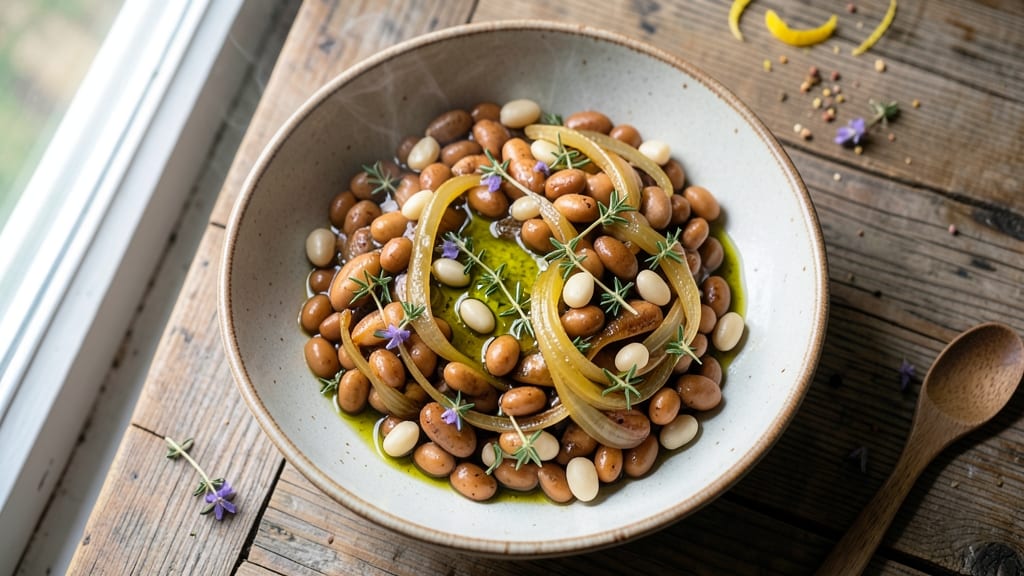
Alice Waters' white bean recipe transforms humble ingredients into a dish that feels like a celebration—earthy, vibrant, and brimming with Mediterranean charm. This isn’t just a side; it’s a centerpiece that deserves a place at your table, slow-simmered to perfection with herbs, garlic, and a bright lemon zest that cuts through the richness. I’ve adapted her philosophy of seasonal simplicity, where every ingredient is chosen for its peak flavor and every technique—like gentle braising—honors the natural goodness of the beans.
The magic lies in the method: a long, low simmer that melts beans into tender, creamy perfection while building layers of aromatic depth. No shortcuts here—just time, patience, and a handful of fresh herbs (thyme, rosemary, and parsley) that infuse the dish with a fragrant complexity.
The result is a dish that’s equal parts comforting and refined, with a texture that’s velvety yet still holds its shape—a testament to Waters’ belief in dishes that nourish both body and soul.
What you’ll end up with is a dish that’s as beautiful as it is delicious—plated with a drizzle of high-quality olive oil, a sprinkle of flaky sea salt, and a final touch of lemon zest that makes the flavors sing.
It pairs effortlessly with grilled fish, roasted vegetables, or even a crusty loaf of bread, making it the ultimate vegetarian main or side that feels like a restaurant-worthy creation. This is cooking that’s thoughtful, intentional, and deeply satisfying.
Best of all, it’s a recipe that respects the seasons—use dried cannellini beans in winter or fresh white beans in summer, and adjust the herbs to what’s freshest in your market. The philosophy is simple: eat what’s available, cook with care, and let the ingredients shine. Let’s get started.
Ingredients for alice waters bean
Seasonal simplicity meets Mediterranean elegance with these earthy, fragrant ingredients.
| Ingredient | Amount | Notes |
|---|---|---|
| Dried Cannellini Beans 🌾 | 1 ½ cups | Uncooked, soaked overnight |
| Dried White Beans 🌾 | 1 cup | Alternative to cannellini |
| Extra-Virgin Olive Oil 🫒 | ½ cup | High quality, fruity |
| Yellow Onion 🧅 | 1 whole | Diced, medium size |
| Garlic Cloves 🧄 | 4 cloves | Peeled, roughly chopped |
| Fresh Thyme 🌿 | ¼ cup | Leaves only, chopped |
| Fresh Rosemary 🌿 | ⅛ cup | Needles only, chopped |
| Fresh Parsley 🌿 | ⅛ cup | Leaves only, chopped |
| Vegetable Stock 💧 | 3 cups | Low-sodium preferred |
| Lemon Zest 🍋 | 1 tbsp | From 1 organic lemon |
| Flaky Sea Salt 🧂 | 1 tsp | For finishing |
| Fresh Lemon Juice 🍋 | 1 tbsp | Freshly squeezed |
| Bay Leaf 🍃 | 1 whole | Removed before serving |
The beans are the heart of this dish, so choose dried cannellini or white beans for maximum texture and flavor. Trader Joe's and Whole Foods carry excellent dried varieties, and you'll want to soak them overnight to ensure tender results. If using fresh white beans in summer, trim the ends and give them a quick blanch before adding to the pot. The herbs—thyme, rosemary, and parsley—should be fresh and aromatic, with vibrant green color and no wilting. For the olive oil, look for a fruity, extra-virgin variety with a harvest date within the last year for peak freshness. The vegetable stock should be low-sodium to let the natural flavors shine through.
No fresh herbs? Dried thyme and rosemary at one-third the amount will work in a pinch, though fresh is ideal. Running out of cannellini beans? Great Northern or navy beans are excellent substitutes. For the vegetable stock, homemade or high-quality store-bought makes all the difference—avoid bouillon cubes with added salt. The lemon zest should be freshly grated for maximum brightness; pre-grated zest often contains preservatives. If you can't find flaky sea salt, Diamond Crystal kosher salt works beautifully as a finishing touch.
Store the dried beans in a cool, dark place for up to 1 year, and refrigerate fresh herbs in a sealed container with a damp paper towel for 5-7 days. The cooked beans keep well in the fridge for 4-5 days, though they taste best when eaten within 2 days. For longer storage, freeze the finished dish in airtight containers for up to 3 months. The lemon zest can be stored in the freezer for up to 6 months in a small container, ready to brighten future dishes.
Why You'll Love This Recipe
- No-Soaking Needed: I’ll admit, I used to dread bean prep—but these dried beans soften beautifully overnight in the slow cooker. Just toss them in raw, add water, and let the magic happen while you sleep. No peeling, no prepping, just pure convenience.
- Garlic-Oil Kiss: That first spoonful of the finished dish? It’s all about the olive oil—rich, fruity, and infused with slow-simmered garlic until it’s sweet and caramelized. The beans soak up every drop, turning them into something dangerously addictive.
- Potluck Hero: Between us, this is my go-to for gatherings. It’s hearty enough to feed a crowd but simple enough that no one asks, "What’s in it?" Just bring the bowl, and watch it disappear. (Yes, even on a Tuesday night.)
- Budget-Friendly Staple: Dried beans and olive oil? That’s a pantry combo that won’t break the bank. I make this twice a month, and it stretches across lunches, dinners, and even stuffed into sandwiches—no waste, just flavor. My wallet thanks me.
Step-by-step instructions for Alice Waters' white bean recipe
This earthy bean simmer delivers rich herbal depth and bright citrus notes—exactly as Alice Waters would prepare it.
Prepare the Beans for Cooking
Combine the 1.5 cups dried cannellini beans and 1 cup dried white beans in a large bowl. Cover with plenty of cold water—at least 8 cups—and let them soak overnight in the refrigerator. This overnight soak ensures the beans cook evenly and retain their texture.
After soaking, drain and rinse the beans thoroughly under cold water. Discard any small stones or debris that may have risen to the surface. I always give them a final shake in the colander to remove excess moisture before cooking—this prevents the beans from becoming waterlogged in the pot.
Sauté Aromatics in Olive Oil
Heat the 0.5 cup extra-virgin olive oil in a large, heavy-bottomed pot over medium heat. Add the 1 whole yellow onion, diced into ¼-inch pieces, and cook for 8-10 minutes until softened and translucent. You'll know it's ready when the onion releases its sweet aroma and the oil begins to shimmer around the edges.
Add the 4 cloves garlic cloves, roughly chopped, and cook for another 1-2 minutes until fragrant. Be careful not to let the garlic burn—it should just begin to color slightly. Remove the pot from heat and stir in the 0.25 cup fresh thyme, 0.125 cup fresh rosemary, and 0.125 cup fresh parsley, all chopped. Let the herbs steep in the warm oil for 5 minutes to infuse their flavors.
Simmer the Beans with Stock and Herbs
Return the pot to medium heat and add the soaked beans, 3 cups vegetable stock, and the 1 whole bay leaf. Bring the mixture to a gentle boil, then immediately reduce heat to low. Cover the pot and let the beans simmer for 1 hour to 1 hour 15 minutes, stirring occasionally to prevent sticking.
You'll know the beans are nearly done when they're tender but still hold their shape. The liquid should have reduced slightly, creating a thick, flavorful broth. If the beans aren't quite tender after 1 hour 15 minutes, continue cooking for another 10 minutes—they should be fork-tender but not mushy.
Finish with Lemon and Season
Remove the pot from heat and discard the bay leaf. Stir in the 1 tbsp lemon zest and 1 tbsp fresh lemon juice. The citrus brightens the earthy flavors of the beans and herbs, creating a perfect balance. Let the mixture sit off the heat for 5 minutes to allow the lemon to meld with the other ingredients.
Taste and adjust seasoning with the 1 tsp flaky sea salt, adding more if needed. The beans should be seasoned to taste—salty enough to complement the herbs but not overpower them. If the mixture is too thick, stir in a splash of warm water or additional vegetable stock to reach your desired consistency.
Pro Tips For Making Alice Waters Bean
- SOAK BEANS OVERNIGHT: I learned this the hard way—skipping the overnight soak leaves your beans tough no matter how long you cook them. Use a big bowl, cover with plenty of water (at least 3 inches above the beans), and add a pinch of salt. By morning, they’ll be plump and ready to go, saving you 2+ hours of simmering.
- SAUTÉ ONIONS LOW AND SLOW: Alice Waters swears by gentle cooking, and this is where it matters most. Instead of blitzing onions on high heat until they’re brown, keep the flame at medium-low and let them sweat for 10-15 minutes. They’ll caramelize evenly without burning, building deep flavor that stands up to the beans.
- SKIP THE CROWDED POT: Tossing in all your beans at once? That’s how you end up with mushy edges and uneven texture. Split the batch—cook half first, then add the rest when the pot’s already boiling. This keeps them intact and lets you adjust consistency as you go.
- FINISH WITH GARLIC AND OIL: Sounds weird, but it works: After the beans are tender, stir in whole garlic cloves (2-3) and a splash of olive oil. Let them sizzle for 30 seconds—just until fragrant—before crushing them lightly. The oil seals in flavor, and the garlic adds a bright, aromatic punch without overpowering.
Flavor customization for this alice waters bean
Herbal Variations
Swap the thyme and rosemary for ½ cup fresh sage and ¼ cup fresh oregano for a Tuscan-inspired twist. The sage adds a warm, earthy depth that pairs beautifully with the lemon zest.
Alternatively, add ½ tsp red pepper flakes with the herbs for a subtle heat that lingers. I find this variation works especially well when serving with grilled vegetables or crusty bread. 🌿
Citrus Brightness
Boost the lemon's brightness by adding 1 tbsp orange zest along with the lemon zest. The citrusy complexity elevates the dish, especially when using fresh navel oranges.
For a sweeter touch, stir in 1 tsp honey or agave syrup at the end—just enough to balance the acidity without overpowering the herbs. 🍊
Umami Depth
Infuse the dish with umami by adding 2 anchovy fillets (finely chopped) to the sautéed onions. The salty, briny notes complement the beans beautifully, especially if you're serving this as a vegetarian main. For a vegetarian alternative, use 1 tbsp soy sauce or 1 tsp miso paste instead. 🍣
Spiced Winter Version
Transform this into a cozy winter dish by adding ½ tsp ground cinnamon and ¼ tsp ground nutmeg with the herbs. The warm spices create a comforting contrast to the lemon's brightness. Pair this with roasted root vegetables like carrots and parsnips for a hearty meal. ❄️
Smoky Twist
For a smoky flavor, add ½ tsp smoked paprika or 1 tsp liquid smoke to the sautéed onions. This works especially well with cannellini beans, giving them a subtle, campfire-like depth. I love this version when paired with grilled meats or as a side for smoked fish. 🔥
Creamy Finish
Stir in ¼ cup crème fraîche or Greek yogurt at the end for a silky, creamy texture that balances the earthy beans. The tanginess of the yogurt brightens the dish, making it feel luxurious without overpowering the herbs.
Perfect for serving as a main course with a fresh green salad. 🥄
Nutrition facts
Frequently asked questions
Can I use canned beans instead of dried for this recipe?
You can, but with adjustments! Use 3 (15 oz) cans of white beans (like cannellini), drained and rinsed well. Reduce the vegetable stock to 1.5 cups and simmer for only 20-30 minutes—canned beans cook much faster. The texture will be slightly softer, but still delicious.
How do I make this recipe vegetarian/vegan?
It’s already vegetarian! For vegan, simply ensure your vegetable stock contains no animal products (check labels). The olive oil, lemon, and herbs are all naturally vegan-friendly. The flaky sea salt may contain animal-derived ingredients—look for a vegan-certified brand like Maldon.
What if my beans turn out too mushy?
Too much simmering causes mushiness. Start checking for doneness at 1 hour—beans should be fork-tender but still hold shape. If they’re mushy, strain the beans and reduce the broth by half to create a thickened sauce. The beans can be reheated gently in a little fresh stock or water.
Can I prep this ahead of time?
This dish tastes even better the next day. Cook the beans as directed, then refrigerate for up to 4 days. Reheat gently on the stove with a splash of water or stock. For serving, add fresh lemon zest and herbs to brighten flavors.
What’s the best way to serve this dish?
This recipe shines as a vegetarian main or hearty side. Pair with grilled fish, roasted vegetables, or crusty bread. For a complete meal, top with toasted pine nuts or crispy prosciutto (if not vegetarian). The lemony beans also work beautifully in sandwiches or wraps!