
Soups & Stews
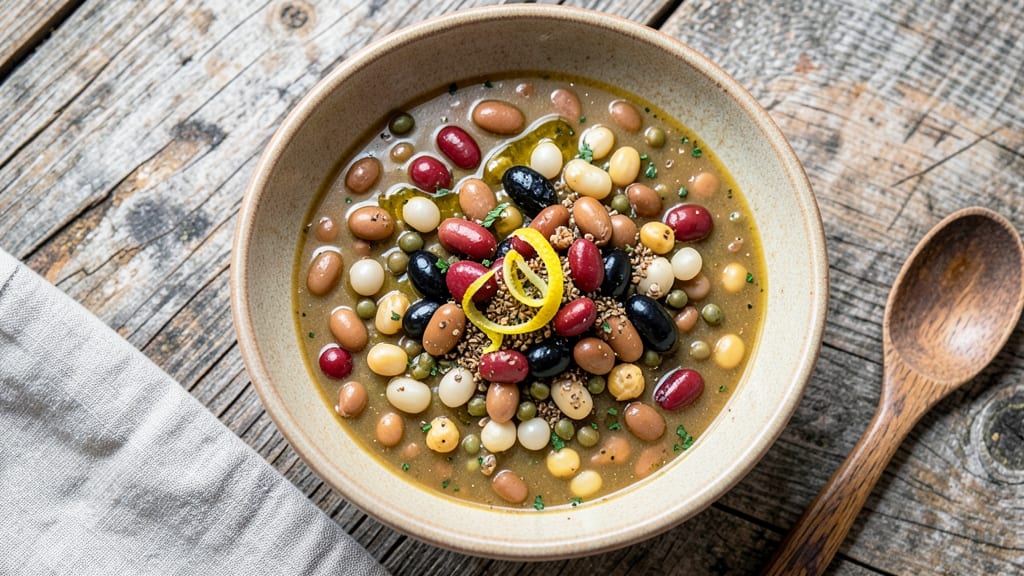
This 7 bean vegetarian soup recipe transforms simple pantry staples into a hearty, protein-rich meal that warms you from the inside out.
The beauty lies in its simplicity—no fancy ingredients, just seven different beans simmered with aromatic vegetables until they develop deep, earthy flavors that linger long after the last spoonful.
I created this recipe during a particularly chilly winter when I needed something nourishing yet effortless, and it quickly became a staple in my rotation.
The magic happens during the slow simmer, where the beans soften and absorb the rich flavors of onions, garlic, and herbs.
Unlike many vegetarian soups that can feel light or insipid, this version delivers bold, satisfying texture with every bite—thanks to the combination of tender white beans, hearty kidney beans, and slightly chewy chickpeas. The secret?
A long, gentle cook that allows all the flavors to meld together without breaking down the beans into mush.
What you'll end up with is a deeply flavorful, protein-packed soup that's perfect for meal prep, potlucks, or cozy weeknight dinners. The broth is rich and savory, the beans are perfectly tender yet hold their shape, and the vegetables add freshness and color.
This isn't just a soup—it's a complete, satisfying meal that feels indulgent yet wholesome, all while being completely vegetarian-friendly.
Pair it with crusty bread for dipping or a simple green salad to balance the heartiness. The best part? This recipe scales effortlessly, so you can make a single serving or feed a crowd without breaking a sweat. Let's get started on this pantry-to-pot masterpiece.
Ingredients for 7 bean soup recipe vegetarian
Pantry staples meet protein powerhouse in this vegetarian seven-bean masterpiece.
| Ingredient | Amount | Notes |
|---|---|---|
| Great Northern Beans (Dried) 🌱 | 1 cup | Rinsed before soaking |
| Kidney Beans (Dried) 🌱 | 1 cup | Rinsed before soaking |
| White Beans (Dried) 🌱 | 1 cup | Cannellini or navy preferred |
| Chickpeas (Dried) 🌱 | ½ cup | Rinsed before soaking |
| Black Beans (Dried) 🌱 | ½ cup | Rinsed before soaking |
| Lentils (Green or Brown) 🌱 | ½ cup | Rinsed before soaking |
| Split Peas (Dried) 🌱 | ½ cup | Rinsed before soaking |
| Yellow Onions 🧅 | 2 whole | Diced, yellow or red |
| Garlic Cloves 🧄 | 4 cloves | Minced for aromatic base |
| Carrots 🥕 | 2 whole | Peeled, chopped into chunks |
| Celery Stalks 🧅 | 3 whole | Chopped, with leaves included |
| Vegetable Broth 💧 | 6 cups | Low-sodium preferred |
| Tomato Paste 🍅 | 2 tbsp | For rich depth of flavor |
| Dried Thyme 🌿 | 1 tsp | Or 1 tbsp fresh thyme |
| Bay Leaves 🍃 | 2 whole | For subtle earthy flavor |
| Olive Oil 🫒 | 3 tbsp | Extra-virgin for richness |
| Salt 🧂 | 1 ½ tsp | Adjust to taste |
| Black Pepper 🌶️ | 1 tsp | Freshly ground preferred |
| Fresh Parsley 🌿 | ¼ cup | Chopped, for garnish |
The beans are the heart of this soup, so pick dried over canned—they hold their texture better and let you control the cooking time. Whole Foods or Trader Joe's bulk bins are perfect for finding a mix of varieties, but any grocery store carries dried beans. Look for beans with vibrant color and no signs of damage. Soaking overnight reduces cooking time dramatically—just remember to rinse them first. For a shortcut, I sometimes use pre-soaked beans from the canning aisle, but they won't have the same depth of flavor. The secret to great texture? Don't overcook them. Remove any that soften too quickly after the first hour of simmering.
No dried beans on hand? Canned beans work in a pinch, but drain and rinse them thoroughly to cut down on sodium. Fresh thyme unavailable? Dried works at one-third the amount, but toast it lightly in a dry pan first to wake up the flavor. The vegetable broth is non-negotiable—low-sodium versions like Pacific Foods or Imagine save you from adding extra salt later. For extra richness, I sometimes add a splash of balsamic vinegar or a pinch of smoked paprika to the broth. The carrots and celery can be swapped for whatever veggies you have—zucchini or sweet potatoes add sweetness, while mushrooms bring earthiness. Just keep the onion and garlic—they're the flavor anchors.
This soup tastes even better the next day as flavors meld. Store in an airtight container in the fridge for up to 5 days, or freeze portions for 3 months. I love making a big batch on Sunday and portioning it into containers for the week. The beans keep their texture beautifully when reheated gently on the stove with a splash of water. For serving, I always garnish with fresh parsley and a drizzle of olive oil—adds freshness and makes it look restaurant-worthy. Double the recipe and freeze half for those nights when you're too tired to cook.
Why You'll Love This Recipe
- No-Soaking Hassle: I’ll be real—soaking beans used to make me groan. This recipe skips it entirely. Just toss those dried beans (Great Northerns, kidney, white, chickpeas, and black) into a pot, cover with water, and let them simmer. By the time you’re chopping carrots and celery, they’re tender and ready—no waiting around.
- Umami Bomb: Between us, the flavor combo here is chef’s kiss. The kidney beans add a deep, smoky edge, while the chickpeas bring creamy texture and a little bite. A splash of balsamic vinegar at the end? Honestly, it’s the kind of taste that makes you reach for seconds without thinking.
- Lunchbox Magic: This soup tastes even better the next day—perfect for packing. I swear, my kids (yes, even the picky one) will eat it cold or reheated. Just portion it into jars, and you’ve got a week’s worth of lunches that’ll save you from takeout nights.
- Pantry Stash Winner: I keep a bag of each bean on hand just for this. It’s my go-to when I’m low on groceries or need to stretch a budget. A big pot feeds six for under $10, and the leftovers? They’re my secret weapon for lazy nights when I don’t feel like cooking.
Step-by-step instructions for 7 bean vegetarian soup
Transform pantry staples into a hearty, protein-rich soup that simmers into perfect harmony.
Prepare the Beans and Aromatics
Begin by rinsing all the dried beans—1 cup Great Northern, 1 cup Kidney, 1 cup White, 0.5 cup Chickpeas, 0.5 cup Black Beans, 0.5 cup Lentils, and 0.5 cup Split Peas—under cold water in a colander to remove any debris. Place them in a large bowl and cover with plenty of cold water (about 8 cups). Let them soak for at least 8 hours or overnight, which significantly reduces cooking time and improves digestibility.
While the beans soak, dice the 2 whole Yellow Onions, mince the 4 cloves Garlic, peel and chop the 2 whole Carrots into chunks, and chop the 3 whole Celery Stalks (including leaves). Set these aside—they'll form the aromatic base of your soup. This prep work ensures everything is ready when you're ready to cook, making the process smoother and more efficient.
Sauté the Vegetables and Build the Base
Heat 3 tablespoons Olive Oil in a large pot or Dutch oven over medium heat. Add the diced onions and cook for 5-6 minutes until they soften and begin to turn translucent. This step develops their natural sweetness and removes any sharpness. Add the chopped carrots and celery stalks, cooking for another 5 minutes until they begin to soften as well.
Stir in the minced garlic and cook for 30 seconds until fragrant—this releases the full flavor of the garlic without letting it burn. Add the 2 tablespoons Tomato Paste and cook for 1 minute, stirring constantly. This creates a rich, slightly sweet base that will deepen the flavor of the entire soup. The tomato paste also helps bind the beans together, creating a cohesive texture.
Combine and Simmer the Soup
Drain the soaked beans and add them to the pot along with the 6 cups Vegetable Broth, 1 teaspoon Dried Thyme, 2 whole Bay Leaves, 1.5 teaspoons Salt, and 1 teaspoon Black Pepper. Bring the mixture to a boil over high heat, then immediately reduce the heat to low and let it simmer uncovered for 1.5 to 2 hours. This slow cooking time ensures the beans become tender and the flavors meld beautifully.
During this time, stir the soup occasionally and add more broth if it becomes too thick. You'll know it's ready when the beans are fork-tender and the soup has a thick, hearty consistency. The bay leaves and thyme will infuse the broth with their earthy flavors, while the tomato paste adds a subtle depth that ties everything together. This is where patience pays off—rushing the simmering will leave you with tough beans and a watery soup.
Finish and Serve
Once the beans are tender, remove the 2 whole Bay Leaves and discard them. Taste the soup and adjust the seasoning with additional salt or pepper if needed. The soup should be rich, flavorful, and well-balanced—savory from the beans, slightly sweet from the carrots, and aromatic from the herbs.
Ladle the soup into bowls and garnish each serving with 0.25 cup Fresh Parsley, chopped finely. The parsley adds a fresh, bright note that cuts through the richness of the beans and broth. Serve immediately while hot, and enjoy the comforting, protein-packed result of your efforts. This soup tastes even better the next day as the flavors continue to develop, making it perfect for meal prep or a cozy dinner.
Pro Tips For Making 7 Bean Soup Recipe Vegetarian
- SOAK BEANS SEPARATELY: White beans and chickpeas need 8–12 hours, while black and kidney beans soften faster in 4–6. I learned this the hard way—mixing them all in one bowl means some beans stay rock-hard while others turn mushy. Use two bowls if you’re short on time, or just soak the tougher ones overnight and quick-soak the rest in boiling water for 30 minutes.
- SIMMER LOW AND LONG: This soup isn’t a race—keep it at a gentle bubble, not a rolling boil, after the beans start cooking. I used to rush it, and the beans either stayed tough or split into a gluey mess. Aim for 1.5–2 hours after beans are tender; the flavors meld when they’re barely simmering, not when they’re fighting for space.
- SKIP THE SALT UNTIL LATER: Adding salt early toughens the beans, especially the Great Northerns and chickpeas. Wait until the beans are fully cooked, then season with salt and acid (like tomatoes or vinegar) to brighten the whole pot. Trust me, your soup will taste richer without this common rookie move.
- STIR IN THE KIDNEYS LAST: Kidney beans turn mushy faster than the others. Hold them back until the last 20 minutes of cooking, then add them with any fresh herbs or greens. This keeps their texture firm and their color vibrant—no more sad, grayish beans lurking in the mix. (Yes, even if you’re impatient like me.)
Essential equipment for perfect results
Large Pot Essentials
A 6-8 quart Dutch oven is my go-to for this recipe—it holds all the ingredients comfortably while allowing even heat distribution. The deep sides prevent spills during the long simmer, and its heavy bottom maintains consistent temperature.
I use a Lodge 5.5-quart for smaller batches and a Le Creuset 8-quart for feeding crowds. If you don't have a Dutch oven, a heavy-bottomed stockpot with a lid works just as well. 🔥
Bean Soaking Tools
For soaking beans, I recommend a large mixing bowl (at least 8-quart capacity) with a fine-mesh colander for rinsing. A glass or stainless steel bowl prevents any off-flavors from plastic.
For overnight soaking, I use a glass jar with a lid (like a Ball Mason jar) to keep beans submerged. If you're short on time, a pressure cooker (like an Instant Pot) can reduce soaking time to just 1 hour before cooking.
Precision Measuring
Accurate measurements are key for balanced flavor. I use a digital kitchen scale for beans (they're often sold by weight) and a stainless steel measuring cup set for broth and liquids. For spices, a small scoop or spice grater ensures consistent amounts.
A microplane comes in handy for fresh garlic—it's faster than mincing and releases more flavor. Never eyeball measurements with beans or spices! 💡
Simmering Accessories
You'll need a wooden spoon (at least 12 inches long) for stirring without scratching your pot. A fine-mesh strainer helps remove any debris from rinsed beans. For flavor testing, I keep a small ladle handy.
The Instant Pot or slow cooker can replace stovetop simmering—just set to High Pressure for 20 minutes (Instant Pot) or Low for 4-5 hours (slow cooker).
Garnish & Serving
Fresh parsley needs a sharp chef's knife and cutting board. For extra presentation, I use small ceramic bowls (like Corelle) that hold heat well. A fine-mesh sieve helps strain any excess liquid if you want thicker soup.
For serving, a slotted spoon makes it easy to transfer soup to bowls while keeping garnishes separate. Don't forget a small pitcher for extra broth or olive oil at the table! 🌿
Nutrition facts
Frequently asked questions
Can I substitute canned beans for dried in this recipe?
Yes, but with adjustments! Use 2 (15 oz) cans of each bean type (drained and rinsed) to replace the dried versions. The texture will be slightly softer, and you'll lose some of the depth from slow cooking. For best results, simmer the canned beans for 30-45 minutes after combining to let flavors meld. Add a splash of broth if needed to maintain consistency.
How do I make this soup vegan?
Skip the optional garnish of olive oil and use vegetable broth instead of any dairy-based options. All the beans, vegetables, and spices in this recipe are naturally vegan. For extra richness, stir in 1 tablespoon nutritional yeast at the end—it adds a cheesy, umami flavor without animal products. The soup remains hearty and satisfying!
Why does my soup taste bland after simmering?
Bland flavor usually means one of three things: under-seasoned broth, rushed cooking time, or missing acidity. First, ensure you're using a flavorful vegetable broth (not water). Simmer uncovered for the full 1.5-2 hours to let flavors develop. For extra depth, add 1 teaspoon apple cider vinegar or ½ teaspoon smoked paprika at the end. Taste as you go!
Can I freeze this soup for later?
Let the soup cool completely, then transfer to airtight containers or freezer bags, leaving 1-inch headspace for expansion. It freezes beautifully for up to 3 months. Thaw overnight in the fridge and reheat gently on the stove with a splash of water or broth. The texture remains excellent—just stir well before serving.
What's the best way to reheat leftovers?
Reheat gently on the stove over low-medium heat, stirring occasionally, until warmed through (5-7 minutes). Avoid microwaving as it can make the beans mushy. For extra flavor, add a splash of water or broth and let it simmer for 5 minutes uncovered. The soup often tastes even better the second day as flavors continue to develop!