
Soups & Stews
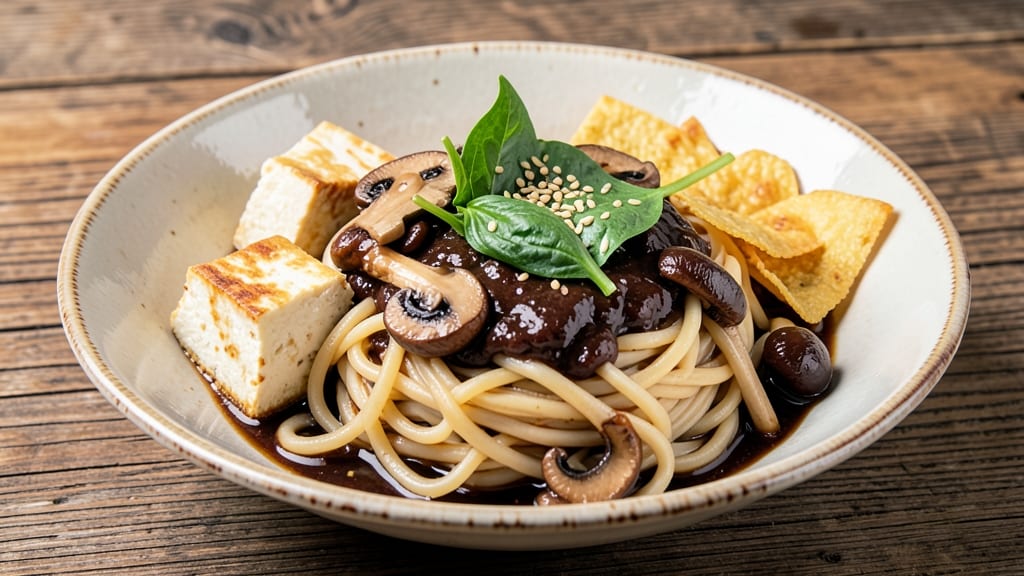
This Korean black bean paste noodles recipe delivers restaurant-quality comfort in one umami-rich bowl, where crispy tortilla shards meet silky noodles and deeply savory broth.
The secret lies in fermented black bean paste (kongnamu), which transforms simple ingredients into a dish packed with depth—no shortcuts, just authentic flavor built through slow simmering and precise layering.
What sets this recipe apart is the balance of textures: crispy fried tortilla pieces add crunch, while hand-cut noodles soak up the velvety broth infused with mushrooms, tofu, and seasonal greens.
Traditional Korean techniques—like blooming aromatics in oil and simmering the paste until glossy—ensure every spoonful delivers that signature kongguksu experience, but with a vegan twist that doesn’t compromise on richness.
The result is a dish that’s both satisfying and adaptable—perfect for weeknight dinners or meal prep, with leftovers that taste even better the next day. The crispy tortilla topping isn’t just garnish; it’s the star, adding a satisfying contrast that makes each bite irresistible. Ready to master this Korean classic?
This recipe serves 4 and takes about 45 minutes of active time, with most of the work happening during the broth’s slow simmer. The key to success?
Patience—letting the black bean paste develop its full complexity over 20 minutes on the stove transforms it from ordinary to extraordinary. Let’s get started.
Ingredients for black bean paste noodles korean
Kongnamu, crispy tortilla shards, and silky noodles—authentic Korean flavors with a vegan twist.
| Ingredient | Amount | Notes |
|---|---|---|
| Kongnamu (Fermented Black Bean Paste) 🫘 | ½ cup | Korean brand preferred for authenticity |
| Dried Kongguksu Noodles 🍜 | 8 oz | Or sub with udon noodles |
| Extra-Firm Tofu 🥬 | 1 lb | Pressed and cubed |
| Shiitake Mushrooms 🍄 | 8 oz | Fresh or rehydrated |
| Spinach 🍃 | 4 cups | Baby spinach preferred |
| Corn Tortillas 🥞 | 6 whole | Cut into 1-inch squares |
| Vegetable Oil 🫒 | ½ cup | High smoke point preferred |
| Sesame Oil 🌱 | 1 tbsp | Toasted sesame oil |
| Fresh Garlic 🧄 | 6 cloves | Minced for aromatic base |
| Fresh Ginger 🌿 | 1 ½ tbsp | Finely grated, fresh |
| Green Onions 🧅 | 4 whole | White and green parts separated |
| Soy Sauce 🥫 | 2 tbsp | Tamari for gluten-free |
| Sesame Seeds 🌰 | 1 tbsp | Toasted for garnish |
| White Miso Paste 🍶 | 1 tbsp | For umami depth |
| Vegetable Broth 💧 | 4 cups | Homemade or low-sodium |
For the kongnamu, Korean specialty stores carry the best quality—look for brands like Soy Gochujang or Hanjin, which deliver that signature fermented funk. If you can't find it, substitute with 1/4 cup soy sauce + 1 tbsp miso paste as a backup, though it won't be identical. The tofu must be extra-firm and pressed for 20 minutes to remove excess water—no shortcuts. Shiitake mushrooms add earthy depth; fresh is ideal, but rehydrated slices work in a pinch. Spinach wilts quickly, so keep it separate until the very end. The tortillas should be corn-based for authentic texture—Mission brand works best for crispiness.
No kongnamu? Double the miso paste and add 1 tsp fish sauce substitute (vegan Worcestershire) to mimic the umami. The tortilla topping is non-negotiable for texture—fry in batches until golden and crispy, then drain on paper towels. For the broth, homemade vegetable stock elevates the dish, but low-sodium store-bought is acceptable. The ginger and garlic should be finely minced—no graters here; a sharp knife ensures even distribution. If you're short on time, prep the tofu and tortilla toppings first while the broth simmers—they can wait while the paste develops its depth.
The kongnamu paste keeps for 6 months in the pantry once opened, but the tofu and tortillas are best used fresh. Store prepped toppings in airtight containers in the fridge for 2 days—the tortilla pieces lose crispiness after that. The cooked noodles reheat beautifully; add a splash of water to prevent drying. For meal prep, assemble bowls day-of to maintain texture contrast. Freeze the broth base (without noodles) for 3 months
Why You'll Love This Recipe
- No-Fuss Pantry Staple: I swear by this when my fridge is empty—just dried noodles, a spoonful of kongnamu, and whatever mushrooms I can find. The fermented black bean paste does all the flavor work while I’m still figuring out dinner.
- Umami Bomb Combo: That deep, funky taste from kongnamu? It’s like a flavor explosion in your mouth, especially when it caramelizes with the tofu and shiitakes. Honestly, I’ll take this over any takeout any day.
- Leftover Hero: This dish actually improves the next day—no joke. The noodles soften just right, and the spinach wilted into the sauce becomes even more tender. I make a double batch on Sundays and eat it all week.
- Budget Meal Magic: Tofu and dried noodles stretch for miles, and a little kongnamu goes a long way. Between us, I’ve fed four people for under $10 with this—plus, the mushrooms add that restaurant-quality texture without breaking the bank.
Step-by-step instructions for black bean paste noodles with crispy tortilla topping
Follow this method to deliver restaurant-quality depth where the fermented black bean paste meets crispy tortilla crunch.
Prepare the Umami Base with Kongnamu and Tofu
In a large skillet, heat the 0.5 cup vegetable oil over medium-high heat until shimmering. Add the 1 lb extra-firm tofu (pressed and cubed) and cook for 8-10 minutes until golden brown on all sides. Remove and set aside.
In the same skillet, add the 0.5 cup kongnamu (fermented black bean paste) and cook for 1-2 minutes until fragrant. This is your flavor foundation—don't rush it. The paste will release its deep, savory aroma as it blooms in the oil. Add the 6 cloves minced fresh garlic and 1.5 tbsp finely grated fresh ginger, cooking for another 30 seconds until the garlic turns golden. Here's where the authentic Korean depth begins.
Build the Broth and Cook the Vegetables
Pour in the 4 cups vegetable broth and bring to a gentle simmer. Add the 8 oz shiitake mushrooms (sliced) and cook for 5 minutes until softened. Stir in the 1 tbsp white miso paste and 2 tbsp soy sauce, letting it dissolve completely into the broth. This creates the velvety, umami-rich base that defines the dish.
Add the 4 cups spinach and cook just until wilted—about 2 minutes. Overcooking will turn it bitter. Remove from heat and set aside. The broth should now carry that signature Korean fermented depth with a touch of miso richness. This is your foundation layer that will carry all the other flavors.
Cook the Noodles to Al Dente Perfection
In a separate pot, bring 8 cups water to a rolling boil and add the 8 oz dried kongguksu noodles. Cook for 3-4 minutes until al dente—the noodles should still have a slight bite. Drain immediately and rinse briefly under cold water to stop the cooking process. This prevents them from becoming mushy when combined with the hot broth.
Transfer the drained noodles to the skillet with the vegetable mixture. Toss gently to coat evenly with the umami-rich broth. The noodles will absorb the flavor immediately—this is where the magic happens. Keep the mixture warm over low heat while you prepare the crispy tortilla topping.
Create the Crispy Tortilla Topping
Cut the 6 whole corn tortillas into 1-inch squares. Heat 1 tbsp sesame oil in a separate skillet over medium-high heat until smoking. Add the tortilla pieces in a single layer and fry for 2-3 minutes per batch until deep golden brown and crispy. Transfer to paper towels to drain excess oil.
Here's the key: the tortilla pieces must be uniformly crispy. If they're not golden enough, return them to the pan for another 30 seconds. The contrast between the soft noodles and crispy topping is what makes this dish so satisfying. Sprinkle with 1 tbsp toasted sesame seeds while still hot.
Assemble and Garnish for Maximum Impact
Divide the noodle mixture evenly among 4 serving bowls. Top each portion with the crispy tortilla pieces and drizzle with any remaining broth from the skillet. Garnish with the white and green parts of the 4 whole green onions, separated and arranged artfully.
Serve immediately with additional sesame seeds on the side. The contrast of textures—silky noodles, crispy tortilla, tender vegetables—paired with the deep umami from the kongnamu creates a harmonious balance. Each bite should deliver that perfect combination of savory, crispy, and slightly sweet notes that define this Korean classic.
Pro Tips For Making Black Bean Paste Noodles Korean
- Bloom the Kongnamu: Toss the black bean paste in a dry pan for 30 seconds before adding liquid—this wakes up its flavor without burning it. I used to skip this, and the paste always tasted flat until I saw how much richer it got after just a quick toast.
- Soak Noodles Separately: Split the dried kongguksu into two batches for soaking—one in hot water, one in cold. The hot water softens them faster, but the cold water keeps them from overcooking while you finish the sauce. (Yes, it’s extra work, but mushy noodles ruin everything.)
- Press, Don’t Slice, Tofu: Wrap the extra-firm tofu in a towel, press it under a heavy pan for 15 minutes, then slice it thick—about ½ inch. Thin slices turn to mush, but thick ones hold their shape and soak up the kongnamu sauce like a sponge.
- Blanched Spinach Wins: Shock the spinach in ice water after blanching—it keeps the color vibrant and prevents it from turning to sludge in the hot sauce. I learned this the hard way when my first batch of noodles looked like a swamp.
Best sauces and condiments for black bean paste noodles korean
Crispy Tortilla Topping
The star of this dish, these golden-brown tortilla shards provide the perfect crunch contrast to silky noodles. Cut 6 corn tortillas into 1-inch squares and fry in 1 tbsp sesame oil over medium-high heat until deeply crispy—about 2-3 minutes per batch.
Drain on paper towels and sprinkle with 1 tbsp toasted sesame seeds while hot. 🌟
Sesame Oil Drizzle
A final touch of toasted sesame oil (just 1 tsp) elevates the dish by adding nutty depth. Drizzle it over each bowl right before serving—its aroma will make the flavors sing.
For extra richness, warm the oil slightly before drizzling. This simple step transforms the dish from good to unforgettable. ✨
Spicy Kick Option
For heat lovers, add 1 tsp gochujang paste or ½ tsp red pepper flakes to the simmering broth. Stir well and let it meld for 1 minute before adding vegetables.
The spice balances the umami perfectly—adjust to taste. If you prefer milder heat, a dash of Korean chili crisp on top works beautifully. 🌶️
Extra Umami Boosters
Enhance the broth’s depth by adding 1 tbsp soy sauce or ½ tsp fish sauce substitute (like vegan Worcestershire) when simmering. For a smoky note, stir in ½ tsp smoked paprika with the kongnamu. These small additions amplify the dish’s complexity without overpowering it. 💡
Fresh Garnishes
Brighten each bowl with green onions (white and green parts separated) and a sprinkle of toasted sesame seeds. For extra freshness, add thinly sliced cucumber or shredded carrot on top. These garnishes not only look beautiful but also cut through the richness. 🥗
Broth Thickeners
If the broth feels too thin, stir in 1 tsp cornstarch mixed with 1 tbsp water and simmer for 2 minutes until slightly thickened. Alternatively, add 1 tbsp grated daikon radish while cooking for natural thickening. This ensures every bite is packed with flavor. 🍜
Nutrition facts
Frequently asked questions
What makes this recipe different from regular Korean black bean noodles?
This version features a crispy tortilla topping that adds satisfying crunch, while keeping the dish fully vegan. Traditional recipes often include meat or seafood, but we substitute with extra-firm tofu and shiitake mushrooms to maintain umami depth. The tortilla pieces are the secret weapon for texture contrast!
Can I make this dish ahead of time for meal prep?
Prepare the broth base and tofu up to 2 days ahead—store in airtight containers. Cook the noodles fresh when ready to eat, then toss with the prepped broth. Keep the crispy tortilla pieces separate until serving to maintain their crunch. The flavors actually improve overnight!
What if I can't find kongnamu (fermented black bean paste)?
Mix ¼ cup soy sauce with 1 tbsp white miso paste as a substitute. For extra depth, add ½ tsp vegan Worcestershire sauce. While not identical, this combo captures the savory essence. The key is simmering it long enough—20 minutes will develop the umami!
How do I get the tortilla pieces extra crispy?
Fry in small batches over medium-high heat until deep golden brown (about 2-3 minutes). Drain on paper towels immediately to remove excess oil. For extra crunch, sprinkle with toasted sesame seeds while still hot. The secret? Don't overcrowd the pan—this keeps them crispy!
Can I use wheat noodles instead of kongguksu?
Yes! Udon or ramen noodles work well as substitutes. For best results, cook them 1 minute less than package instructions to prevent mushiness when combined with the hot broth. The wider noodles hold up better to the rich sauce. Just adjust cooking time to maintain al dente texture!